
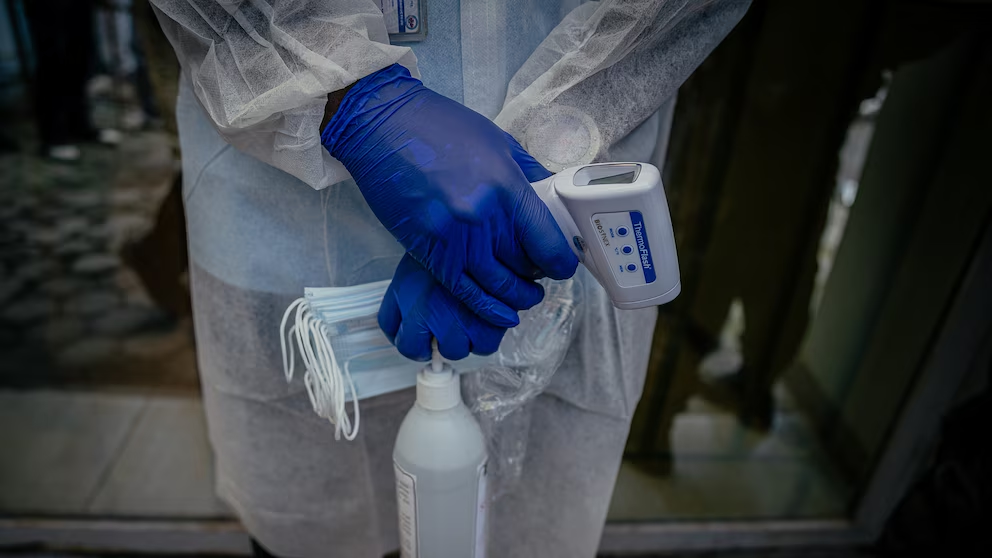
A health worker observes individuals entering the Rodolphe Merieux Laboratory, National Biomedical Research Institute (INRB) in Goma, on May 19, 2026.Jospin Mwisha/AFP via Getty Images
LONDON — As of Wednesday, the ongoing Ebola epidemic in the eastern portion of the Democratic Republic of the Congo had resulted in 139 presumed fatalities and close to 600 potential cases, according to the most recent data from World Health Organization Director-General Tedros Adhanom Ghebreyesus.
“We anticipate these figures will continue to rise, considering the duration the virus circulated before the epidemic was identified,” Tedros mentioned during a media briefing in Geneva, Switzerland.
Following Tedros’ declaration of a public health emergency of international concern on Sunday — a status just below a pandemic in the United Nations agency’s warning framework — the WHO gathered an emergency committee on Tuesday evening.
This marked the first instance of a WHO leader declaring such an emergency before convening the emergency committee. Following the discussion, the committee concurred that the epidemic did not fulfill the criteria of a pandemic emergency, similar to the global COVID-19 occurrence.
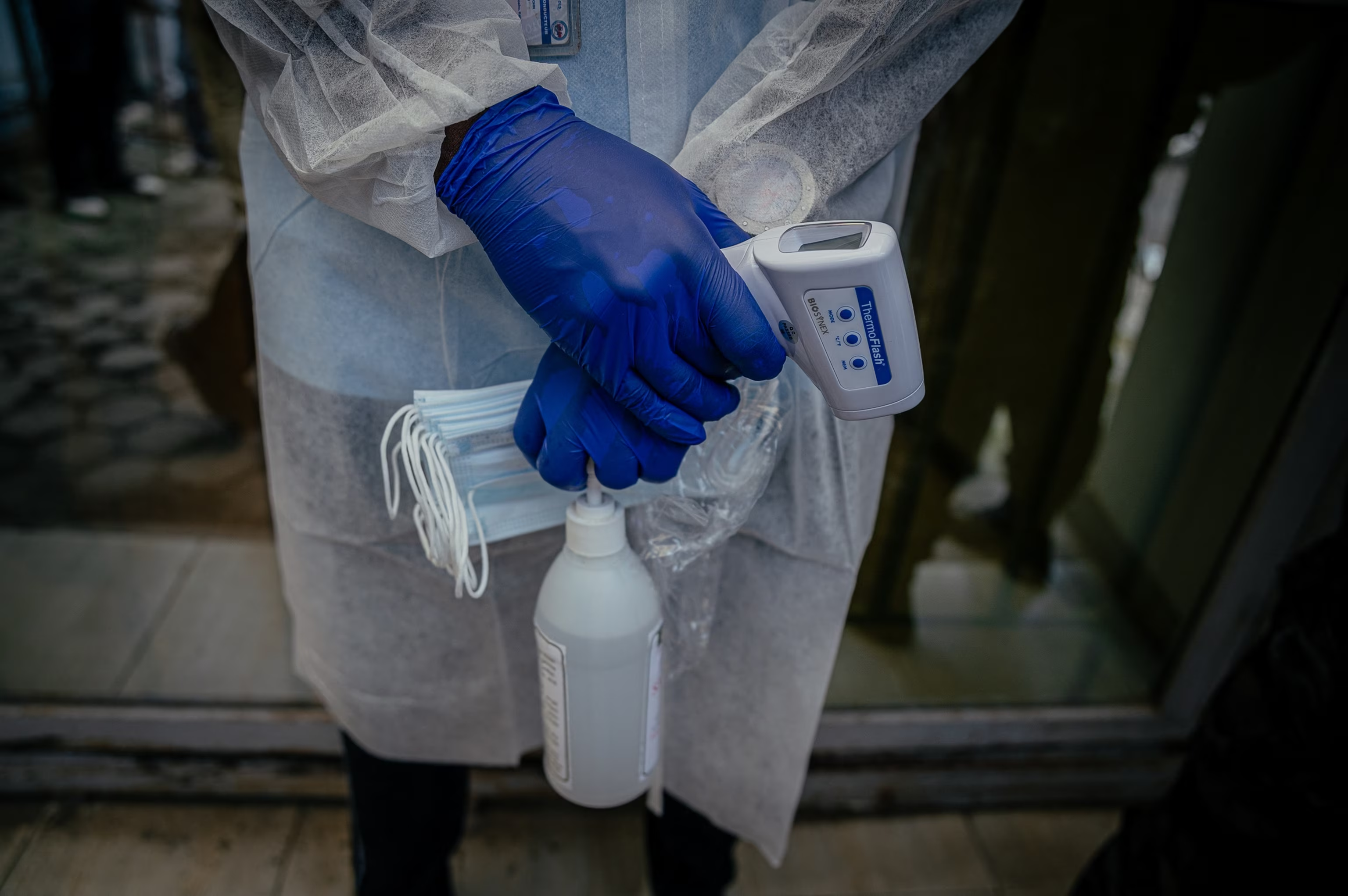
A health worker observes individuals entering the Rodolphe Merieux Laboratory, National Biomedical Research Institute (INRB) in Goma, on May 19, 2026.Jospin Mwisha/AFP via Getty Images
The outbreak was initially identified in the DRC’s northeastern Ituri province, with cases formally verified by the health ministry on May 15. This represented the 17th instance of Ebola virus disease in the DRC, which ranks as Africa’s second-largest country and fourth-most populous nation.
The ongoing outbreak stems from the Bundibugyo virus, an uncommon Ebola variant lacking approved vaccines or treatments, necessitating distinct diagnostics compared to other variants. The WHO reports that prior Bundibugyo outbreaks have shown case fatality rates ranging from 30% to 50%.
Tedros noted that Ebola cases have been reported in multiple urban regions of the eastern DRC amidst the current outbreak, including the major metropolitan areas of Goma and Bunia, with at least two cases and one death documented in Kampala, the capital city of neighboring Uganda. According to Tedros, health workers have also been affected.
To date, at least 51 cases have been confirmed in the current outbreak.
The WHO leader cautioned that substantial population movement in the area, encompassing a heavily trafficked mining zone, alongside insecurity and heightened conflict in recent months, elevates the likelihood of further spread. According to Tedros, the risks are significant at the national and regional levels, but remain minimal globally.
Among the verified cases is an American, Dr. Peter Stafford, who tested positive for Ebola while working in the DRC. Tedros stated that Stafford has since been transferred to Germany.
Dr. Scott Myhre, a colleague of Stafford’s at Serge — an international Christian missions organization — informed ABC News that the doctor was exposed to Ebola during surgery on a “very sick” patient who subsequently passed away.
Myhre indicated that Stafford developed symptoms that can resemble other ailments, such as fever, aches, chills, and fatigue — which can complicate Ebola diagnosis and treatment.
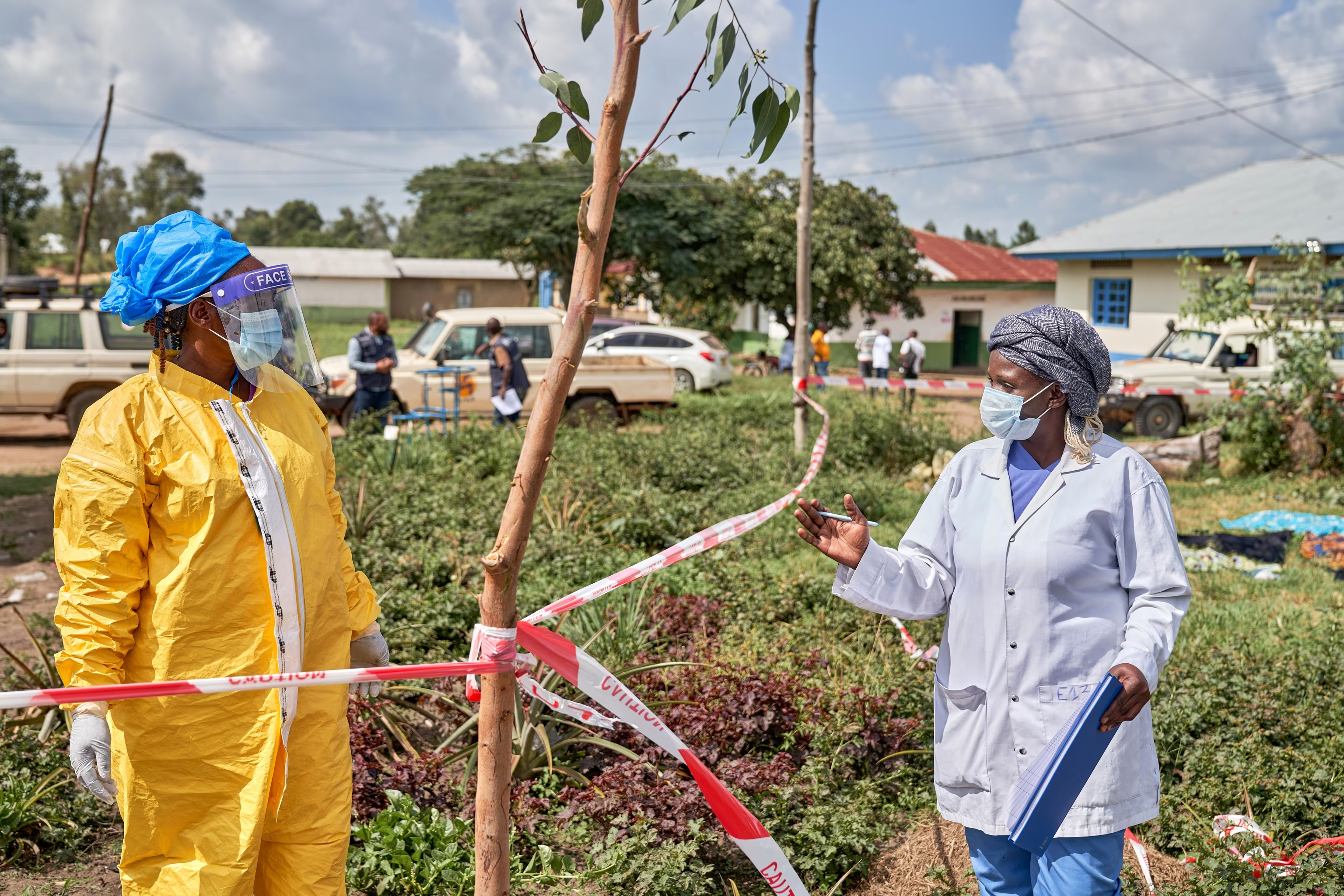
Health workers chat at an Ebola treatment center in Bunia, Congo, Tuesday, May 19, 2026. (AP Photo/Dirole Lotsima Dieudonne)The Associated Press
According to Scott, Stafford has since been given IV fluids and was transported on a biocontamination plane Tuesday morning to a U.S. military base in Germany. He added that Stafford was placed on the plane in a plastic, bubble-like device to prevent potential exposure to others on board.
According to Scott, other high-risk contacts, including Stafford’s wife and children, are undergoing monitored quarantine and are expected to be flown to Germany on Wednesday.
Dr. Satish K. Pillai, incident manager for the Centers for Disease Control and Prevention’s Ebola response, verified at a CDC press conference on Tuesday that six other high-risk contacts “are also having movement plans that are finalizing and will be transiting to Europe as well shortly.”
He added that genetic analysis from this outbreak reveals similarities to the “genetic fingerprints” from outbreaks in 2007 and 2012, indicating the availability of diagnostic instruments capable of detecting this specific Ebola strain.
Pillai mentioned on Monday that the agency has activated its Emergency Operations Center through its country offices in the DRC and Uganda, and is deploying technical specialists that have been requested from Atlanta headquarters.
The CDC announced on Monday its preparations to restrict entry for travelers arriving from areas of central Africa where an Ebola outbreak has been declared, in collaboration with the Department of Homeland Security.
Pillai stated that the risk to the general public in the U.S. remains minimal.
ABC News’ Youri Benadjaoud, Eric M. Strauss and Mary Kekatos assisted in the creation of this report.
Sourse: abcnews.go.com