
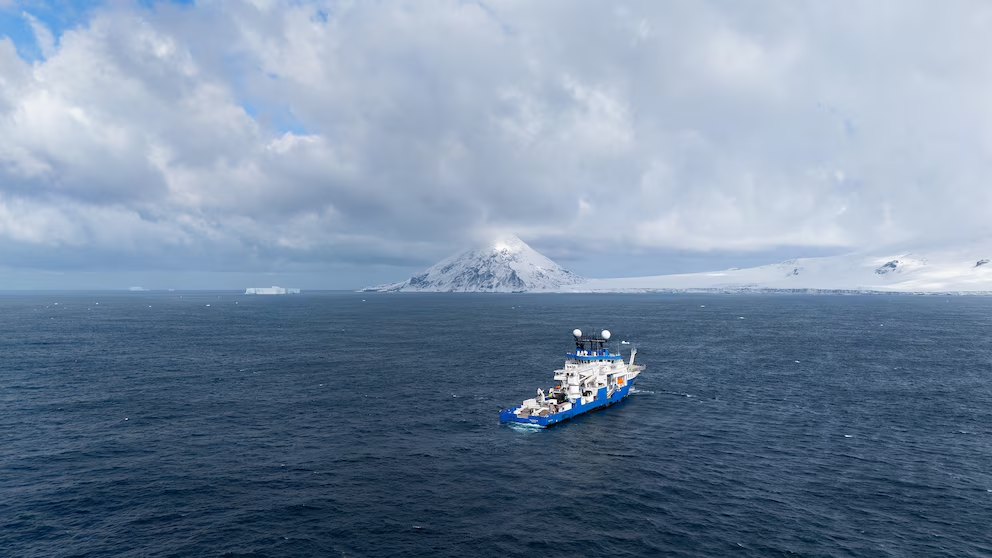
RV Falkor (too), the Schmidt Ocean Institute’s exploratory vessel, functioning in Antarctica throughout the 2025 Ocean Census/SOI South Sandwich Islands Expedition.Schmidt Ocean Institute
Oceanic researchers have unearthed an unprecedented number of novel lifeforms residing in the deeps of the planet’s waters within the last year.
In total, 1,121 fresh marine varieties were identified in a year’s duration, representing a “notable stride” in the investigation required to comprehend and safeguard the seas, as per the experts affiliated with The Nippon Foundation-Nekton Ocean Census, the globe’s premier initiative to hasten the finding of ocean species.
The staggering sum of unveilings signifies a 54% surge in classifications within a single year, the researchers indicated.
Among the recently discovered creatures are corals, crabs, shrimps, sea urchins, and anemones — some inhabiting depths surpassing four miles below the water’s surface.
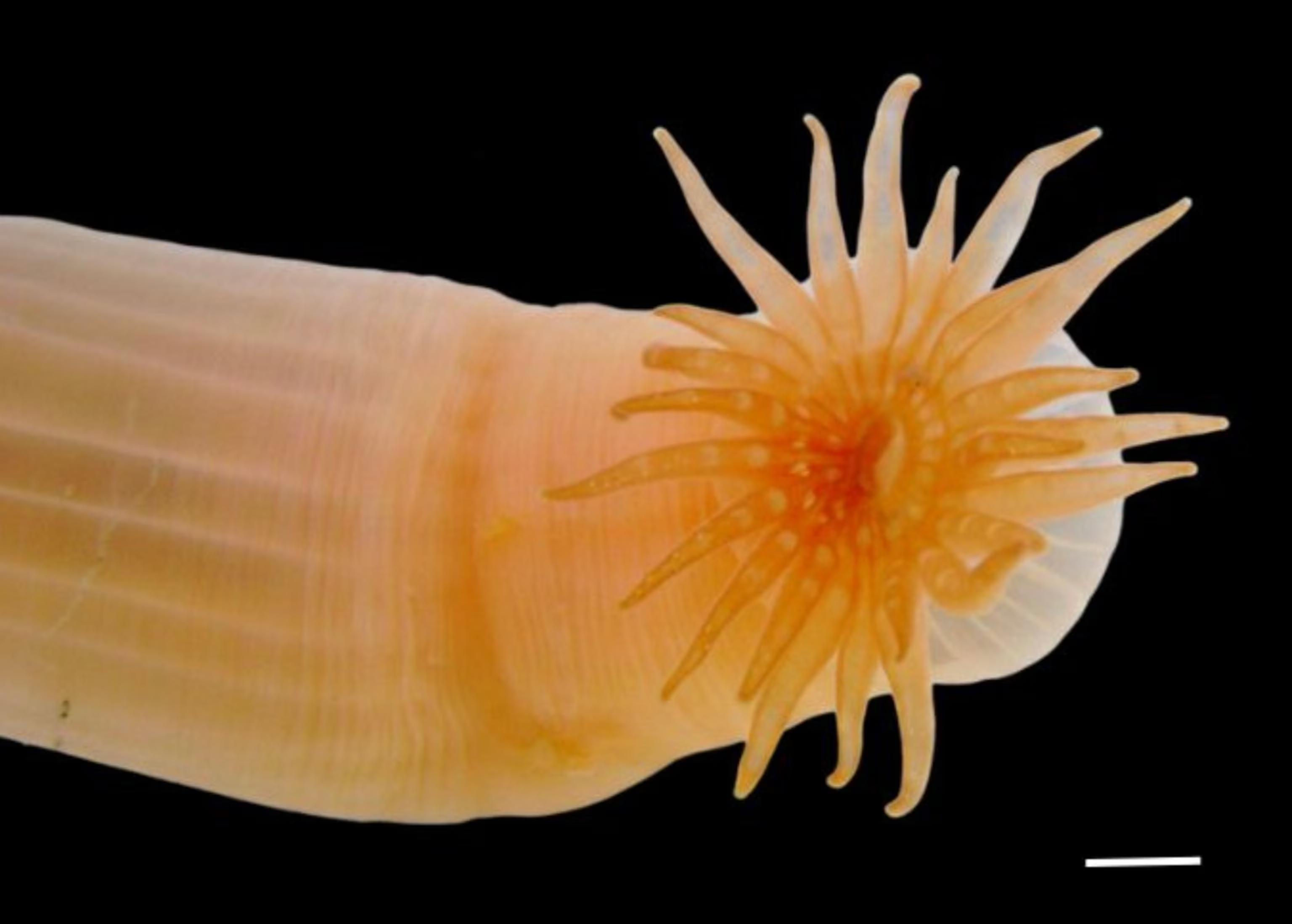
Burrowing sea anemone originating from the San Julian Peninsula in Argentina.The Nippon Foundation-Nekton Ocean Census/Agustín Garese
The “Ghost Shark” Chimaera, a far-flung kin of sharks and rays, was detected in the Coral Sea Marine Park just off the shore of Queensland, Australia. Chimaeras rank among the most enigmatic denizens of the profound ocean, the researchers noted. They predate the dinosaurs and branched off from rays and sharks into their individual evolutionary descent almost 400 million years ago.
Symbiotic segmented worms were located coexisting within a “glass castle” atop volcanic seamounts in Japan. The “castle” is essentially intricate cubicles of a glass sponge, with a skeleton comprised of crystalline silica.
The ribbon worm, a predator distinguished by prominent pigmentation, was unearthed near the surface, at depths spanning from 3 to 16 feet.
An impressive new kind of shrimp — the Mediterranean shrimp — was likewise identified in a sea cave offshore of Marseille, France, the researchers conveyed. It showcases vibrant orange stripes and elaborate appendages.
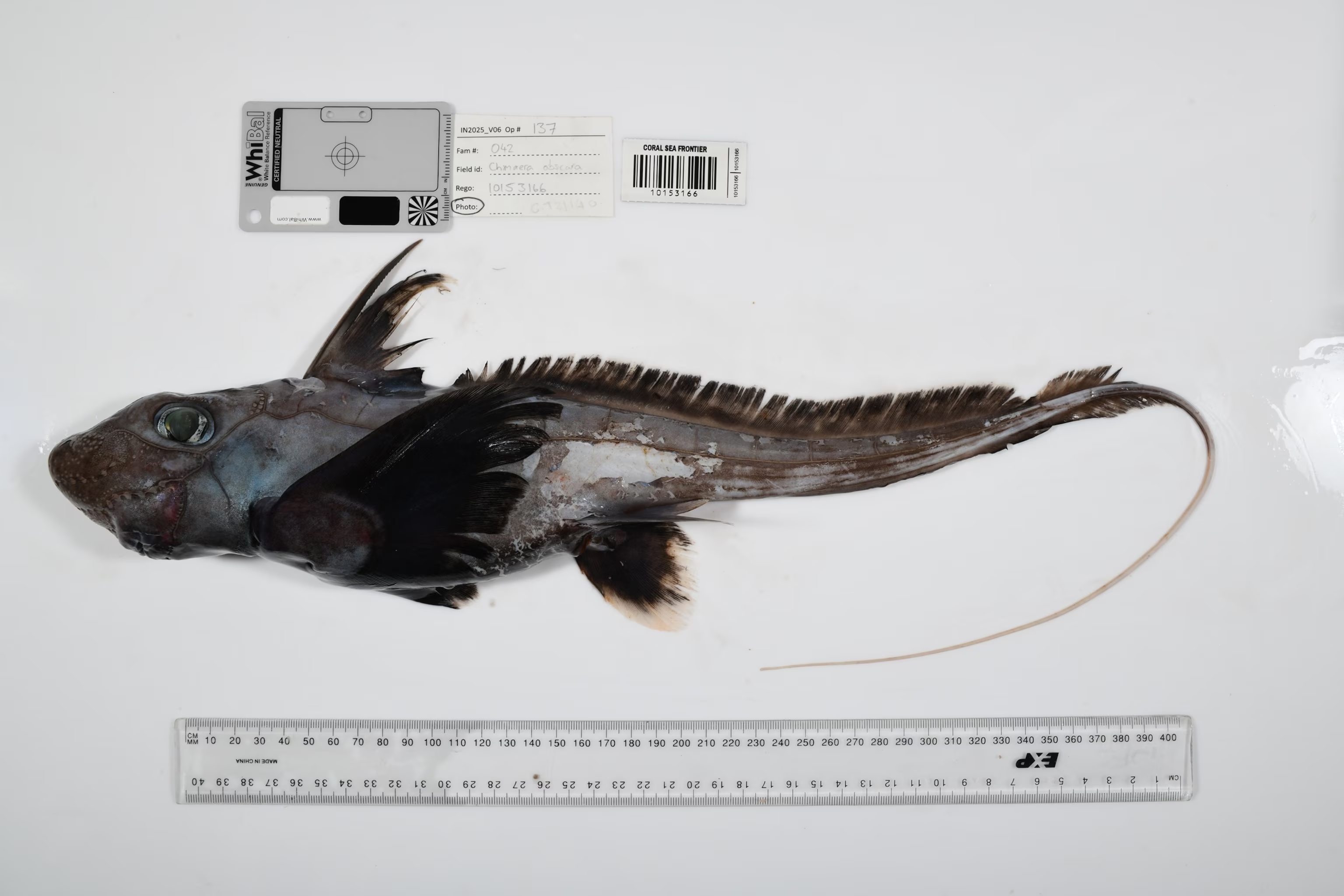
“Ghost Shark” chimaera discovered in the deep sea.The Nippon Foundation-Nekton Ocean Census/CSIRO
The varieties were discerned through 13 voyages throughout some of the globe’s most isolated and least-explored maritime zones, as well as nine discovery symposiums, the researchers reported.
“This year, Ocean Census has demonstrated the potential when scientific drive is complemented by worldwide teamwork on a grand scale,” Mitsuyuku Unno, executive director of the Nippon Foundation, voiced in a statement. “Through expeditions reaching from frigid depths to tropical waters, and the science converting samples into findings, this collective is unveiling the extraordinary abundance of sea life.”
Previous investigations have indicated that up to 90% of marine species remain undiscovered.
Cataloging the extent of lifeforms existing in the oceans is critical for policymakers and marine authorities to adequately conserve the ocean, the researchers affirmed.
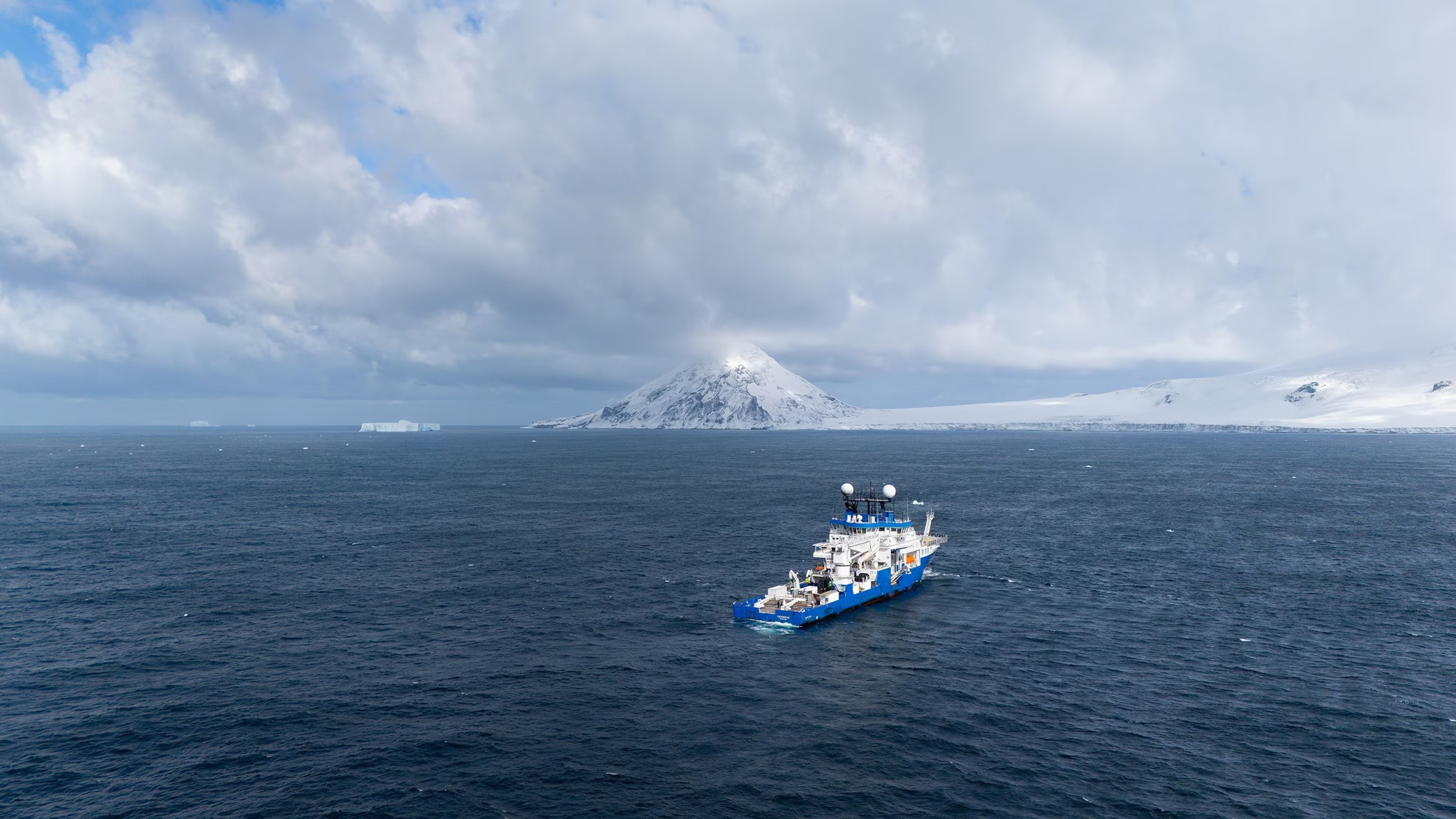
RV Falkor (too), the Schmidt Ocean Institute’s exploratory vessel, functioning in Antarctica throughout the 2025 Ocean Census/SOI South Sandwich Islands Expedition.Schmidt Ocean Institute
The typical duration between a species’ initial detection and its authorized “portrayal” in scholarly writings is historically around 13.5 years, thus placing species at risk of extinction even before they are indexed, the researchers stated.
“Considering that numerous species are susceptible to vanishing before they are even recorded, we find ourselves in a race against the clock to grasp and safeguard oceanic life,” Michelle Taylor, science director at Ocean Census, expressed in a statement. “For an extended period, myriad species have lingered in a scientific “uncertainty” due to the inability of the pace of discovery to keep up.”
To tackle this issue, marine biologists are now acknowledging “discovered” as an official scientific status that can be instantly documented.
Sourse: abcnews.go.com