
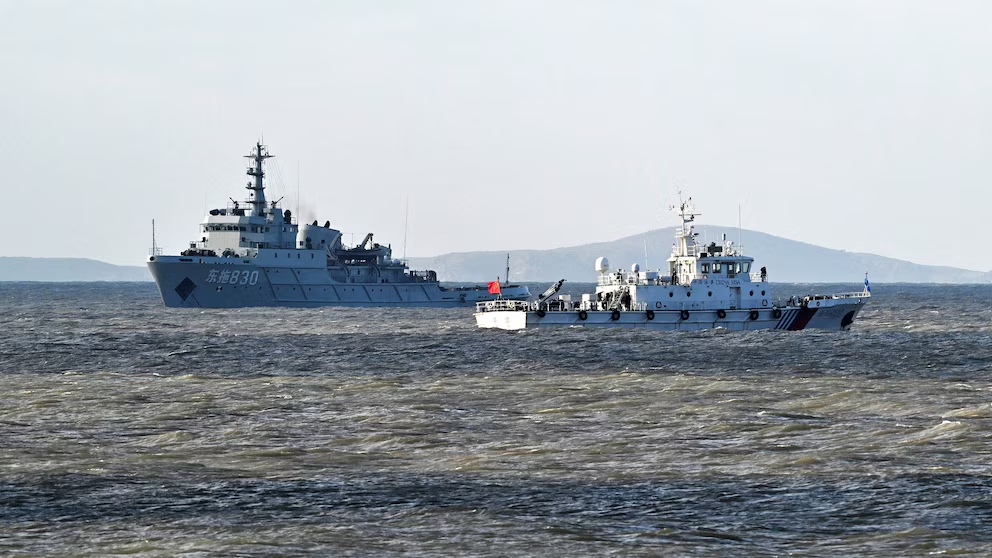
In this Dec. 30, 2025, archival photograph, Chinese vessels are seen patrolling while the People’s Liberation Army (PLA) executes military exercises on Pingtan island, situated in eastern China’s Fujian province, the nearest location to Taiwan.Adek Berry/AFP via Getty Images, FILE
While the ongoing crisis in Iran is projected to overshadow President Donald Trump’s China meeting, the most potentially vital security matter under discussion in private may be much closer to Beijing.
"I am certain Taiwan will be a subject of discussion, as it invariably is," Secretary of State Marco Rubio expressed to White House correspondents recently.
"I believe both nations appreciate that it is not in either of our interests to witness any unsettling events in that area of the world," he stated. "We do not require any destabilizing occurrences concerning Taiwan or anywhere else in the Indo-Pacific."
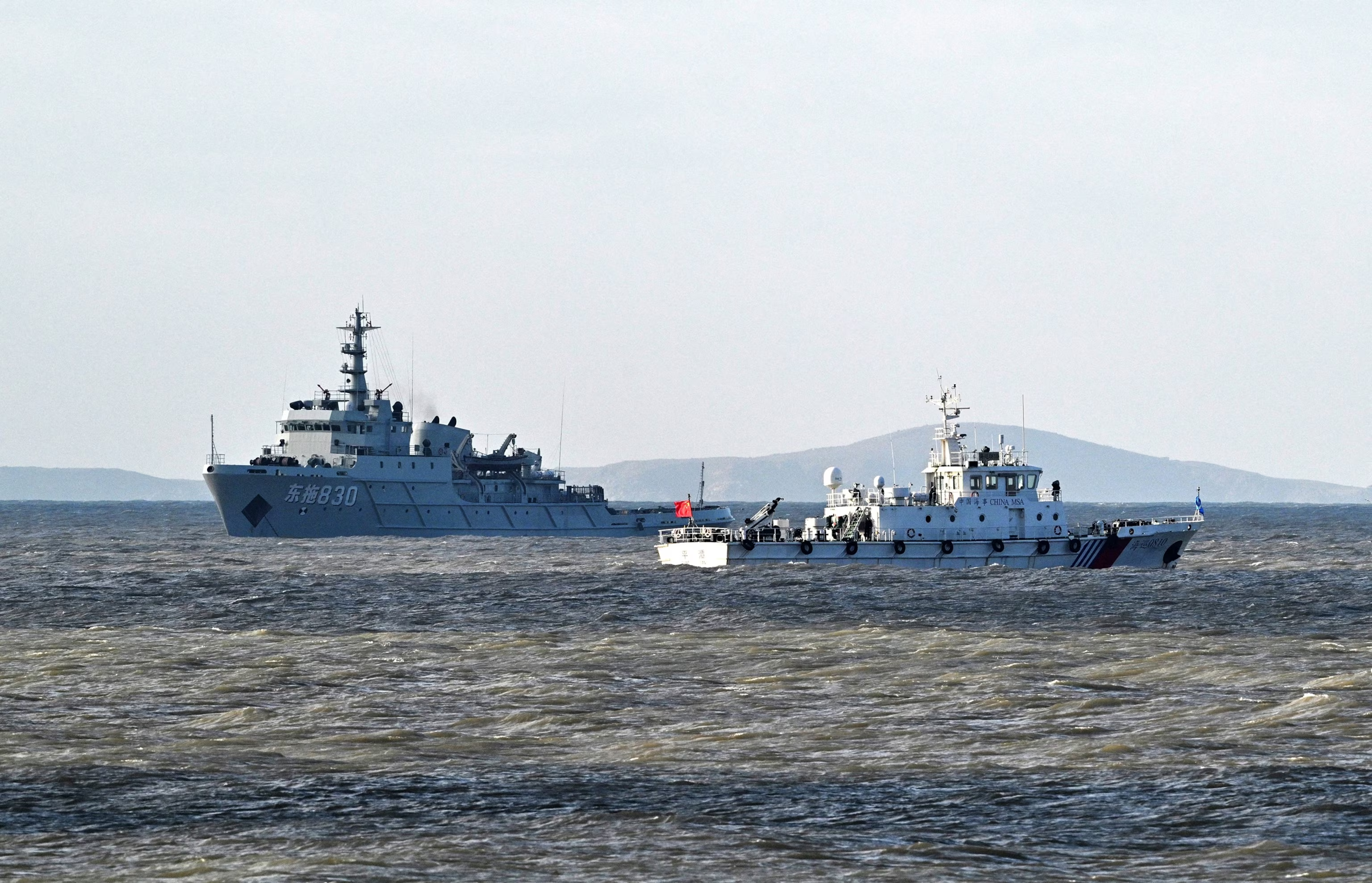
In this Dec. 30, 2025, archival photograph, Chinese vessels are seen patrolling while the People’s Liberation Army (PLA) executes military exercises on Pingtan island, situated in eastern China’s Fujian province, the nearest location to Taiwan.Adek Berry/AFP via Getty Images, FILE
Beijing regards its island neighbor as being governed by a breakaway administration that must be "reunified" with the Chinese nation. The U.S. has long supported a policy of maintaining the status quo, wherein China refrains from aggressions toward Taiwan’s autonomy and the U.S. refrains from recognizing its statehood.
When asked about weapons sales to Taiwan on Monday, Trump remarked, "I intend to discuss that with President Xi. President Xi would prefer that we did not."
On the cusp of the meeting, a group of eight senators from both parties dispatched a letter to the White House addressing the status of a $14 billion arms package destined for Taiwan, which they sanctioned in January but has yet to be forwarded by the White House.
"You can articulate to Beijing that as you endeavor to even the economic playing field, American support for Taiwan remains non-negotiable," the senators, spearheaded by New Hampshire Democrat Jeanne Shaheen and joined by Republicans Thom Tillis and John Curtis, penned on Friday.
The U.S. Congress has formalized into legislation a principle that it will not participate in such deliberations with China.
During a House Appropriations hearing on Tuesday, when asked about the pending weapons deliveries to Taiwan, Defense Secretary Pete Hegseth responded, "The president is on the verge of a journey, and I shall accompany him, and he will render all decisions pertinent to that."
Retired Navy Rear Adm. Mark Montgomery, a senior director at the Foundation for the Defense of Democracies, which advocates for U.S. backing of Taiwan, conveyed his apprehension that Taiwan would be "on the agenda" at the summit.
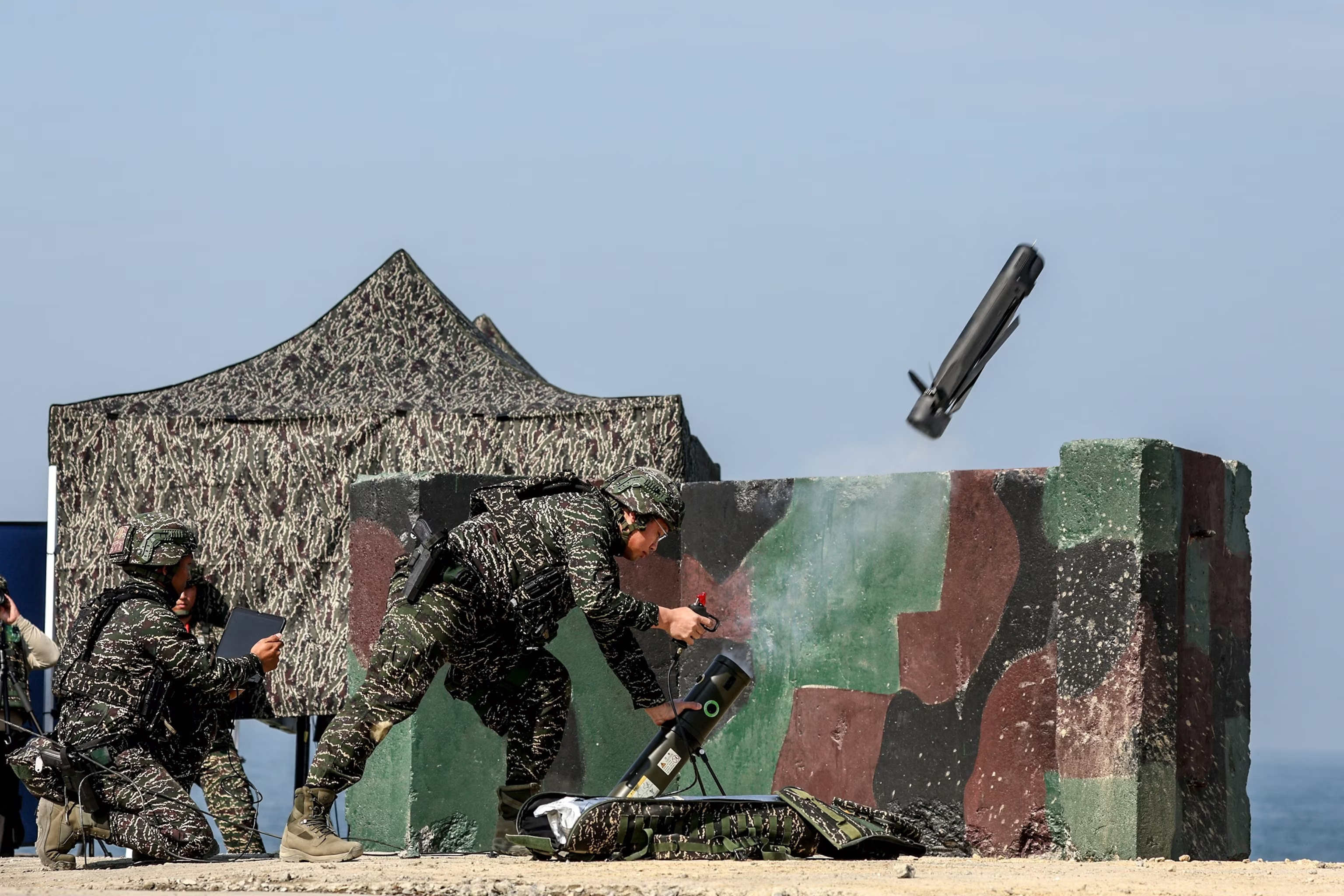
In this Jan. 29, 2026, archival photograph, soldiers launch an unmanned aerial vehicle (UAV) during the spring military exercises at the Tsoying Naval Base in Kaohsiung.I-hwa Cheng/AFP via Getty Images, FILE
"If I were Taiwanese, I would be concerned," he stated, citing indications that the two parties might discuss U.S. arms offerings to Taiwan.
"I am concerned that we have a president who engages in transactions, and a transactional opportunity could present itself, and then we would face a challenge," Montgomery added.
China analysts suggested that merely discussing Taiwan poses risks, as Chinese President Xi Jinping will likely seek to further his objectives during his meetings with Trump. According to three former senior government officials, the Chinese will primarily aim for so-called "declaratory language" from Washington, or public pronouncements from U.S. officials that lean toward accommodating China’s stance.
The talks between Trump and Xi follow a warm reception in Beijing for the leader of Taiwan’s opposition party, which advocates for closer ties with Xi’s government there.
"I believe, concerning Taiwan policy," one of the former officials noted, "the anxiety [within the Trump administration] pertains more to the potential next two or three actions regarding Taiwan" than to any public statements the U.S. might issue regarding the situation.
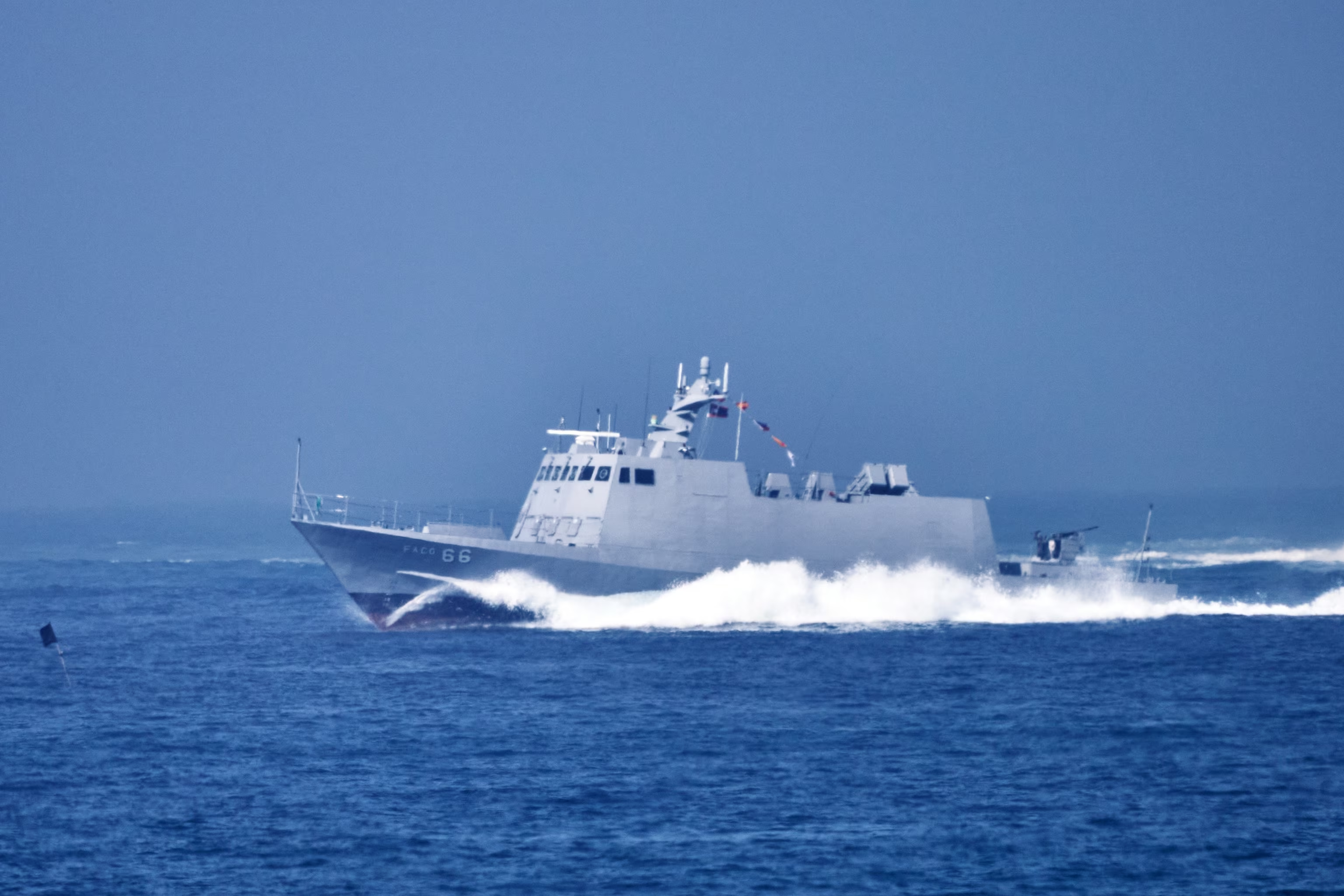
In this Jan. 29, 2026, archival photograph, a Taiwanese Navy ship undertakes a military exercise beyond a naval base in Kaohsiung, Taiwan.An Rong Xu/Bloomberg via Getty Images, FILE
"I expect administration officials will argue that shifts in declaratory policy are merely words, [and that] capabilities are more significant. And [that] the U.S. Congress’s commitment to Taiwan persists," the former official observed.
Other China analysts posited that any rhetoric emanating from the summit could be overturned by a succeeding administration or even the current one.
However, the former officials concurred that it would be challenging to ascertain what Xi confidentially conveys to Trump regarding his aspirations toward the island, which he is widely believed to aspire to control by 2027.
Recent U.S. intelligence assessments have determined that timeline to be improbable.
One former official, who noted that both heads of state wield unparalleled influence over their respective governments, predicted that Taiwan would be Xi’s principal concern.
That signifies "assurance in himself, and, frankly, his capacity to undertake calculated risks," the official concluded.
Sourse: abcnews.go.com