
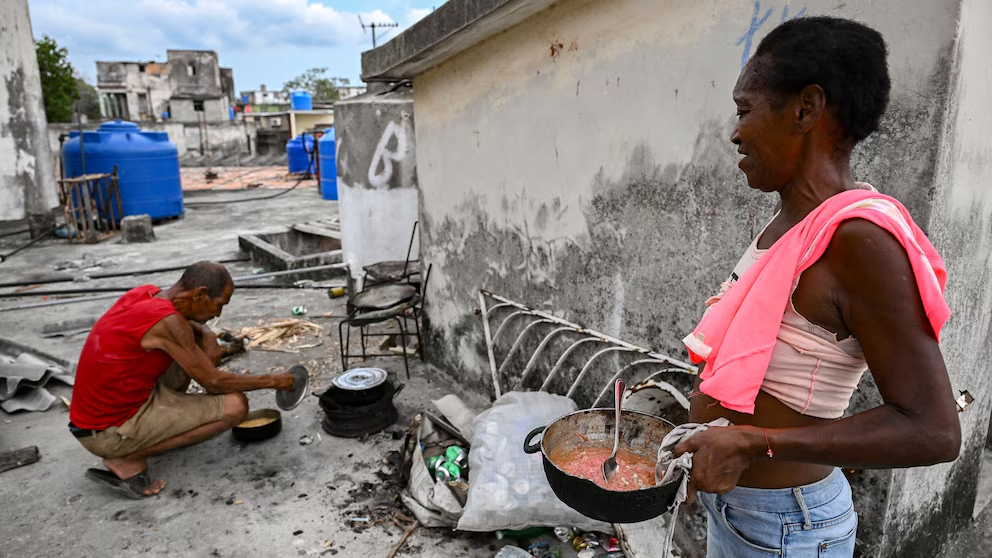
Individuals are cooking with firewood amidst a power outage in Havana on May 13, 2026. Cuba held the United States responsible for the “particularly strained” circumstances impacting its energy infrastructure on May 13, 2026, which has suffered persistent blackouts, while Washington reaffirmed its offer of $100 million in assistance to the nation. Yamil Lage/AFP via Getty Images
The situation is increasingly deteriorating for Cuban residents as the island contends with diminishing oil provisions to sustain daily routines, according to specialists in Cuban-U.S. affairs who spoke with ABC News.
On Thursday, the U.S. embassy in Cuba released a security notification regarding the country's intensifying electricity shortage — indicating that the nationwide electrical network "is becoming progressively more fragile."
Extended power failures, both planned and unexpected, have been a daily occurrence across the island, notably in the capital of Havana, U.S. officials report. These disruptions are influencing the provision of water, illumination, refrigeration and means of communication.
A deficit of fuel is also influencing transit and prompting lengthy queues at fueling stations, the U.S. embassy stated. Cuban Minister of Energy and Mines Vicente de la O Levy declared during a press briefing on Wednesday that the island had exhausted its fuel inventories.
Havana underwent a power cut that same day that lasted more than 20 hours, O Levy commented.
"We possess absolutely no fuel; we possess absolutely no diesel," he conveyed.
This constitutes the initial grid breakdown Cuba has faced since the early days of March, when Cuba encountered the initial major power outage ensuing the Trump administration’s restrictions.
The prevailing energy predicament commenced on Jan. 3, when the U.S. apprehended Venezuelan President Nicolas Maduro and his spouse within the country and compelled the Venezuelan government to cease dispatching oil to Cuba.
Venezuela had been furnishing roughly 20% of Cuba's cumulative energy procurements, William M. LeoGrande, an American University professor specializing in U.S.-Cuban ties, informed ABC News. While statistics differ concerning the precise quantity of barrels consumed daily by Cuba, Worldometer, a website providing real-time statistics, indicates that the figure is approximately 112,423 barrels daily. In 2025, Venezuela was supplying Cuba with approximately 26,500 barrels each day, Reuters documented – roughly 24% of the daily utilization.
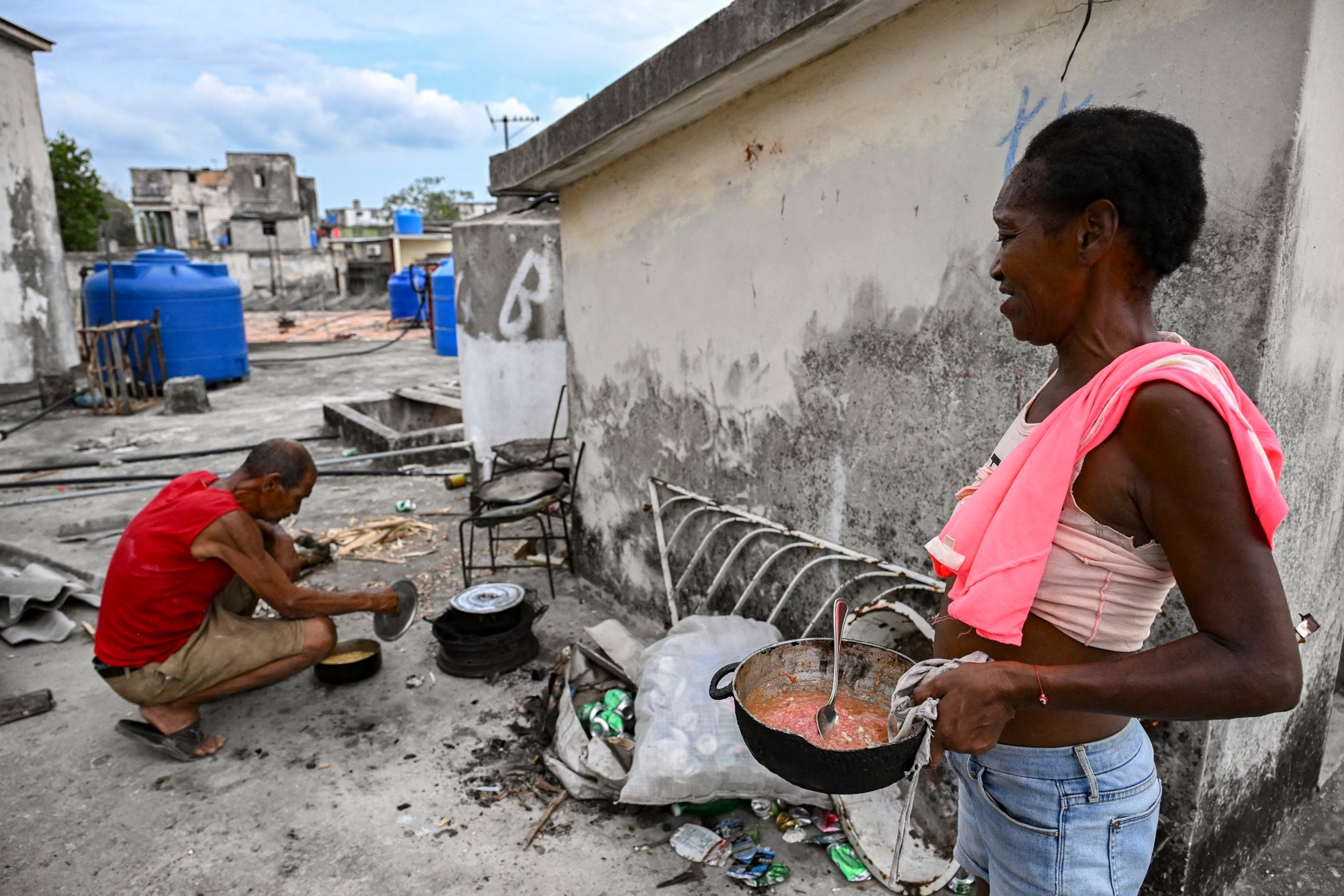
People cook with firewood during a blackout in Havana on May 13, 2026. Cuba blamed the United States for the “particularly tense” situation in its power grid on May 13, 2026, which has been plagued by prolonged blackouts, while Washington once again offered $100 million in aid to the island.Yamil Lage/AFP via Getty Images
The cessation of oil delivery from Venezuela was a “substantial blow,” considering Cuba generates only around 40% of its necessary oil within its borders, according to LeoGrande, who added that Cuba produces heavy oil with high sulfur content, thereby damaging infrastructure and intensifying failures on the electrical system.
Approximately 80% of Cuba's electricity originates from facilities running on natural gas — around 20% from renewable sources, which encompasses a rising volume of solar power, LeoGrande specified.
The imminent predicament grew more critical when U.S. President Donald Trump executed an executive order on Jan. 29, proclaiming a national security crisis concerning Cuba and posing the threat of tariffs on countries providing oil to the island nation.
The executive order specifies that the "policies, practices, and actions of the Government of Cuba constitute an unusual and extraordinary threat, which has its source in whole or substantial part outside the United States, to the national security and foreign policy of the United States."
Trump additionally accused the Cuban regime of backing "numerous hostile countries, transnational terrorist groups, and malign actors adverse to the United States," including Russia, China, Iran, Hamas and Hezbollah.
"With the exception of one Russian tanker, no one else has dared to defy the U.S. on that matter," LeoGrande stated.
The failure of the Cuban electrical infrastructure is not a contemporary phenomenon, Alejandro de la Fuente, the head of the Cuba Studies Program at Harvard University, informed ABC News. Cuba has experienced increasingly frequent power failures during the preceding five years.
Cuba's oil-fueled power installations are more than 40 years old and have undergone negligible capital maintenance, according to Jorge R. Piñon, the director of the Latin America and Caribbean Energy Program at The University of Texas at Austin's Energy Institute.
But the persisting predicament has now been intensified by the U.S.-imposed blockade, Piñon revealed to ABC News.
"The crisis has been exacerbated by the punitive actions of this administration that have rendered the situation borderline desperate," De la Fuente expressed. "They have propelled Cuba into what I would now characterize as a humanitarian crisis."
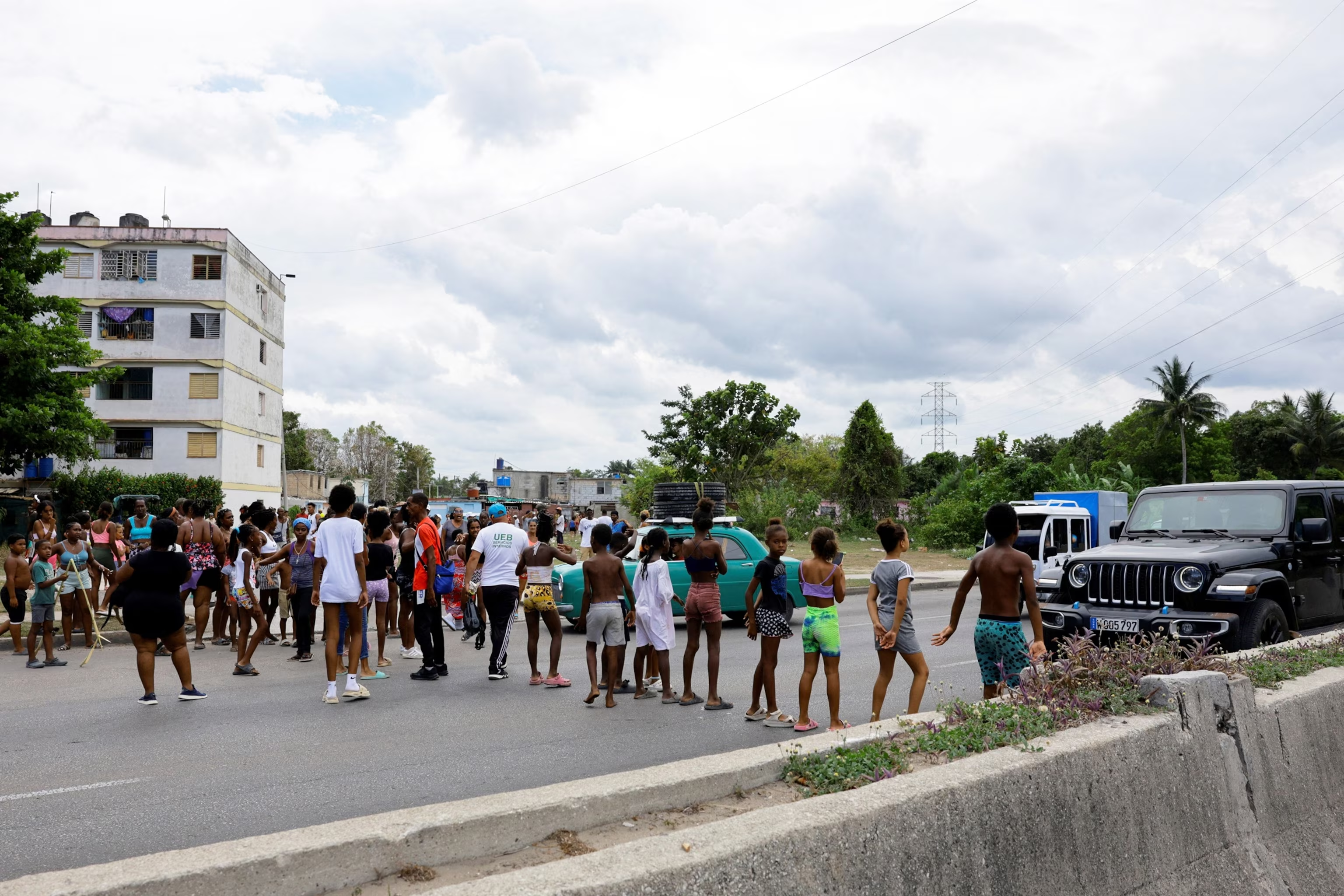
Children block Boyeros Avenue due to a lack of electricity after Cuba’s electrical grid suffered a partial collapse early Thursday, cutting power across eastern Cuba, in Havana, Cuba, May 14, 2026.Norlys Perez/Reuters
On Wednesday, a malfunction in the electrical grid eliminated power to a considerable portion of the eastern area of the nation. Power disruptions are more probable in eastern Cuba due to a less affluent demographic, and power lines damaged during Hurricane Helena in September 2024 remain unrepaired, De la Fuente stated.
Trump's sanctions have particularly influenced Cuba's food provision, given that the island imports the vast majority of its food supply, LeoGrande indicated. Cuba imports 70% to 80% of its internal food requirements, with the majority intended for social protection initiatives, as stated by the World Food Programme.
"You're referring to the potential for authentic mass starvation, should that persist," LeoGrande cautioned. "The state there is absolutely critical."
As a result of the energy deficiency, Cuba's economy is grinding towards cessation, experts report. Grocery shelves stand bare. Hospitals are functioning marginally. The lack of diesel has idled the agricultural domain, maritime vessels and freight vehicles, Piñon conveyed.
LeoGrande recounted that when he was in Cuba in December, some of the only moving vehicles were electric ones. Relatives of De la Fuente residing in Cuba have experienced approximately two hours of electricity within a 36-hour span, he added.
No individual on the island, excluding certain high-ranking dignitaries, can avert the hurdles stemming from the scarcity of oil, Piñon mentioned.
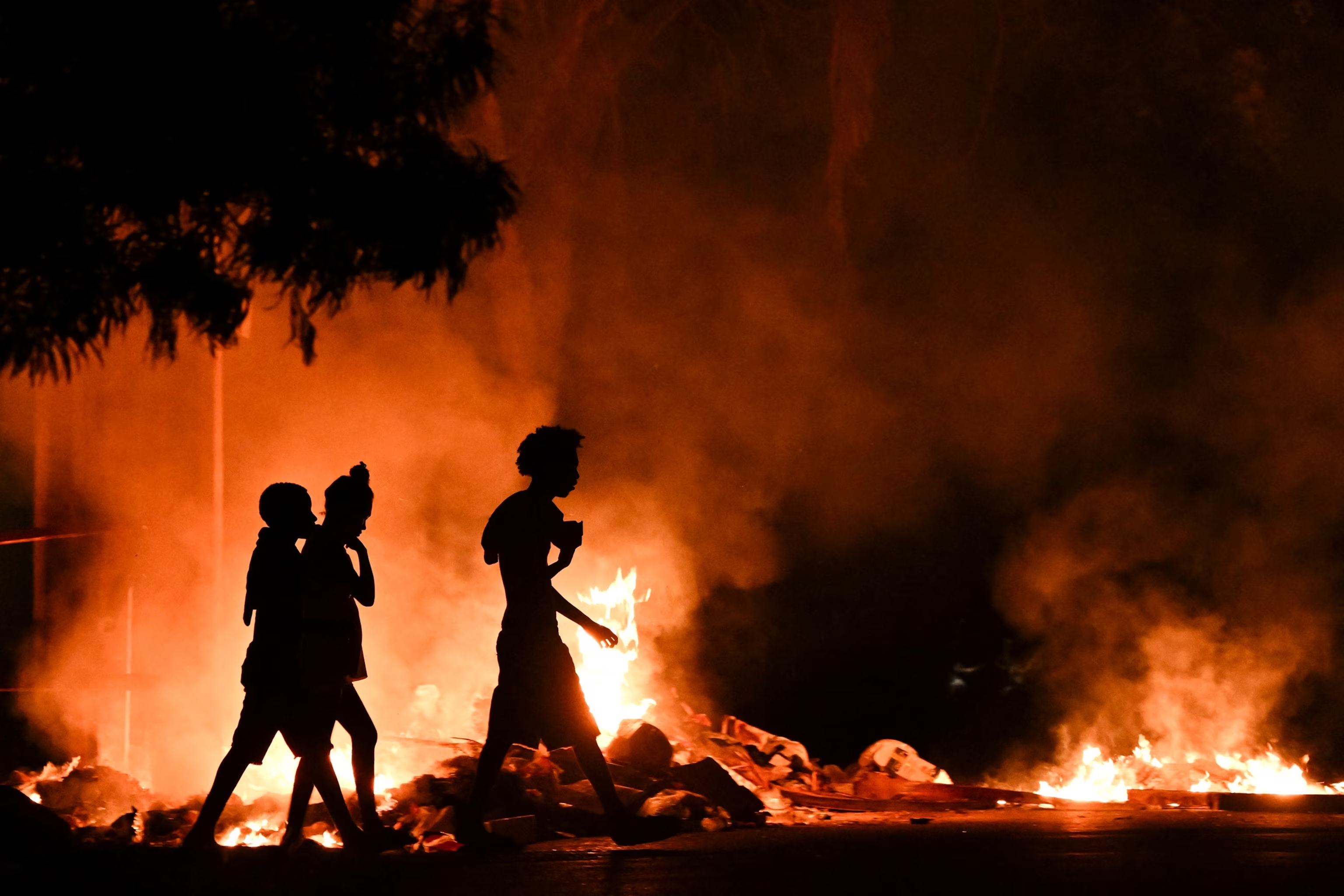
People walk past a fire set by demonstrators during a protest against the lack of energy and blackouts in the Lawton neighborhood in Havana, on May 14, 2026. Cuba blamed the United States for the “particularly tense” situation in its electricity grid, as the east of the country was hit by another widespread power cut on May 14, 2026.Yamil Lage/AFP via Getty Images
This state of affairs has incited resentment among Cuban residents, who have initiated demonstrations opposing the prolonged blackouts, the experts specified.
The U.S. embassy has started to receive reports of demonstrations throughout Havana, resulting in "aggressive police suppression" against the protesters. Footage originating from Havana depicts fires burning in connection with the protests.
"You're commencing to witness the disintegration of civil order," LeoGrande remarked.
While the demonstrations have not specifically targeted U.S. citizens, officials urged Americans to refrain from large assemblies, as well as implement measures to conserve fuel, water and mobile phone charge.
"Be prepared for substantial disturbance," The U.S. embassy noted.
CIA Director John Ratcliffe convened with senior Cuban authorities in Havana on Thursday, discussing intelligence collaboration, economic steadiness, and security, "all against the framework that Cuba can no longer provide a safe haven for adversaries in the Western hemisphere," according to a CIA official who spoke with ABC News.
Cuban Foreign Minister Bruno Rodriguez cautioned that the U.S. was headed down a "perilous course" that could culminate in a "massacre in Cuba" during an interview with ABC News the prior week.
"Hopefully a resolution here will be materializing imminently," Piñon hoped.
Sourse: abcnews.go.com