
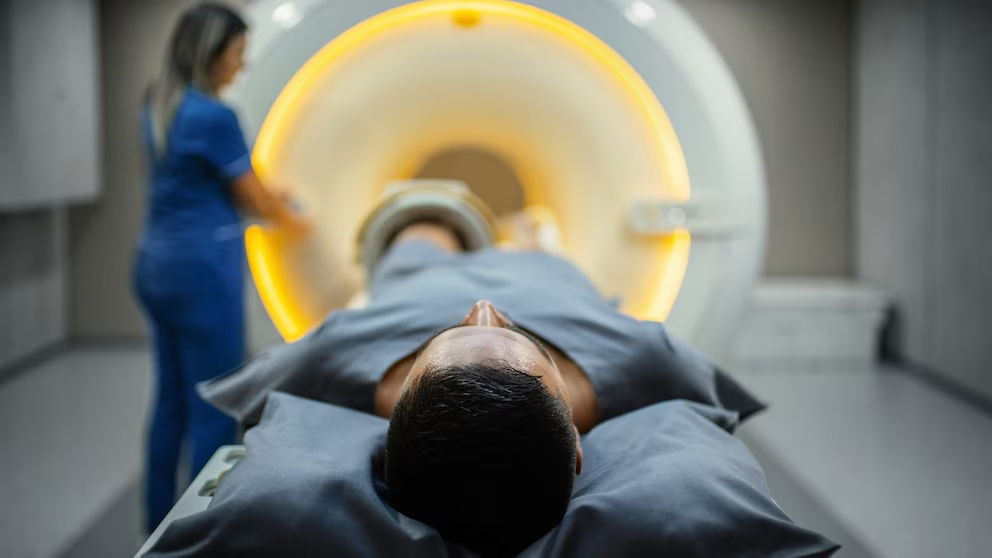
In this file photo, a person gets ready to go into an MRI scanner.STOCK IMAGE/Getty Images
The allure of detecting health issues at an early stage through a comprehensive MRI is spurring a burgeoning industry.
However, for individuals in generally good health, these scans might present a greater likelihood of potential risks than advantages, according to a recent commentary in the scientific publication JAMA.
A complete MRI of the body employs magnetic fields to generate comprehensive visuals of organs and tissues throughout, aiming to identify underlying ailments such as cancer before symptoms manifest.
Businesses and specialized medical facilities promote these scans directly to clients, often without a physician’s recommendation, and they typically aren’t paid for by insurance companies.
As indicated by the JAMA editorial, over 100,000 people have already undergone this procedure.
The cost is significant – approximately $2,500 to $4,000, as stated by the Radiological Society of North America.
“We authored the piece to convey to the public the potential detriments of conducting screening outside the established medical practice, utilizing a test not supported by solid evidence and unendorsed by any medical organization or guideline for widespread use,” Dr. Matthew Scott Davenport, the vice chair, service chief, and a professor within the radiology department at University of Michigan Health, and a co-author of the editorial, explained to ABC News.
Within the JAMA editorial, Davenport, alongside his colleague Dr. Scott Reeder, state that no leading medical organization advocates for total-body MRI scans for the broader populace, as the positive outcomes are yet to be substantiated.
The discoveries might prove to be benign or progress so gradually that they may never result in grave health conditions, as per the authors. Approximately 30% of individuals will necessitate some form of follow-up, the authors noted.
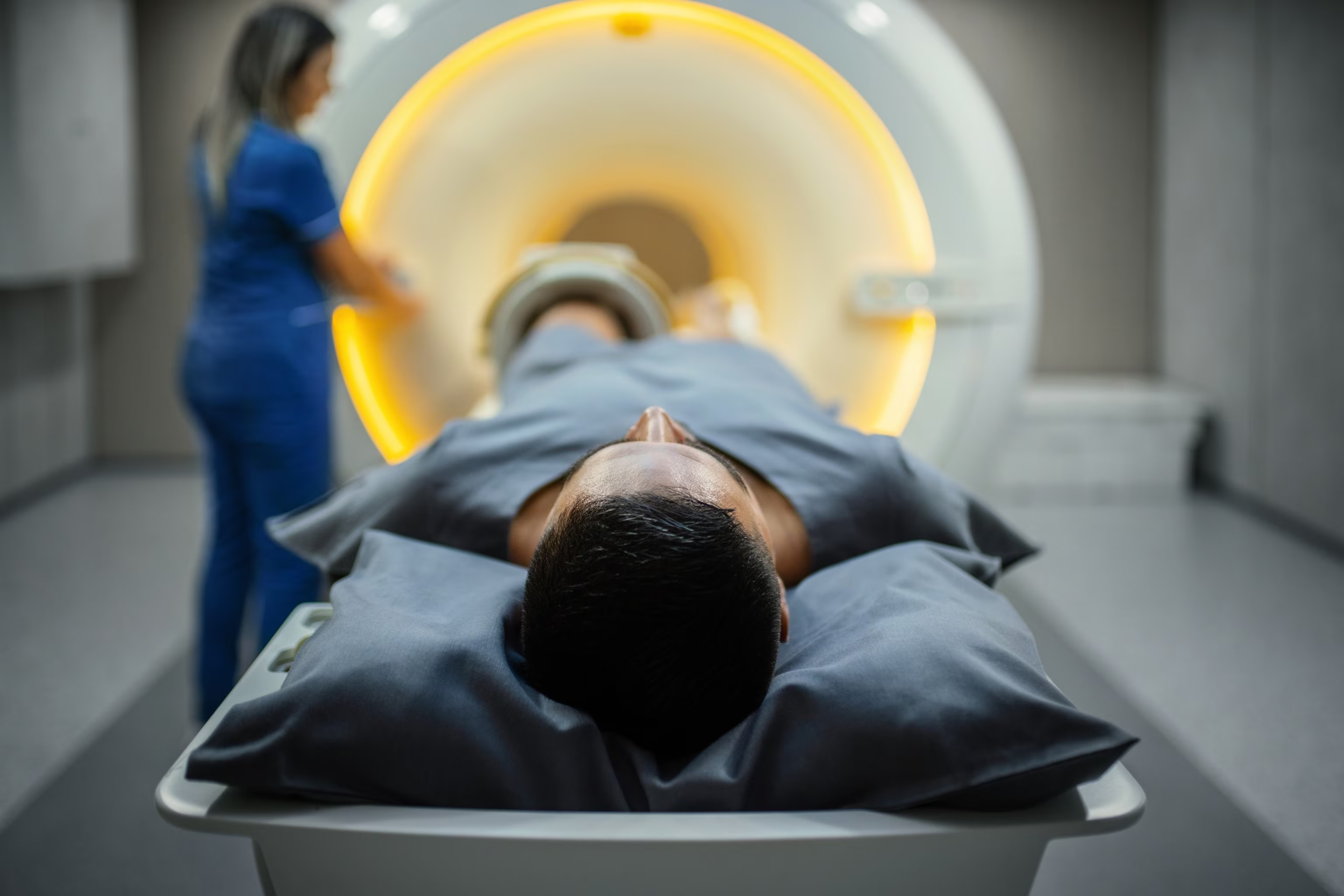
In this file photo, a person gets ready to go into an MRI scanner.STOCK IMAGE/Getty Images
Nevertheless, the detection of any anomaly via a scan frequently initiates a sequence of evaluations, expenses, and anxiety.
“The risks stem from factors such as invasive procedures, surgical interventions, or further investigation of findings with uncertain advantages,” Davenport stated.
Even in instances of cancer detection – roughly 1 to 2 in every 100 individuals – the JAMA article highlights the lack of evidence suggesting that this method of detection contributes to longer lifespans.
Davenport clarified that not all cancers pose a high level of threat. Occasionally, endeavors to diagnose and treat can be counterproductive.
“A prime example would be prostate cancer with a low-risk profile. It was once treated aggressively, but that is no longer the case,” he mentioned.
Prevuno, a firm that provides these scans, refuted the notion that they inflict more harm than good.
"The perils cited by critics are amplified, and the rewards of proactive identification are well-substantiated by Prenuvo and numerous others,” Dr. Durand, Prenuvo's chief medical officer, communicated in a statement to ABC News. "The expenditure of early detection is a mere portion of what advanced-stage cancer care necessitates, and a healthcare paradigm geared toward maintaining wellness, instead of compelling individuals to expend resources during crises, is an objective deserving advocacy."
Durand further added that empowering patients, rather than withholding information from them, constitutes the future of preemptive healthcare.
Davenport concurs on the significance of early detection. However, he maintains that its efficacy is limited to individuals with a higher likelihood of benefiting. For all others, more testing may solely amplify ambiguity.
“I believe the fundamental question is: does the evaluation foster health value, irrespective of its cost? Our assessment indicates that the health value is notably insignificant,” Davenport remarked.
Dr. Crystal Joseph, MD, MS, is an anesthesiology resident at Beth Israel Deaconess Medical Center/Harvard Medical School and a member of the ABC News Medical Unit.
Sourse: abcnews.go.com