
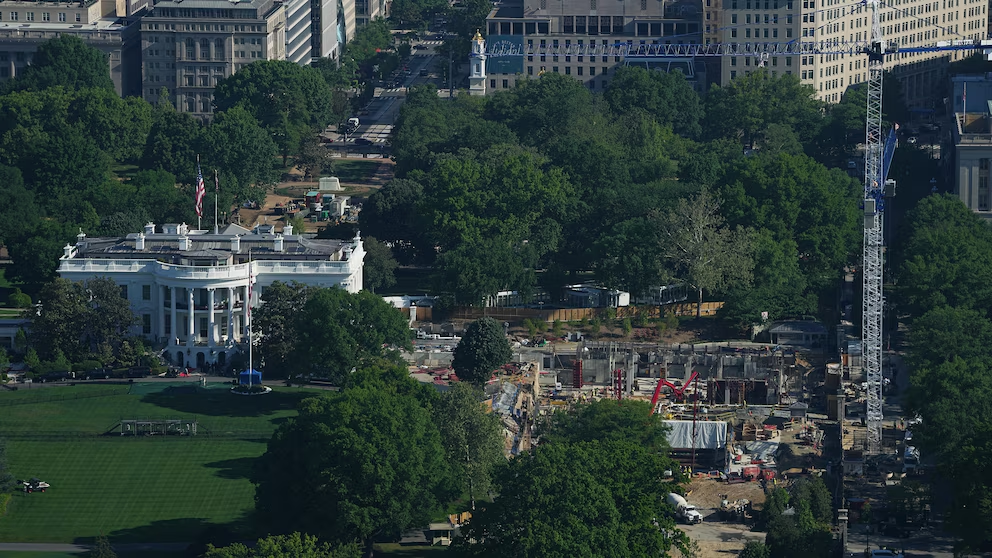
A ballroom under construction is pictured adjacent to the White House, April 27, 2026, in Washington. Matt Rourke/AP
GOP senators are seeking $1 billion in resources for security-related elements of the White House ballroom initiative as part of a more expansive, about $70 billion allotment package for immigration law enforcement, which they intend to approve with almost no backing from Democratic members.
Republicans started revealing details of their reconciliation proposal late Monday. Contained in the measure is a $1 billion assignment to the Secret Service for "the purposes of security enhancements and upgrades … pertaining to the East Wing Modernization Project, including above-ground and below-ground security features."
According to the bill’s text, the allocated resources can exclusively address security-related facets of the project.
Previously, the Trump administration stated its objective to accumulate $400 million in private gifts to finance the ballroom, asserting that it would not impose any financial burden on taxpayers.
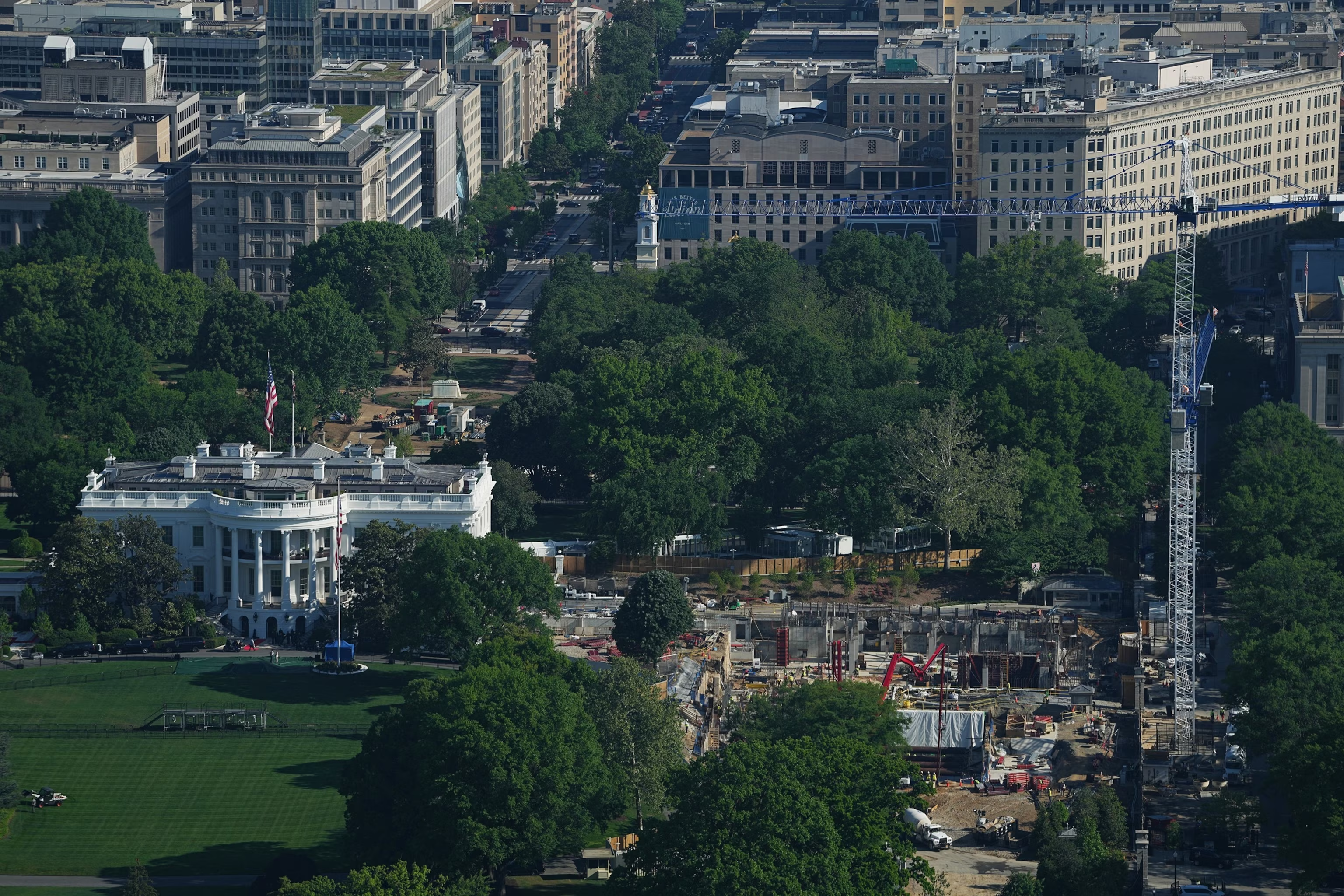
Construction of a ballroom is seen next to the White House, April 27, 2026, in Washington.Matt Rourke/AP
In October, President Donald Trump declared that the ballroom would be "100% financed by myself and some friends," alluding to benefactors.
"The government is contributing absolutely nothing," Trump stated.
Legislators from the Democratic party have presented legislation they’ve dubbed "The Stop Ballroom Bribery Act" to oversee the project and enforce restrictions on charitable contributions.
A contingent of GOP senators, spearheaded by Sen. Lindsey Graham, introduced independent legislation that would allocate $400 million in finances. These senators assert that their proposition aims to counterbalance the expense of the ballroom through the employment of customs duties. Given its independence from a reconciliation measure, its approval is highly doubtful, even if it secures a vote on the Senate floor.
GOP Sen. Rand Paul presented a distinct bill that would sanction the ballroom but not endow it financially. He made an attempt to pass it via unanimous consent the previous week, but it was unsuccessful.
The presentation of this bill arises amidst escalating appeals from Republicans for the construction of the ballroom subsequent to the incident at the White House Correspondents’ Association Dinner the preceding month. They contend that a safeguarded venue is crucial for the President and Cabinet members to assemble with sizable gatherings on the grounds of the White House.
The White House communicated on Tuesday that "Congress has accurately acknowledged the requirement for these assets."
"Largely attributed to the recent assassination attempt on President Trump at the White House Correspondents’ Dinner, the proposition would supply the United States Secret Service with the resources they require to comprehensively secure the White House complex, along with the numerous other vital assignments for the USSS," White House spokesperson Davis Ingle conveyed in a statement. "As President Trump has consistently maintained, the White House must function as a safe and secure complex that generations of future presidents and visitors to the People’s house can appreciate."

President Donald Trump posted a rendering of his proposed White House ballroom to his social media platform, on March 31, 2026.@realDonaldTrump/truthsocial.com
In a statement issued to ABC News on Tuesday, a spokesperson representing Senate Judiciary Committee Chairman Chuck Grassley indicated that the bill "does not finance ballroom construction," but "provides funds for Secret Service enhancements that will ensure all presidents, their families and their staffs are adequately protected."
The ballroom has been the subject of a legal action initiated late last year by historic preservation advocates, with a federal judge deeming it unlawful without legislative authorization.
In a filing submitted last month, the Trump administration articulated that security augmentations to the East Wing project would encompass "missile resistant steel columns, Military-grade venting, drone-proof ceilings and bullet, ballistic, and blast proof glass," all oriented toward establishing a "fortified structural buffer" to safeguard not only the ballroom, but also the principal White House residence and the offices within the West Wing.
That April 27 Justice Department filing, which at times resembled a social media communication composed in the president’s distinctive style, additionally noted that the enhancements would encompass "bomb shelters, a state of the art hospital and medical facilities, Top Secret military installations, structures, and equipment, protective partitioning, and other features."
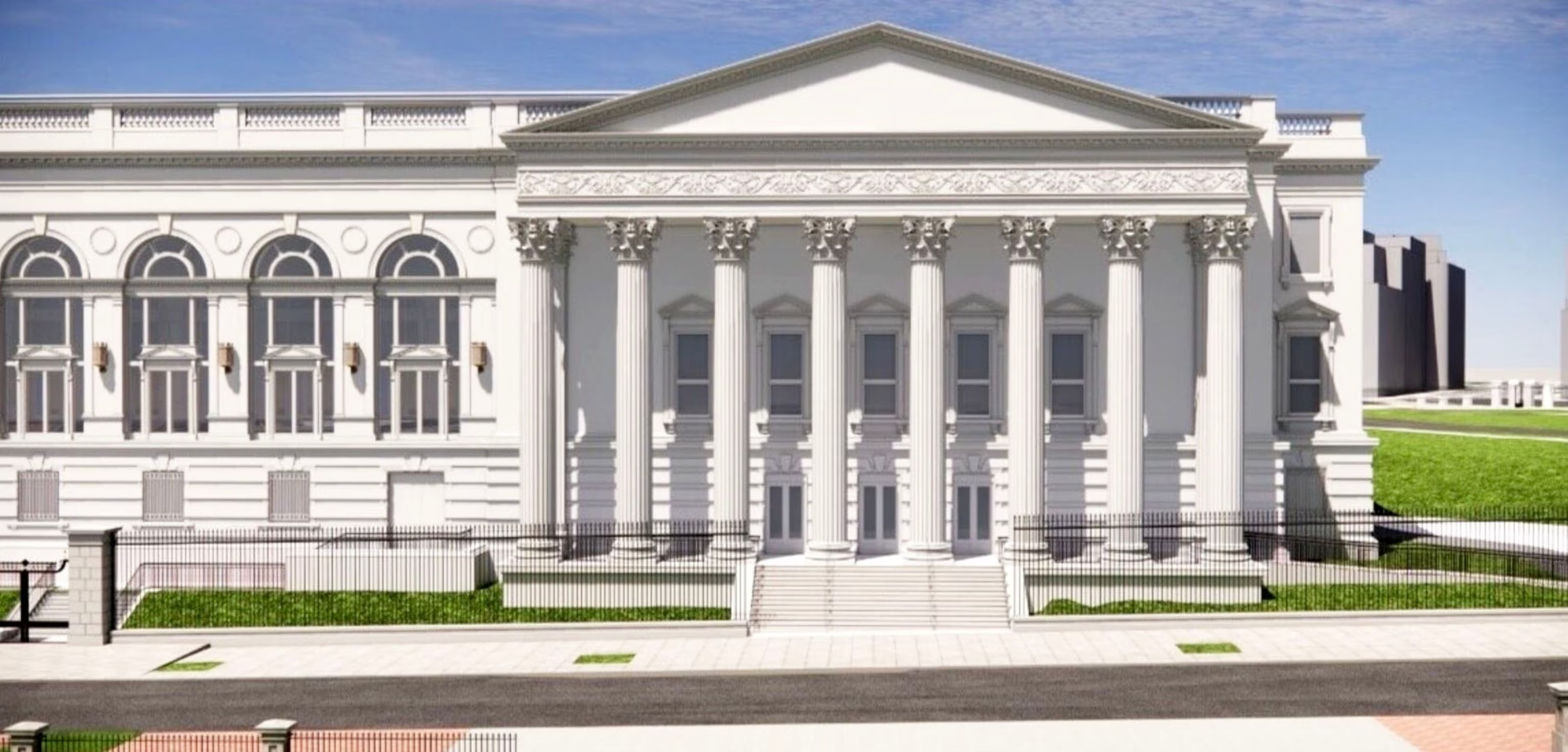
President Donald Trump posted a rendering of his proposed White House ballroom to his social media platform, on March 31, 2026.@realDonaldTrump/truthsocial.com
District Judge Richard Leon decreed in late March that constructing the ballroom without congressional approval infringed upon the law. Despite Leon creating an exception for activities essential to uphold the "safety and security of the White House," he subsequently refined his adjudication to permit "below-ground construction" on the endeavor, alongside any above-ground activity that is "strictly necessary" to secure and defend the work.
Leon’s injunction has been administratively paused by a three-judge group of the D.C. Circuit Court of Appeals, anticipating oral discourse at an assembly scheduled for the subsequent month. The court of appeals’ mandate signifies that, for the moment, endeavors on both the ballroom and the security-associated attributes of the venture can proceed.
For several weeks, Republicans have been endeavoring to present a financial package in response to political obstruction that resulted in Immigration and Customs Enforcement and the U.S. Border Patrol being deprived of their standard annual appropriations. While these entities acquired funding via the previously enacted One Big Beautiful Bill, Republicans contend that more funds are required, and they seek to procure $26 billion for U.S. Customs and Border Protection and $38 billion for ICE in this recently disclosed bill.
Republicans are striving to enact the financing via a budgeting instrument known as reconciliation, which, upon success, would enable Republicans to forward these finances to Trump’s desk without the endorsement of a single Democrat and free from the prospect of a filibuster. However, this procedure is subject to regulations, and the Senate parliamentarian’s approval of the ballroom security funding or other components of the bill hinges on their assessment of whether items in a reconciliation package are "substantive to the budget."
Senate Minority Leader Chuck Schumer communicated on Tuesday that Republicans are "on a different planet" compared to American families with regard to their spending priorities.
"Republicans surveyed families overwhelmed with expenses and concluded that what they genuinely required was more raids and a Trump ballroom," Schumer penned in a post on X Tuesday.
Sourse: abcnews.go.com