
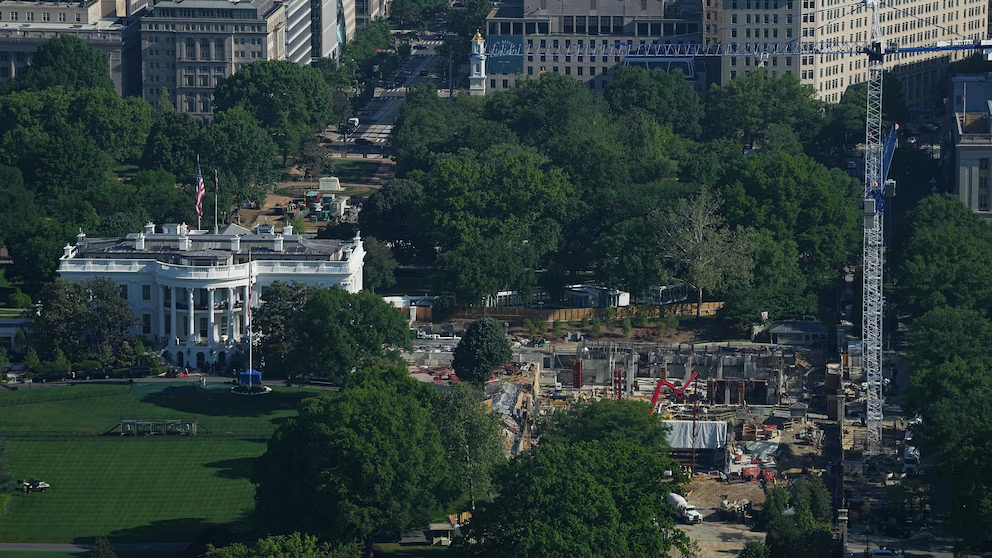
A ballroom being built can be seen near the White House, April 27, 2026, in Washington. Matt Rourke/AP
GOP senators are seeking $1 billion in funds for security-related components of the White House ballroom endeavor, as part of a wider, approximately $70 billion funding measure for immigration enforcement. They intend to pass it with virtually no backing from Democrats.
Republicans initiated the presentation of details of their reconciliation package late Monday. The bill encompasses a $1 billion appropriation for the Secret Service, designated for "security modifications and enhancements… related to the East Wing Modernization Project, covering both above-ground and below-ground protective elements."
According to the legislative text, the allocation is exclusively for security-related facets of the undertaking.
The Trump administration had previously stated intentions to accumulate $400 million in private contributions to finance the ballroom, assuring taxpayers it would bear no cost.
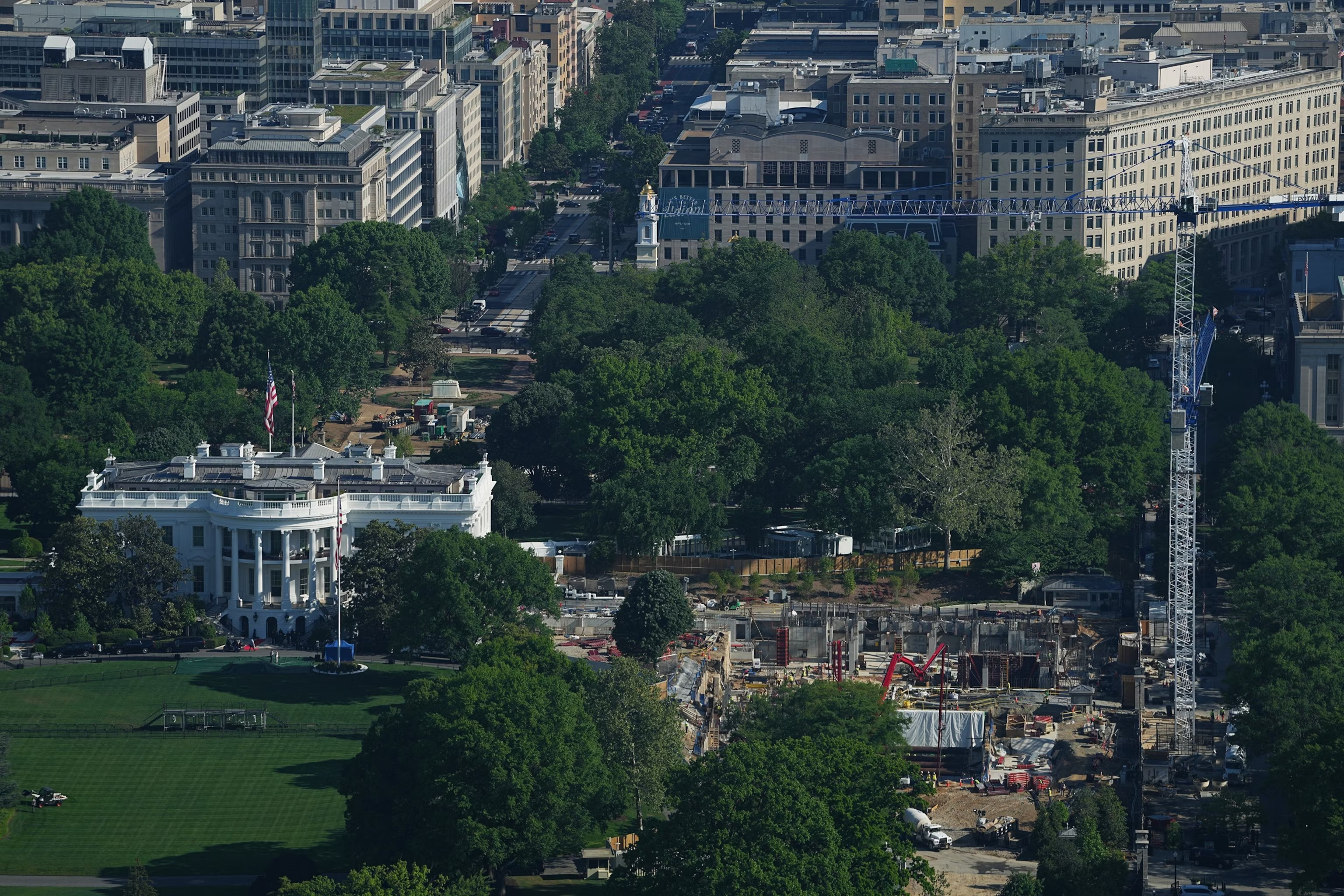
A ballroom being built can be seen near the White House, April 27, 2026, in Washington.Matt Rourke/AP
President Donald Trump remarked in October that the ballroom would be "100% financed by myself and some associates," alluding to benefactors.
"The government is contributing precisely nothing," Trump stated.
Democratic legislators have put forth legislation entitled "The Stop Ballroom Bribery Act" to govern the project and impose limitations on monetary gifts.
A cohort of GOP senators, helmed by Sen. Lindsey Graham, introduced distinct legislation to provide $400 million in funding. These senators assert that their proposition intends to offset the ballroom’s expense by leveraging customs duties. Absent its inclusion in a reconciliation bill, it is highly likely to fail passage, even if it reaches a vote on the Senate floor.
Republican Sen. Rand Paul presented a separate bill authorizing the ballroom but lacking financial provision. His endeavor to pass it via unanimous consent last week proved unsuccessful.
The genesis of this legislative text lies in escalating calls from Republicans for constructing the ballroom after the shooting at the White House Correspondents’ Association Dinner last month. They argue for a secure facility enabling the President and Cabinet members to convene with sizable groups on the White House premises.
The White House communicated on Tuesday that "Congress has appropriately acknowledged the necessity of these funds."
"Prompted in part by the recent assassination attempt on President Trump during the White House Correspondents’ Dinner, this proposal furnishes the United States Secret Service with requisite resources to thoroughly reinforce the White House complex, alongside various other essential USSS missions," White House representative Davis Ingle elucidated in a statement. "As President Trump has emphasized repeatedly, the White House should remain a secure and safe establishment that generations of forthcoming presidents and guests to the People’s house can relish."

President Donald Trump shared a design rendering of his envisioned White House ballroom on his social media platform, March 31, 2026.@realDonaldTrump/truthsocial.com
In remarks to ABC News on Tuesday, a spokesperson for Senate Judiciary Committee Chairman Chuck Grassley stated that the bill "does not allocate funds for ballroom construction," but "provides funding for Secret Service upgrades guaranteeing adequate protection for all presidents, their families, and their staff members."
The ballroom has been challenged by a lawsuit initiated late last year by historical preservationists, with a federal judge decreeing it unlawful without legislative consent.
In a case filing last month, the Trump administration specified that the security improvements to the East Wing endeavor would encompass "missile-resistant steel pillars, military-grade ventilation, drone-proof ceilings, and bullet, ballistic, and blast-resistant glass," all geared toward establishing a "fortified structural safeguard" not only for the ballroom but also the main White House residence and the offices in the West Wing.
That April 27 Justice Department submission, partially reminiscent of a social media communication authored in the president’s unique manner, also mentioned the enhancements would feature "bomb shelters, a cutting-edge hospital and medical installations, top-secret military outposts, constructs, and gear, protective compartmentalization, and other attributes."
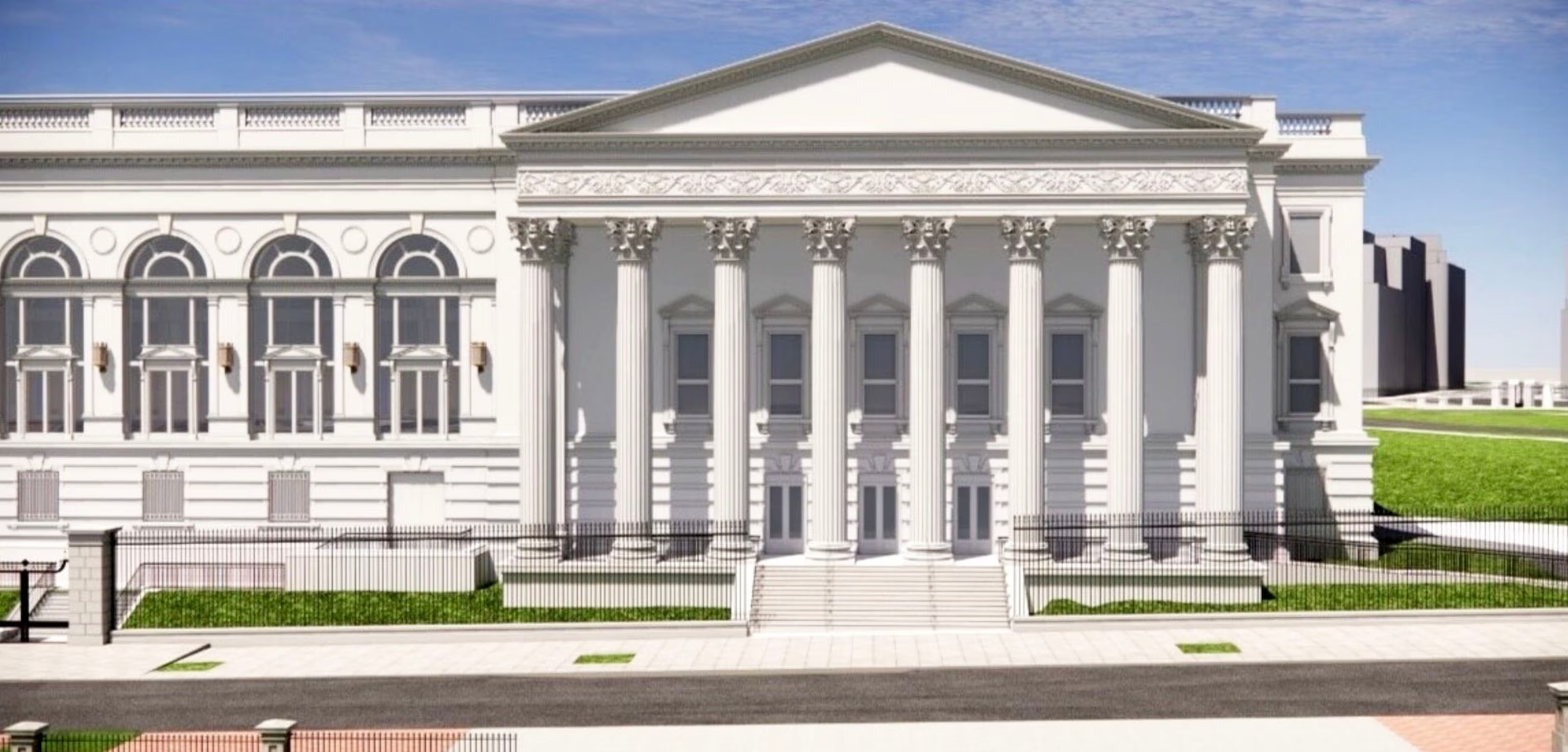
President Donald Trump shared a design rendering of his envisioned White House ballroom on his social media platform, March 31, 2026.@realDonaldTrump/truthsocial.com
District Judge Richard Leon, in late March, concluded that constructing the ballroom absent congressional authorization violated the law. Although Leon made an exception for tasks necessary to ensure the "safety and security of the White House," he later elaborated his decision to permit "below-ground construction" on the project, along with any above-ground work "strictly essential" for securing and safeguarding that undertaking.
Leon’s directive has been administratively suspended by a three-judge panel of the D.C. Circuit Court of Appeals, pending oral arguments at a hearing scheduled for the following month. The appeals court’s disposition implies that, for the time being, work may proceed on both the ballroom and the security elements associated with the endeavor.
For several weeks, Republicans have been engaged in formulating a funding package to address a political impasse that deprived Immigration and Customs Enforcement and the U.S. Border Patrol of their routine annual appropriations. Despite these agencies receiving funds via the previously sanctioned One Big Beautiful Bill, Republicans assert the need for amplified funding and are endeavoring to secure $26 billion for U.S. Customs and Border Protection, alongside $38 billion for ICE, within this freshly unveiled bill.
Republicans are striving to enact the funding through a budgetary mechanism termed reconciliation. If achieved, this would enable Republicans to forward this financial allocation to Trump’s desk devoid of Democratic support and any potential filibuster. However, this procedure entails governing regulations, and it is presently unclear whether the Senate parliamentarian, who must evaluate whether items within a reconciliation package are "substantive to the budget," will endorse the ballroom’s security funding or other components of the bill.
Senate Minority Leader Chuck Schumer remarked on Tuesday that Republicans are "on a different planet" than average American families regarding their spending priorities.
"Republicans observed families burdened by bills and determined that what they genuinely needed were intensified raids and a Trump ballroom," Schumer posted on X Tuesday.
Sourse: abcnews.go.com