
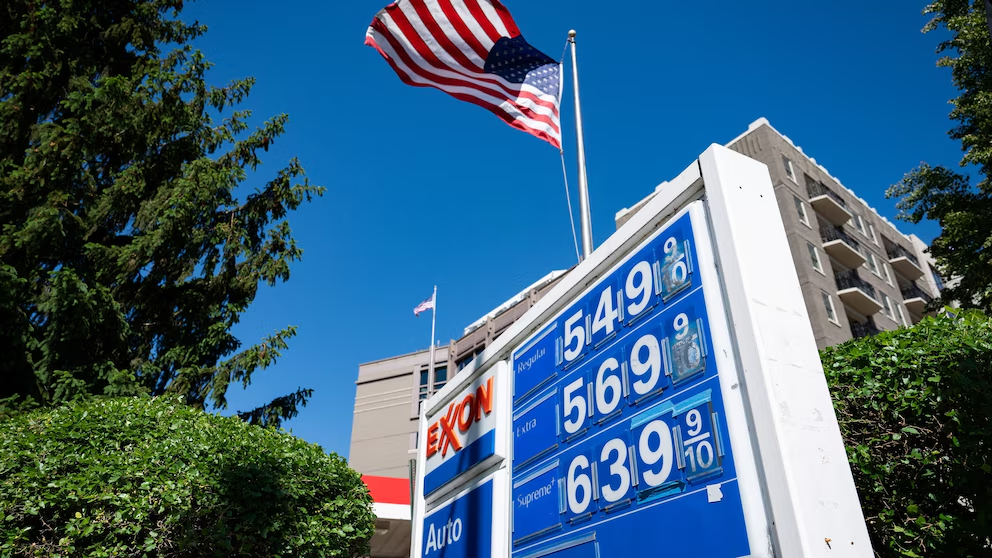
A gas station placard shows costs in Washington, D.C., on May 1, 2026.Annabelle Gordon/Reuters
Following a week where U.S. fuel costs increased once more, Transportation Secretary Sean Duffy voiced optimism Sunday regarding the speed at which costs could decrease after the war concludes, asserting that "instantaneous easing will occur the moment the Strait [of Hormuz] becomes accessible."
Again, we are presently focused on safeguarding movement through the Strait of Hormuz and additionally addressing the — the atomic materials possessed by Iran, a process that is prolonged and projected to unfold throughout the upcoming weeks," Duffy informed ABC News' "This Week" co-host Martha Raddatz. "You are poised to witness immediate relief as soon as the strait reopens and supply resumes."
The de facto shutdown of the Strait of Hormuz has triggered a surge in fuel prices — escalating by almost 40 cents compared to the previous week’s average of $4.05, according to GasBuddy — compounding the already elevated costs. The typical price per gallon has jumped by approximately $1.50 since the commencement of hostilities on Feb. 28.
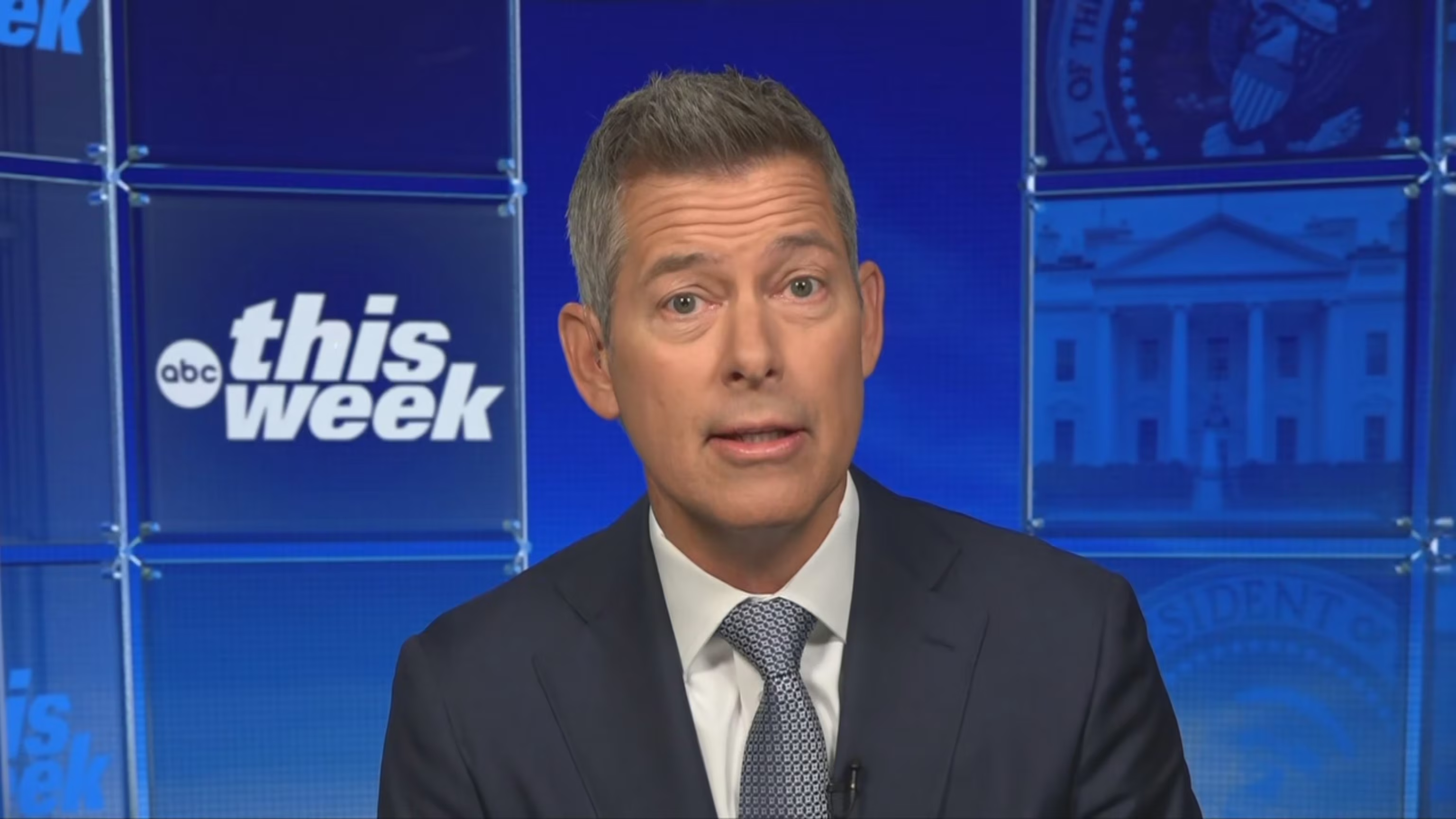
Transportation Secretary Sean Duffy is seen on ABC News’ “This Week” on May 3, 2026.ABC News
As shown by an ABC News/Washington Post/Ipsos survey issued Friday, Americans hold increasingly downbeat views regarding their individual fiscal well-being and the elevated gasoline prices: 44% of those surveyed reported curtailing their driving due to inflated fuel prices, and approximately a third indicated having altered their travel or holiday arrangements.
Upon being presented with the survey’s data, Duffy stated that as a result of President Donald Trump's energy strategies, the U.S. does not face any threat of gasoline shortages similar to what other nations may be experiencing, despite confronting steep prices.
"That reasoning highlights why the president has concentrated so intently on energy costs and American energy superiority," Duffy commented. "The president has prioritized American energy independence."
Duffy also made reference to Trump's landmark tax and spending legislation, which resulted in more substantial tax rebates for certain Americans during the current tax period. However, according to an ABC News/Washington Post/Ipsos poll released Sunday, Americans' sentiment toward Trump's handling of taxation — 38% approve, 61% disapprove — mirrored his overall approval rating almost exactly — 37% approve, 62% disapprove.
Nevertheless, Duffy implied that elevated fuel costs represent a worthwhile sacrifice to avert Iran from acquiring a nuclear arsenal — a central aim behind the president’s decision to initially attack Iran.
"Energy costs have increased. You are correct. And once again, one must look to the president and inquire, what actions does a leader undertake? What measures does a president employ upon identifying a possible nuclear-armed Iran? He will not accept it," Duffy stated.
"Again, we shall return to diminished energy expenses," Duffy appended. "Once the strait becomes accessible, those costs decline, and Americans undertake journeys, and I believe our economy is poised for a level of prosperity and prospects not previously experienced in terms of American affluence and opportunities."
The escalation in gasoline costs affects not only consumers at the filling station. Air carriers have been compelled to augment fares and implement supplementary surcharges due to intensifying pressures stemming from the expenditure on jet fuel.
Low-cost airline Spirit Airlines terminated operations entirely early Saturday morning. The airline had sought bankruptcy protection on several occasions and had encountered financial hardships for many years, though its president cited the swelling jet fuel expenses within his formal announcement of the liquidation.
"The abrupt and sustained escalation in fuel prices over recent weeks has ultimately furnished us with no recourse other than to pursue an orderly dissolution of the Company," Spirit President and CEO Dave Davis stated.
Duffy attributed Spirit's failures to the Joe Biden administration on Sunday, due to his Justice Department initiating legal action to prevent a fusion between Spirit and JetBlue.
"Spirit endeavored to integrate with JetBlue, but the Joe Biden-Pete Buttigieg administration and DOJ scuttled that accord. Immediately thereafter, they applied for bankruptcy," Duffy indicated. "They submitted a further bankruptcy application the prior year. They were hemorrhaging capital. Hence, this had been developing for some time. They were slated for liquidation."
Following the litigation launched by Biden's Justice Department, a federal adjudicator concurred with the assertion that a merger between Spirit and JetBlue would elevate costs for American consumers, contravene antitrust regulations, and consequently, obstructed the consolidation.
Duffy declared that he felt "proud" of other U.S. airlines for intensifying efforts to assist Spirit patrons requiring rebooked journeys, along with Spirit personnel who, as he mentioned, now "enjoy specialized channels for employment opportunities within other American airlines."
Sourse: abcnews.go.com