
With polls indicating waning backing for Israel among Democratic voters — particularly among younger cohorts — the American Israel Public Affairs Committee's aid to candidates is facing increased examination and is becoming a point of contention in competitive Democratic primary races spanning from Michigan to New Jersey.
A survey published earlier this month by the Pew Research Center indicates that American perspectives on Israel are becoming more critical, notably among Democrats.
The study revealed that 60% of Americans hold a somewhat or very unfavorable view of Israel. This figure has risen by 7% since the previous year and by 20 percentage points since 2022. Within the Democratic party and Democratic-leaning independents, 80% expressed a somewhat or very unfavorable stance toward Israel.

Streamer Hasan Piker and Abdul El-Sayed, a progressive candidate in the Democratic primary for U.S. Senate in Michigan, take a selfie with young fans following a campaign event, April 7, 2026, at the University of Michigan in Ann Arbor, Mich.Julia Demaree Nikhinson/AP
One demonstration of these shifting sentiments is the amplified analysis of financial contributions from pro-Israel organizations, especially AIPAC.
Disputes over AIPAC’s financial backing have been intensified, in part, by the prominence of the group Citizens Against AIPAC Corruption, more widely known by their social media moniker Track AIPAC, which describes itself as a “grassroots movement to uncover and challenge the impact of AIPAC and the Israel Lobby by methodically documenting their monetary assistance to our federal officials” and accuses Israel of perpetrating genocide in Gaza — an allegation the Israeli government has persistently refuted.
The group creates visual depictions of donations to politicians for its community of over 400,000 followers on X. These figures encompass not only AIPAC contributions but also donations from individuals who have previously donated to entities it identifies as components of the “pro-Israel lobby.” This strategy has stirred controversy, with critics asserting that it is unjust to equate individual donations with overall support for the pro-Israel lobby.
AIPAC has voiced disapproval of Track AIPAC's approach. National spokesperson Deryn Sousa characterized it in a statement to ABC as “an un-American and undemocratic digital campaign that uses selective criteria to condemn and silence Democrats who support Israel.”
Estimates of donations from the pro-Israel lobby were referenced by a participant in a town hall meeting for Michigan Democratic Sen. Elissa Slotkin, who responded to the questioner, “If you're equating the "Israel lobby" with Jewish people, I have a problem with that.”
In Michigan, the Uncommitted National Movement, which promoted resistance to then-President Joe Biden's backing of Israel's military actions against Hamas in Gaza, garnered over 100,000 votes in the 2024 Democratic presidential primary in the critical state.
Disagreements regarding support for Israel have persisted in dominating the state's intensely contested Democratic Senate primary. Michigan is home to one of the largest Arab-American communities in the nation, alongside a substantial Jewish population.
Senate candidate Dr. Abdul El-Sayed, previously the health director for Wayne County, Michigan, who unsuccessfully campaigned for governor in 2018, has been the most outspoken on the matter, repeatedly describing the war in Gaza as a genocide and denouncing his rivals for taking funds from AIPAC and other pro-Israel organizations.
Appearing alongside controversial podcaster and political analyst Hasan Piker at the University of Michigan, El-Sayed directly targeted AIPAC, stating, “We will no longer stand by while AIPAC dictates that the objective of our foreign policy is to align with a foreign government.”
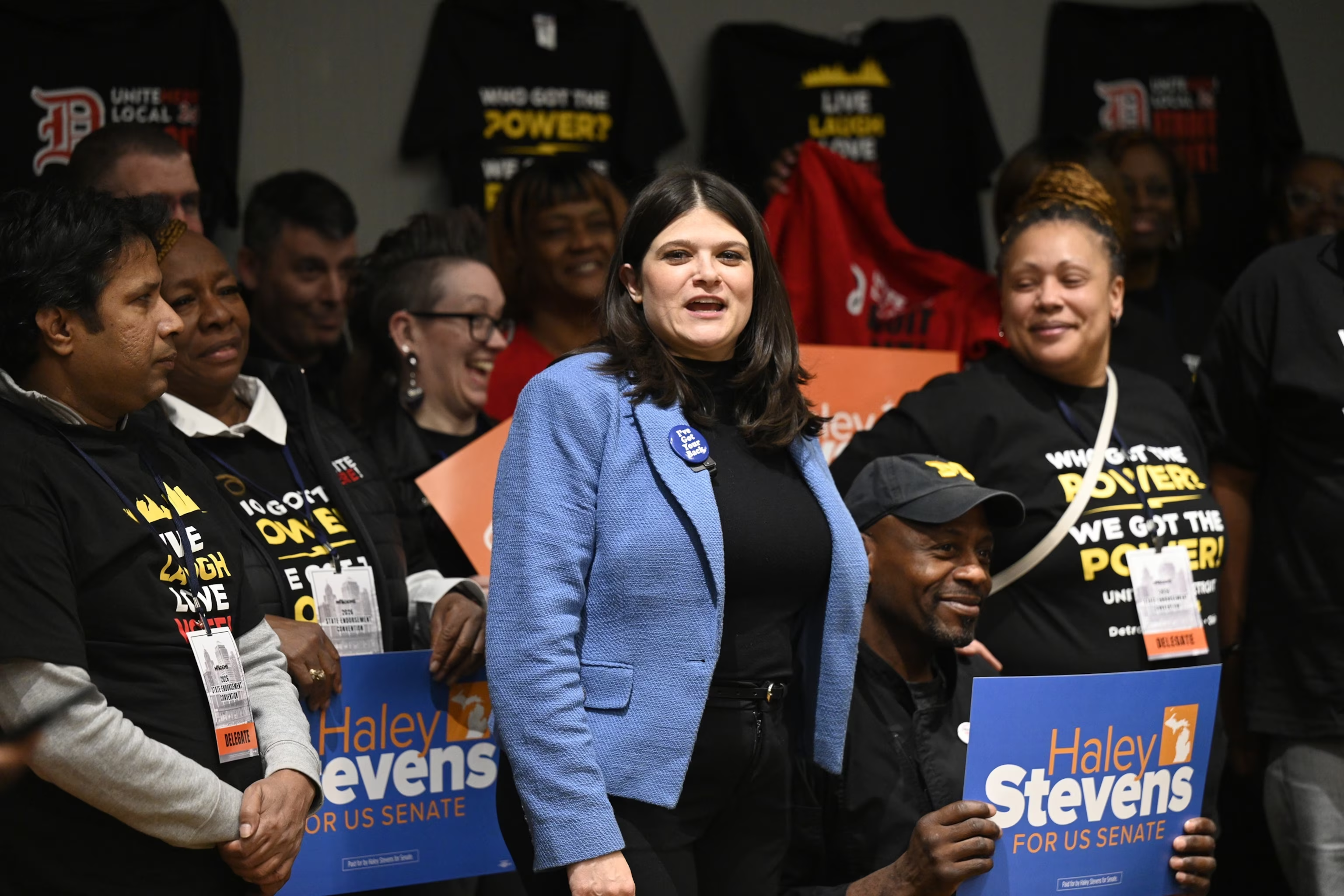
Rep. Haley Stevens, a candidate for the U.S. Senate, stands with supporters before a press conference at the Michigan Democratic Party State Endorsement Convention, April 19, 2026, in Detroit.Jose Juarez/AP
Much of his critique has been aimed at his opponent, Rep. Haley Stevens. Stevens was supported by AIPAC in her 2022 primary challenge against then-Rep. Andy Levin, a progressive Jewish representative who had opposed certain Israeli policies. Stevens recorded a video endorsing AIPAC last month. The Democratic Majority for Israel — a pro-Israel organization — has endorsed her Senate campaign.
The third contender in the race, State Sen. Mallory McMorrow, has criticized Piker for some of his remarks about Jewish people and the conflict in Gaza, labeling it a genocide and promising not to accept funds from AIPAC.
Track AIPAC endorsed El-Sayed, describing him as “the sole candidate for US Senate in Michigan with the courage to condemn Israel's atrocities,” and asserting that “his voice cannot be bought.”
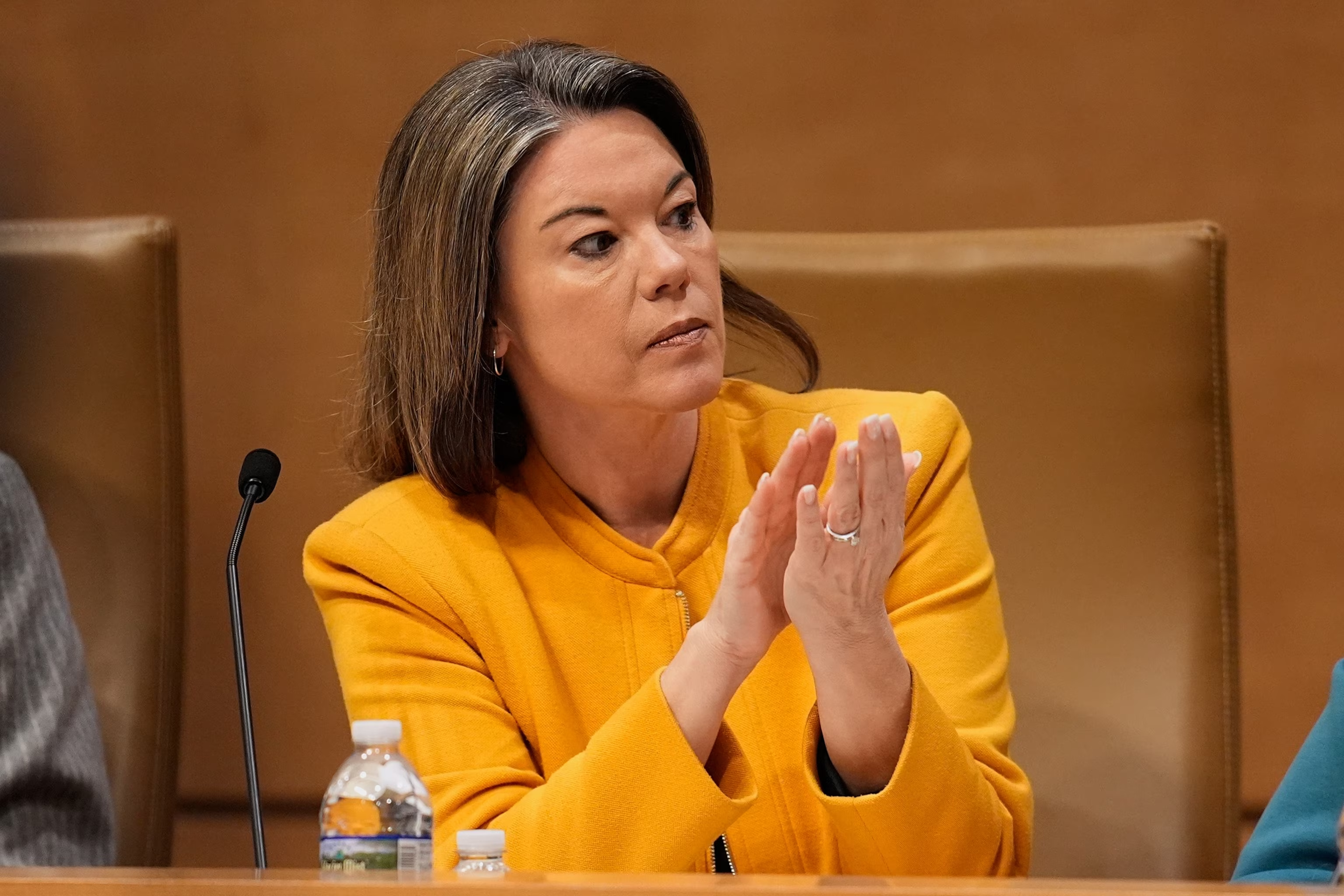
Rep. Angie Craig claps during a field hearing on immigration, Jan. 16, 2026, in St. Paul, Minn.Abbie Parr/AP
Neighboring Minnesota is also witnessing a progressive versus centrist Senate contest between Rep. Angie Craig and Lt. Gov. Peggy Flanagan. While Flanagan has committed not to accept any funding from AIPAC, Craig has previously received funds in her past congressional campaigns from AIPAC and has secured endorsement from the Democratic Majority for Israel.
Craig has not been a recipient of AIPAC funding in this race. When questioned about whether it planned to issue an endorsement in that contest, Track AIPAC's Co-Executive Director Cory Archibald, who has served as a consultant for progressive Democrats such as former Reps. Cori Bush and Jamaal Bowman, stated that it would observe the race “and we are aware that AIPAC has a vested interest in the outcome in Minnesota.”

Minn. Lt Gov Peggy Flanagan greets people at the “No Kings” protest, March 28, 2026, in St. Paul, Minn.Tom Baker/AP
The documented history of AIPAC's expenditure in some of the early primary elections of the year has yielded varied results. In New Jersey's 11th Congressional District, AIPAC allocated $2 million on advertisements targeting moderate Democratic incumbent Tom Malinowski, who had voiced support for certain provisions on aid to Israel. That primary was won by progressive Analilia Mejia, who has characterized Israel's actions in Gaza as a genocide. Track AIPAC ran an advertisement supporting her in that race, which marked its inaugural ad purchase.
The matter of AIPAC backing has surfaced at the national level. The Democratic National Committee contemplated a proposal at its spring gathering to condemn the “increasing influence” of financial contributions in primary elections, specifically mentioning AIPAC. This resolution was defeated. AIPAC celebrated the outcome, declaring that “the DNC has affirmed that all Democrats, including the millions who are AIPAC members, possess the right to fully engage in the democratic process.”
Track AIPAC asserts that, notwithstanding this setback, it intends to remain “an influential voice for change in this cycle and in many more to come.”
Editor’s note: An earlier version of this story incorrectly reported that Rep. Haley Stevens is Jewish.
Sourse: abcnews.go.com