
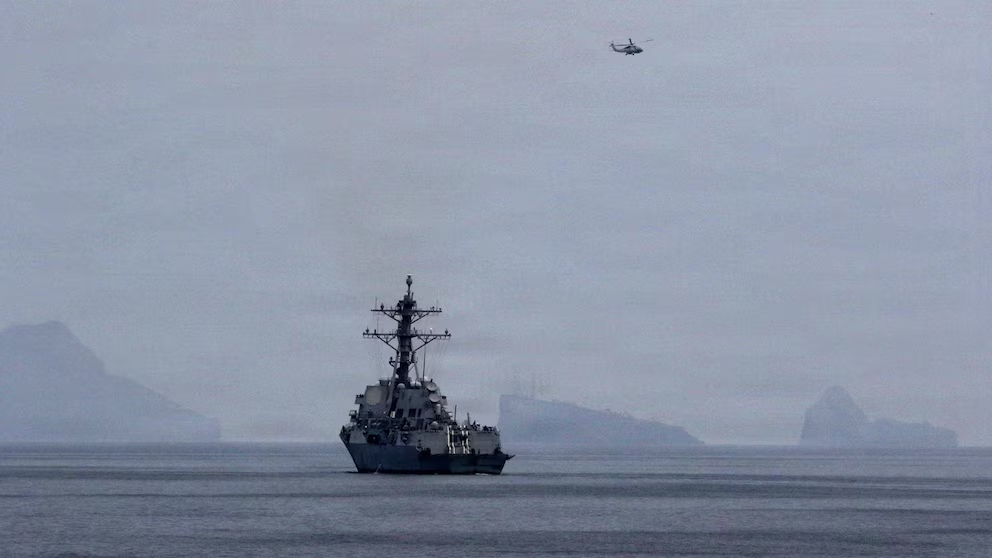
U.S. Central Command (CENTCOM) forces commenced preparations for removing mines in the Strait of Hormuz, April 11, while two U.S. Navy guided-missile destroyers were engaged in operations.Sgt. 1st Class Michael Hunnisett/U.S. Central Command Public Affairs
The U.S. Navy's naval cordon of Iranian harbors in the Strait of Hormuz represents a significant increase in hostilities, pivoting the American armed forces toward explicit maritime enforcement in a crucial international shipping route.
Implementation of President Donald Trump's directive would rely considerably on data and current situational understanding, military specialists informed ABC News.
"It's on the safer end of the risk assessment," stated Clayton Seigle of the Center for Strategic and International Studies, comparing it with choices such as seizing Iran's Kharg Island oil depot.
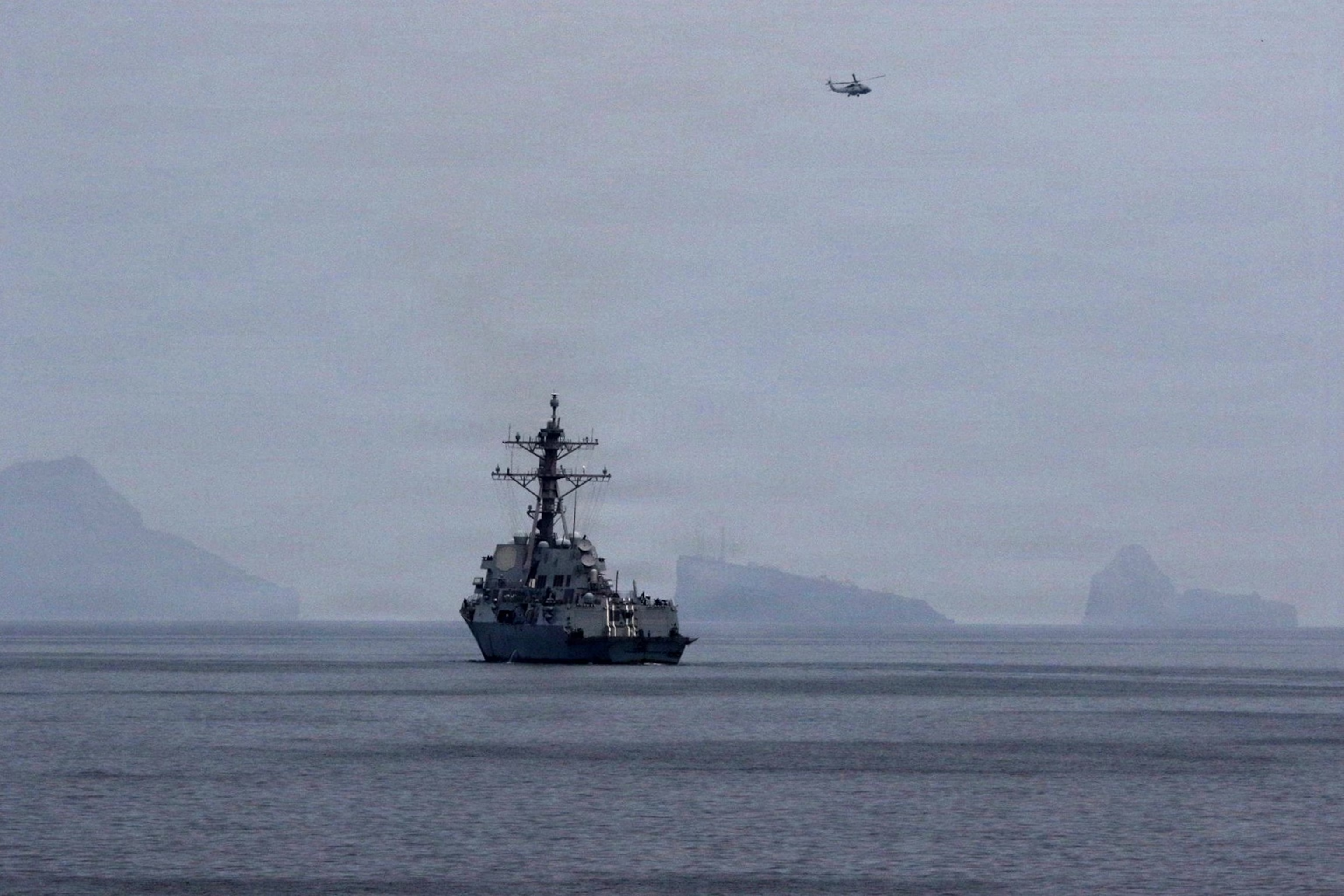
U.S. Central Command (CENTCOM) forces commenced preparations for removing mines in the Strait of Hormuz, April 11, while two U.S. Navy guided-missile destroyers were engaged in operations.Sgt. 1st Class Michael Hunnisett/U.S. Central Command Public Affairs
Nonetheless, specialists warn that the undertaking involves substantial hazard. They point out that miscommunication could rapidly worsen, especially if Iranian forces perceive actions as menacing, amplifying the chance of swift escalation and military reaction.
According to analysts, much of the U.S. mission rests on how successfully it can pinpoint and monitor vessels associated with Iran.
Ocean tracking isn’t infallible, as ships can mimic or tamper with tracking systems to conceal their origin, destination, and goods.
"A ship will indicate it's loading in Saudi Arabia, but it's actually loading in Iran," Seigle commented.
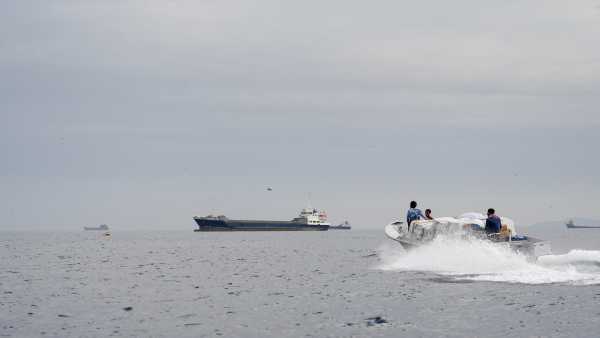
Vessels and a boat at the Strait of Hormuz, off the coast of Oman’s Musandam province, April 12, 2026.Reuters
Movements and blockade makeup
ABC News is monitoring 16 U.S. warships within the area, including 11 destroyers primarily located in the Arabian Sea, although none are within the Persian Gulf.
U.S. forces can execute search and seizure operations against vessels suspected of breaching the blockade; however, applying such power in one of the world's most congested shipping routes might prove complex.
A U.S. official reveals to ABC News that the U.S. Navy will employ a wide array of resources and apparatus to enforce a blockade.
That might encompass surface warships, surveillance drones, intelligence, and observation aircraft.
The U.S. presence in the region also comprises the 31st Marine Expeditionary Unit, which presents vessel-seizure and boarding capabilities.
Boarding operations would probably lean on smaller, more agile U.S. assets, including rigid-hulled inflatable boats and helicopters, to swiftly stop and examine vessels.
"This isn’t a law enforcement task, it's an act of war," commented Mark Nevitt, a former U.S. Navy judge advocate general officer and an associate professor at Emory University School of Law.
He added that a blockade is planned to stop vessels or aircraft from entering or departing harbors, a change in stance that entails different legal and operational conditions than regular maritime policing.
Nevitt indicated that ships that don’t adhere to boarding requests could face warning shots or so-called disabling fire targeting crucial systems, including engines or navigation gear, to halt motion.
Experts caution that President Trump's intention to halt vessels connected with Iran, even within international waters, could complicate the blockade’s ability to achieve its aims.
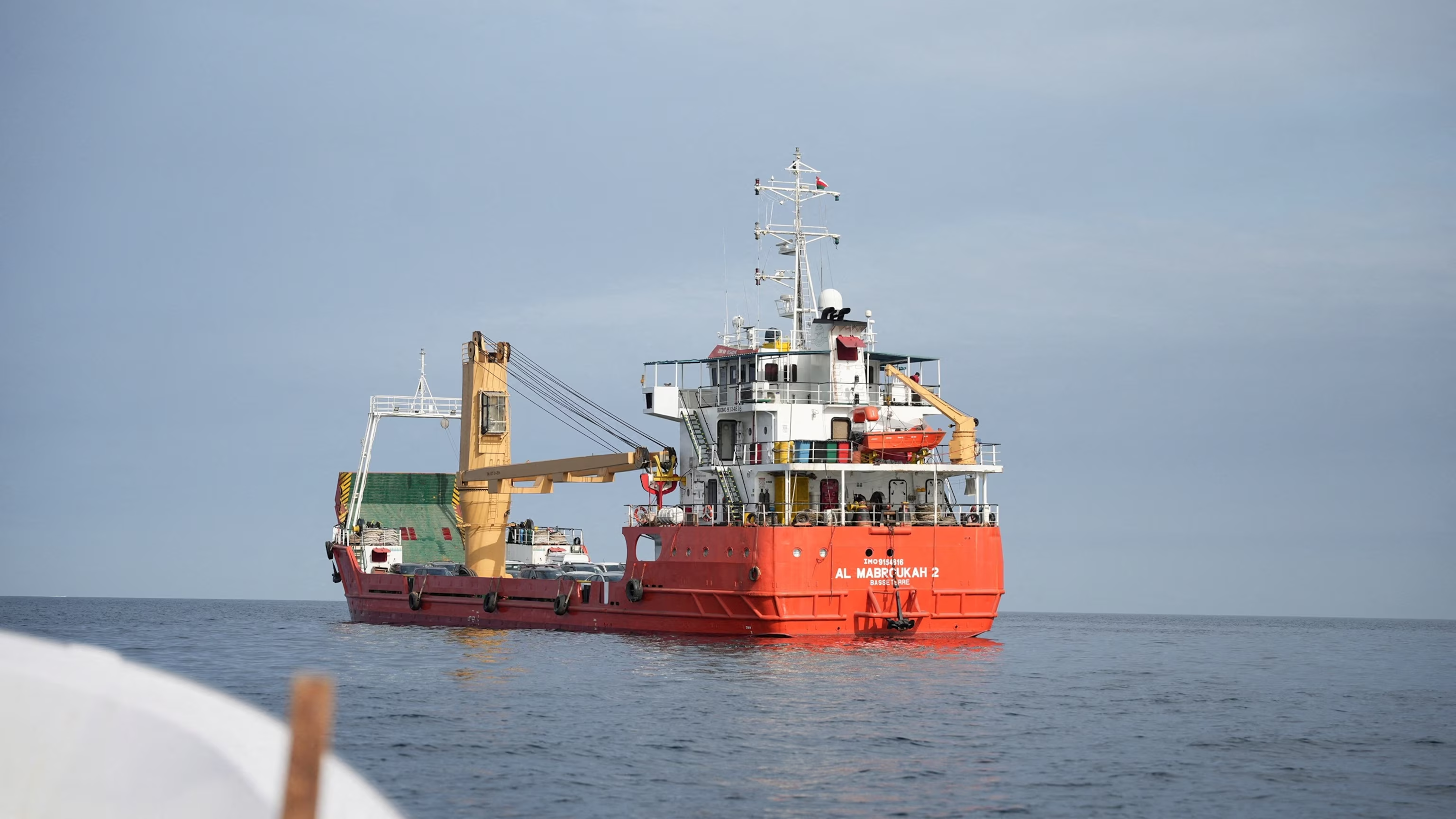
A vessel at the Strait of Hormuz, off the coast of Oman’s Musandam province, April 12, 2026.Stringer/Reuters
"That's a wider scope. Therefore, it's somewhat harder to perform. It may take somewhat longer too, but we know the regime is somewhat reliant on funds gained from the movement of oil, and they might struggle to attempt their toll booth trick in the face of firepower," stated Steven Wills, an analyst at the Center for Maritime Strategy and 20-year Navy veteran.
Wills suggested that targeting ships directly loading from or bound for Iranian ports would be easier than a wider endeavor aimed at vessels that might have paid transit charges.
"I think they're far more interested in actual ships carrying oil cargo out of Iran or attempting to enter to refuel in the first place," Wills stated. "Adding a greater number of ships, perhaps those that pay the toll, will only further complicate the blockade mission. But perhaps more nations will feel encouraged now to disregard the toll and simply proceed."
State of the Strait
Iran persists in asserting authority over the Strait of Hormuz, employing inexpensive and long-range Shahed drones to attack or threaten vessels attempting to cross the strait without coordination with the Iranian military.
The International Maritime Organization (IMO) reports 20,000 civilian sailors stranded on vessels in the Persian Gulf, "experiencing dwindling supplies, exhaustion, and extreme psychological pressure."
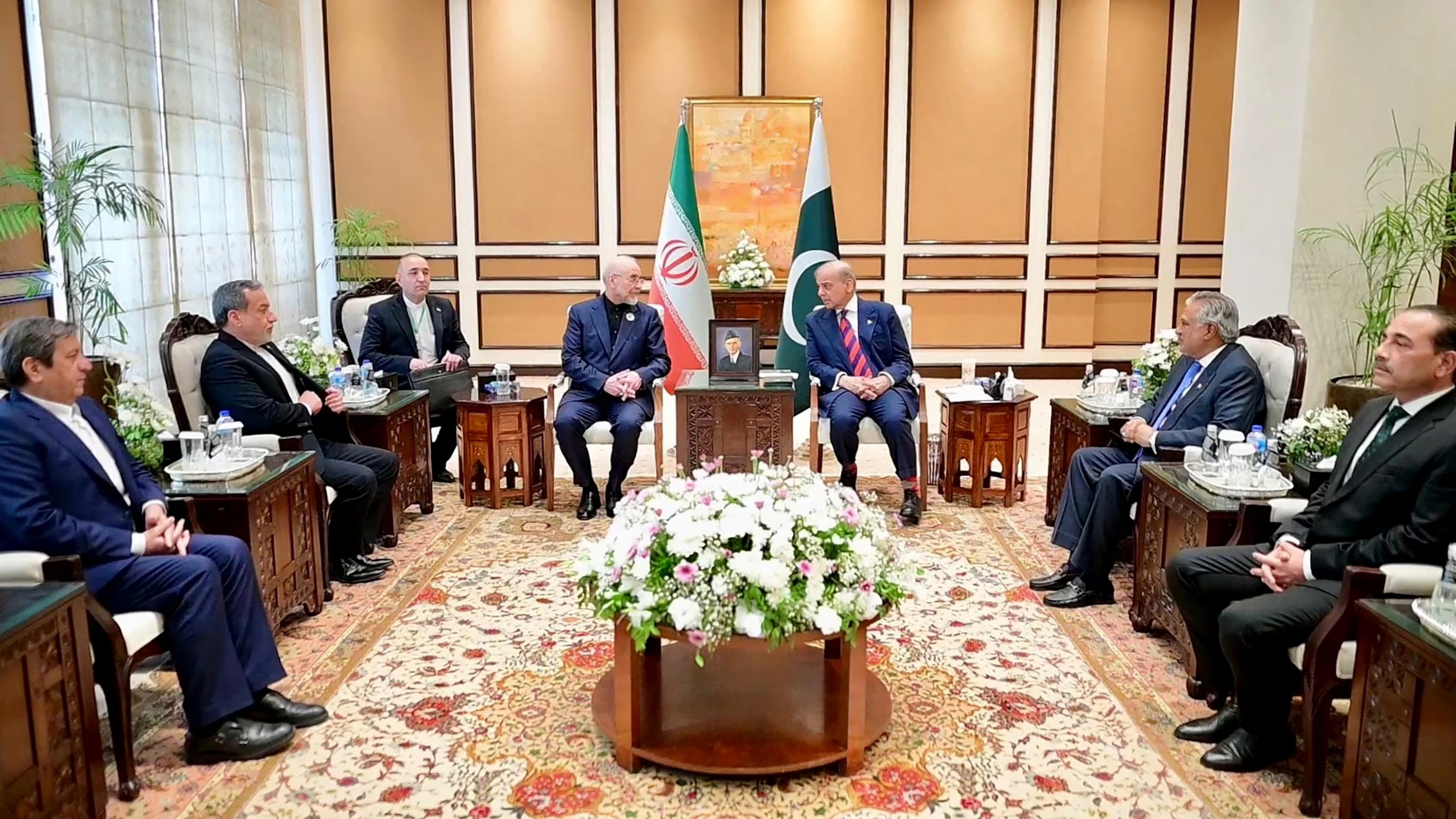
This handout photograph taken on April 11, 2026 and released by Pakistan’s Prime Minister Office shows Pakistan’s Army Chief and Field Marshal Syed Asim Munir (R), Foreign Minister Ishaq Dar (2R), Prime Minister Shehbaz Sharif (3R) during their meeting with Iran’s parliamentary speaker Mohammad Bagher Ghalibaf (4L) and Foreign Minister Abbas Araghchi (2L) prior to the US-Iran peace talks in Islamabad.Pakistan Prime Minister’s Office via AFP via Getty Images
The IMO, currently part of a U.N. task force aimed at delivering humanitarian assistance to those within the strait, has appealed to the U.S. to back an evacuation of those in the Gulf and establish humanitarian routes for aid.
Following unsuccessful weekend discussions in Pakistan, global mediators were striving to bring both parties back to negotiations. President Trump posted on social media that the U.S. military remains "LOCKED AND LOADED" to proceed with attacks on "the little that is left of Iran."
Sourse: abcnews.go.com