
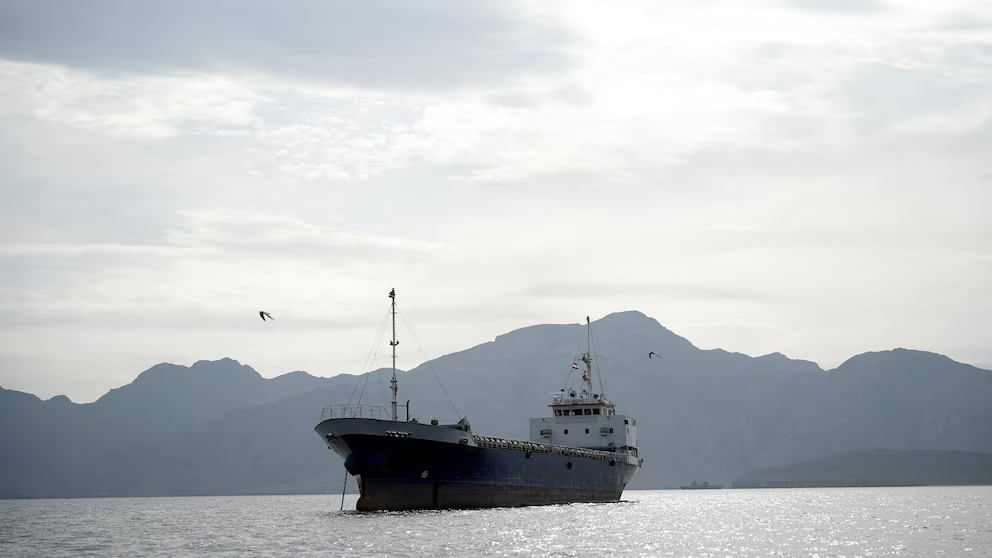
A ship in the Strait of Hormuz, near the shore of Oman’s Musandam province, April 12, 2026. Reuters
With a U.S. Navy naval cordon restricting Iranian harbors in the Strait of Hormuz, a few ships associated with the Islamic Republic appear to be utilizing misleading practices, referred to as "spoofing," to try and penetrate the vital waterway, as per maritime intelligence sources.
U.S. Central Command (CENTCOM), which commands forces in the Middle East, indicated in a social media announcement on Wednesday morning that in the couple of days since the naval cordon was put in place on Monday, several ships have been rerouted in the Strait of Hormuz.
"Yesterday, a cargo ship flying the Iranian flag attempted to dodge the U.S. naval cordon after departing Bandar Abbas, exiting the Strait of Hormuz, and traveling adjacent to the Iranian coastline. The guided-missile destroyer USS Spruance (DDG 111) effectively redirected the vessel, which is now returning to Iran," CENTCOM stated.
"Ten ships have now been turned around and NOT A SINGLE vessel has broken through since the U.S. naval cordon commenced on Monday," it added.
It's not clear if any of these vessels have been connected to spoofing.
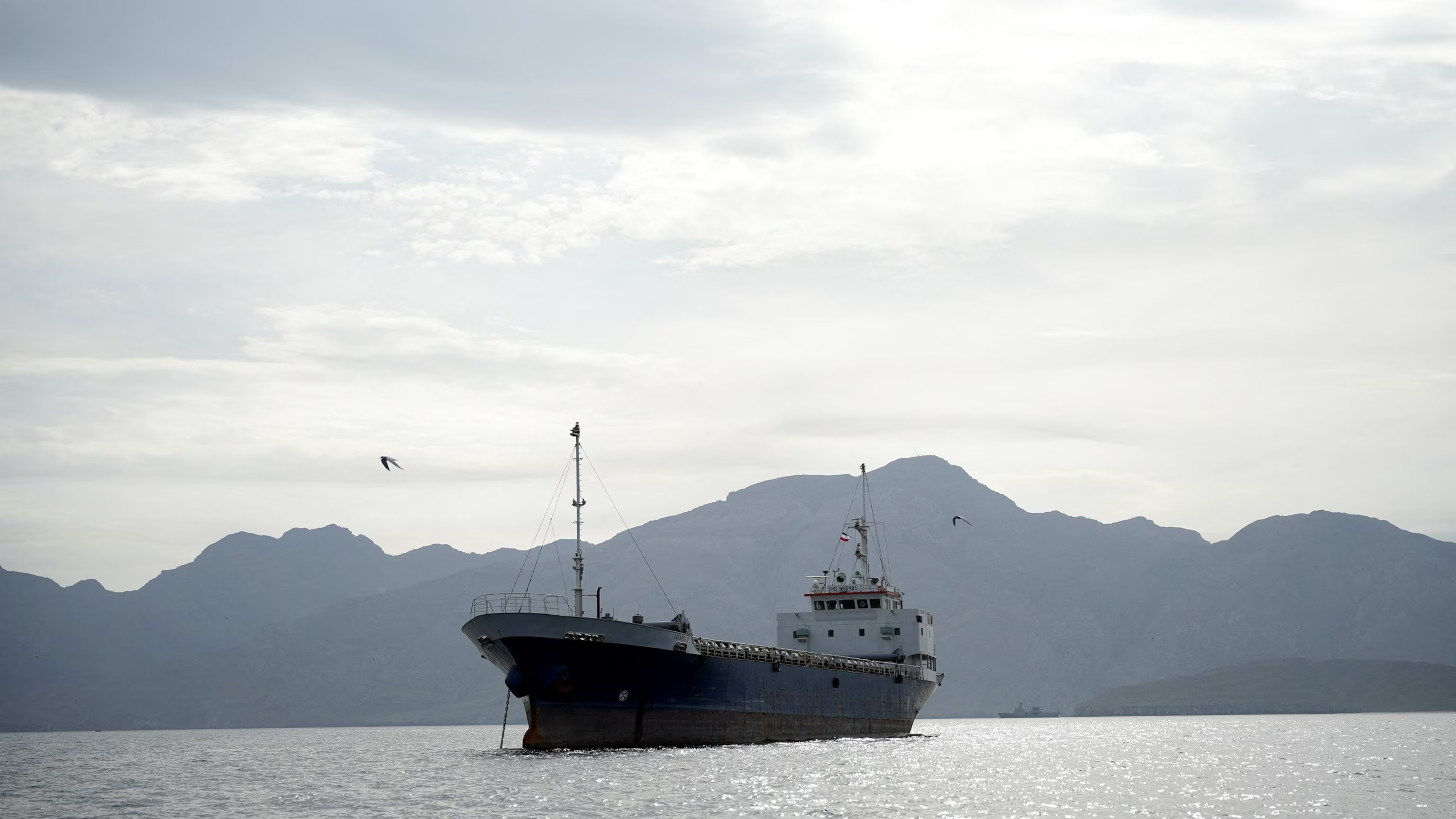
A vessel at the Strait of Hormuz, off the coast of Oman’s Musandam province, April 12, 2026.Reuters
Notwithstanding the naval cordon, vessel tracking companies and analysts noticed overnight that the sanctioned crude oil tanker Alicia crossed into the Strait of Hormuz, from the Gulf of Oman into the Persian Gulf, according to Michelle Wiese Bockmann, analyst at shipping analytics firm Windward. Brockmann noted that the vessel was falsely flagged, but not carrying cargo.
On Tuesday, at least three additional tankers under U.S. sanctions seemed to successfully navigate the strait, according to MarineTraffic.
What is 'ship spoofing?'
A number of Iranian-linked vessels seem to be employing the practice of "ship spoofing" to mask their genuine identities from the U.S. naval cordon, experts have mentioned.
According to the Windward website, ship spoofing is the action of sending incorrect data through the Automatic Identification System, which compels ships to share tracking details, like the vessel's name and identification number, along with speed, heading, and course over ground.
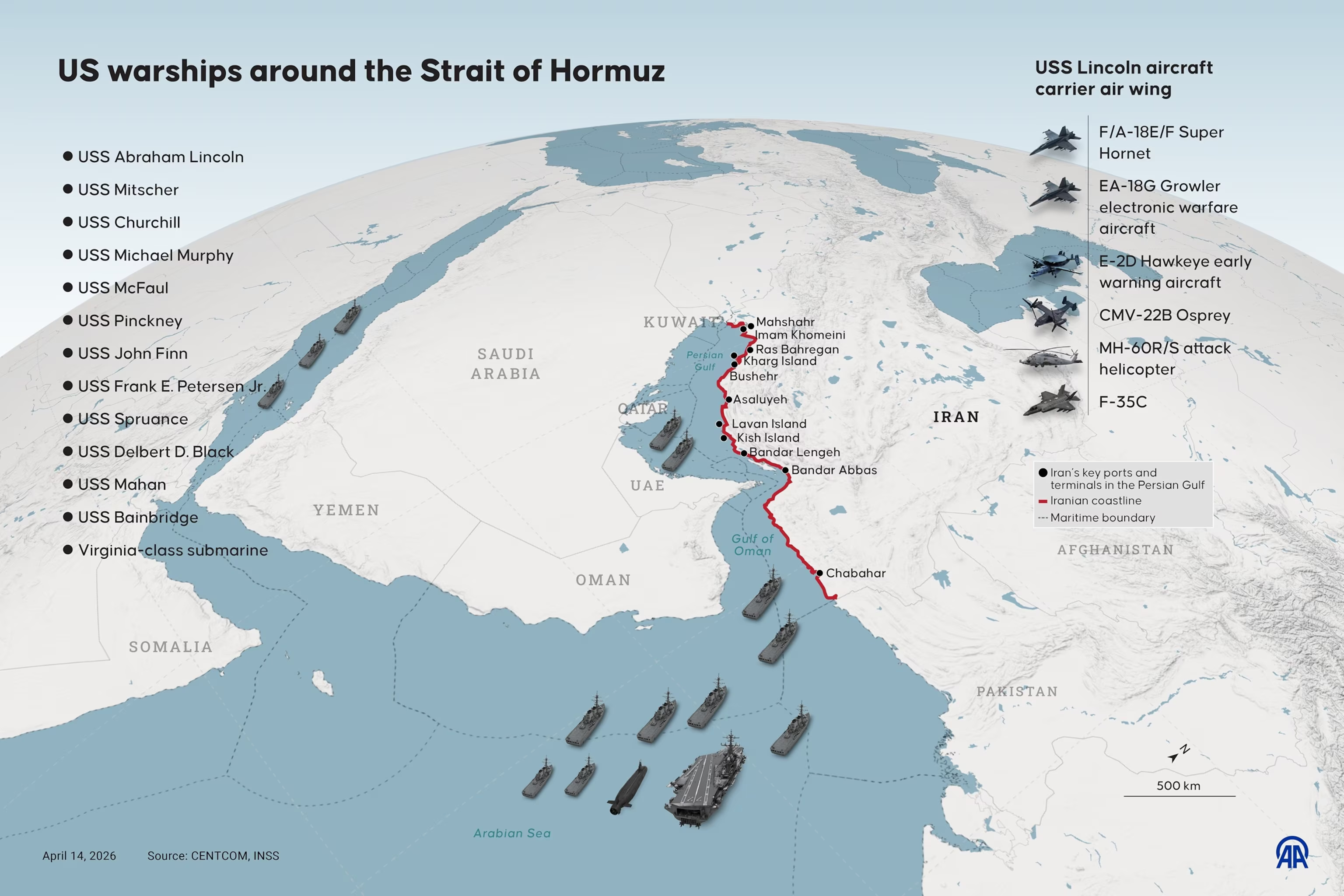
Infographic displaying U.S. warships surrounding the Strait of Hormuz as part of a U.S. naval cordon ordered by President Donald Trump.Anadolu via Getty Images
Clayton Seigle, a senior fellow in the Energy Security and Climate Change Program at the Center for Strategic and International Studies, told ABC News that spoofing or manipulating the tracking system can conceal a vessel's origins, destination, and contents.
"A ship will indicate that it is loading in Saudi Arabia, but it is in actuality loading in Iran," Seigle explained.
How is the U.S. naval cordon being implemented?
ABC News is monitoring 16 U.S. warships in the area, including 11 destroyers mostly stationed in the Arabian Sea, though none are inside the Persian Gulf.
U.S. officials informed ABC News that the U.S. Navy will employ a wide variety of capabilities and equipment to enforce the naval cordon, potentially including surface warships, reconnaissance drones, intelligence assets, and surveillance aircraft.
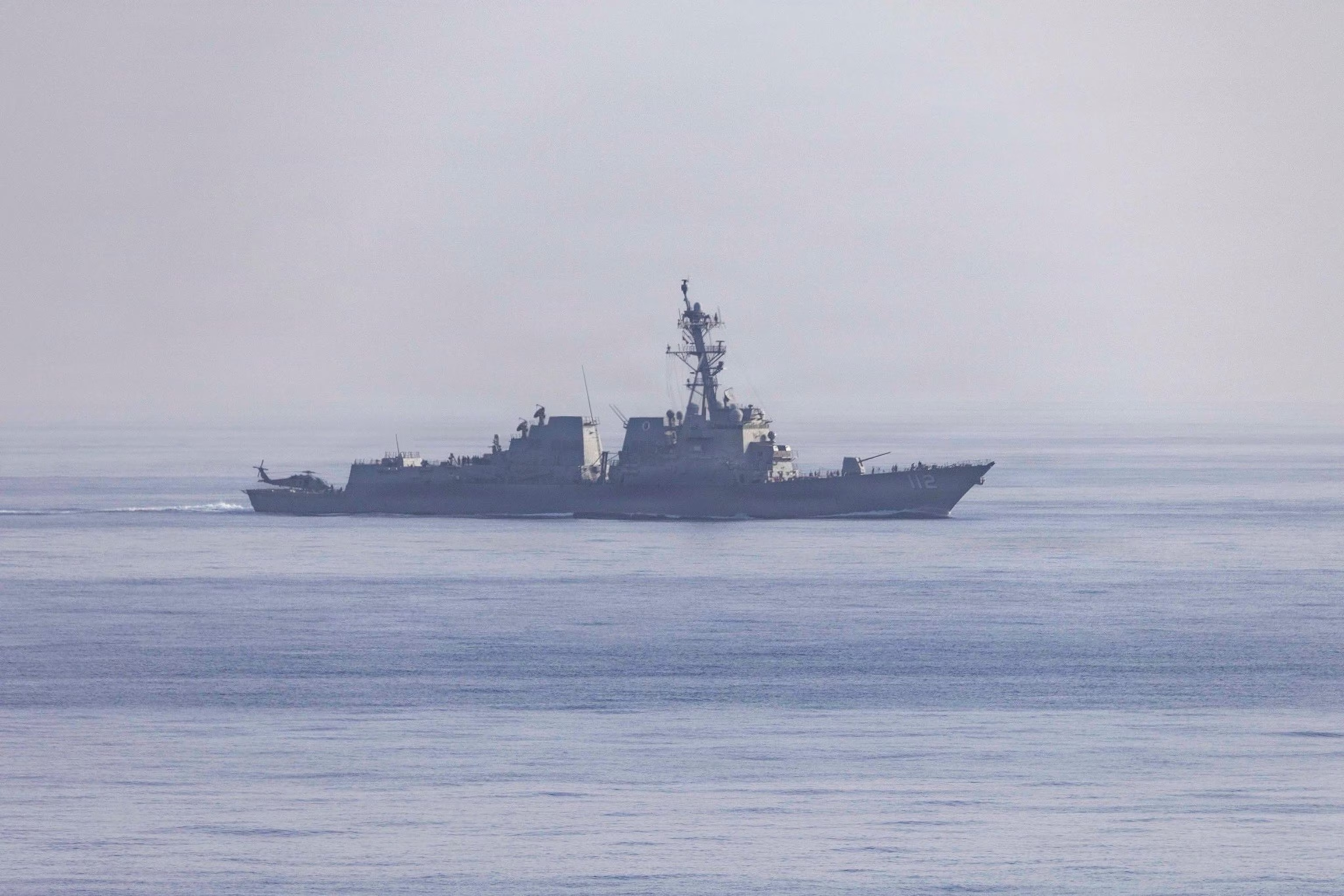
A U.S. Navy guided-missile destroyer is among the assets executing a naval cordon mission impacting Iranian harbors.U.S. Central Command/X
The U.S. Navy is also ready to execute enforcement by intercepting and boarding ships. CENTCOM released a recording of them cautioning ships to turn around.
"If you do not adhere to this naval cordon, we will resort to force," the warning states. "The entirety of the United States Navy is prepared to compel adherence."
Boarding actions would probably depend on smaller, more adaptable assets, including rigid-hull boats and helicopters, to swiftly intercept and examine ships, Mark Nevitt, a former Navy judge advocate general officer and an associate professor at Emory University School of Law, told ABC News.
Ships that fail to meet boarding demands might face warning shots or so-called disabling fire directed at vital systems, like engines or navigation equipment, to halt movement, according to Nevitt.
"This is not a law enforcement action; it's a wartime action," he asserted.
Other methods Iran may employ to bypass the naval cordon
Ian Ralby, a maritime and security professional, suggested Iran could explore additional strategies to circumvent the naval cordon.
"Iran possesses an immense amount of adaptability. It has been under considerable strain for several years, and it is rather challenging to intimidate, given its longstanding pattern of discovering alternative means of operating," he informed ABC News.
Recently, Iran has acquired allies and companions in different regions of the world, notably through its participation in BRICS, a coalition of emerging nations formed in 2009 that initially comprised Brazil, Russia, India, and China, but has now grown to include 11 countries, according to Ralby.
"That signifies they [Iran] have companions and allies with whom they can conduct commerce and who will bolster them in their economic endeavors to survive," he expressed.
Ralby further pointed out that Iran's neighbor, Pakistan, is one of its closest associates and that Iran's northern shoreline is on the Caspian Sea, which presents a direct path to Russia.
"Thus, there exist other avenues for acquiring food, supplies, medicine, and other goods for the 93 million inhabitants of Iran," Ralby stated. "But there are also other means of exporting oil, gas, and other provisions, along with engaging in alternative economic pursuits. Therefore, it is improbable that this will push them to the verge of surrender, which appears to have been the [U.S.] objective from the very beginning."
ABC News' Luis Martinez, Nathan Lee, Steve Beynon, Chris Looft, and Victoria Beaule contributed to this article.
Sourse: abcnews.go.com