
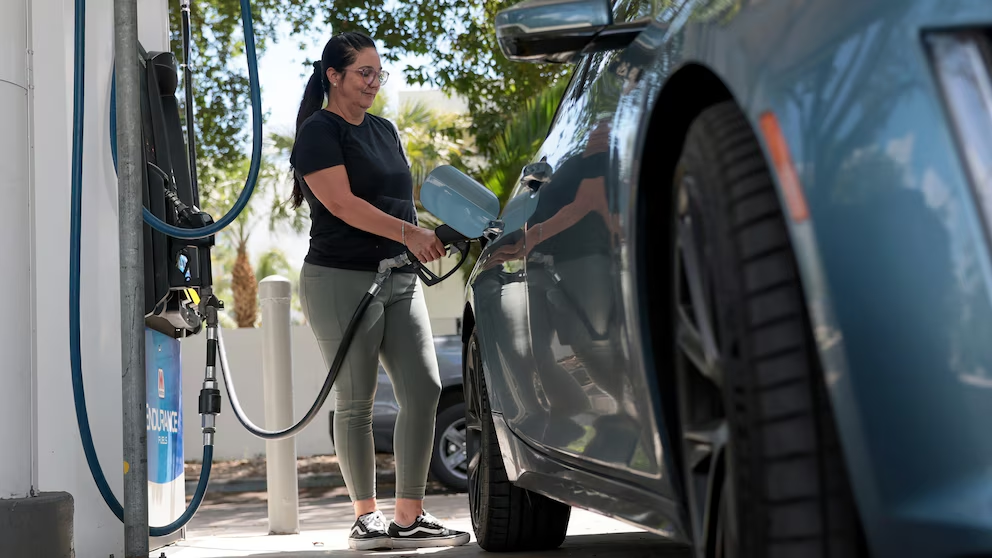
Vanessa Moya fills up her automobile at a filling station on April 6, 2026, in Miami, Florida. Joe Raedle/Getty Images
On Wednesday, the United States sustained its naval barricade around Iranian seaports in the Strait of Hormuz, applying monetary strain on Tehran whilst simultaneously curtailing an oil source amidst a notable worldwide scarcity.
This action unfolds as Americans struggle against a spike in fuel expenses, which threatens to erode family financial plans and decelerate economic activity.
Across the U.S., gasoline prices averaged $4.10 per gallon on Wednesday, approximately 35% greater than their pre-conflict figures, according to AAA data.
Some analysts suggest that the barricade carries the risk of inflated prices at the pump because petroleum is exchanged on a global marketplace, implying that a supply reduction in the Middle East might elevate costs for Americans.
However, they added, the tactic could expedite a resolution to the war or reassure non-Iranian tankers that are hesitant to navigate the strait, ultimately easing the oil crisis and decreasing gas prices.
"This is an economic standoff," Tyler Schipper, an economics professor at the University of St. Thomas, informed ABC News.
Ten vessels have been rerouted at the Strait of Hormuz within the initial 48 hours of the U.S. blockade, complying with directives from the U.S., as reported by U.S. Central Command.
On Wednesday, the commander of the Khatam Al-Anbiya Central Headquarters of Iran’s armed forces declared the U.S. blockade of Iranian ports to be a "breach of the ceasefire," as published by the official Islamic Republic News Agency.
The conflict triggered Iran’s de facto closure of the Strait of Hormuz, a crucial shipping lane facilitating the transit of 20 million oil barrels daily, constituting roughly one-fifth of the world’s total.
Iran has continued to export almost 2 million barrels of petroleum daily through the strait, thereby moderating some of the supply deficit, according to the energy data company Kpler.
Nonetheless, a recent report from the International Energy Agency, released on Tuesday, indicated that oil prices achieved their highest one-month increase ever in March.
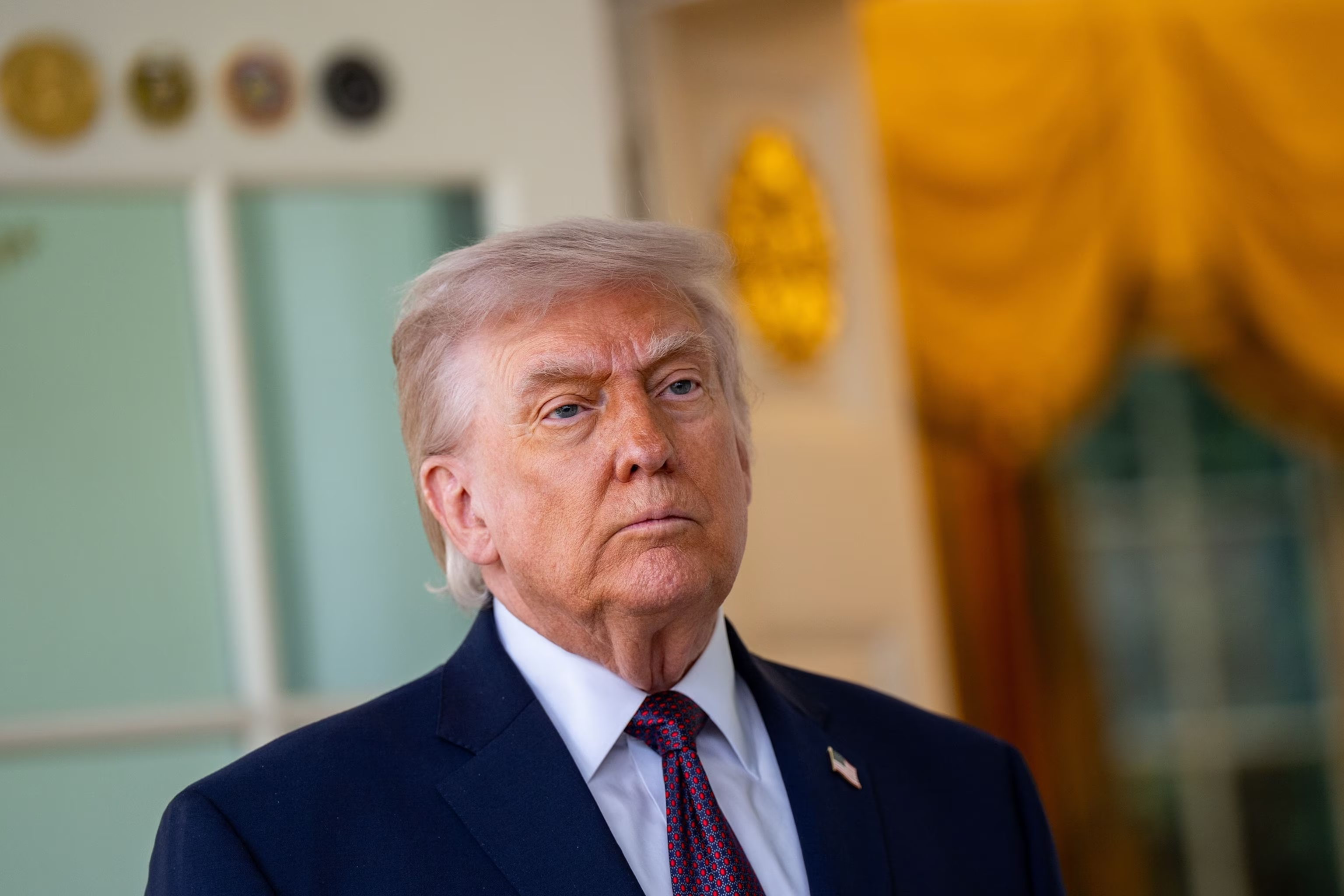
President Donald Trump addresses reporters outside the Oval Office at the White House in Washington on April 13, 2026.Salwan Georges/EPA/Shutterstock
Several analysts have proposed that the potential loss of Iranian petroleum exports resulting from the blockade could worsen the supply crisis and further inflate gasoline prices.
"The shift toward a total blockade of the Strait of Hormuz is exacerbating worries over global supplies and heightening the risk of disruptions," noted GasBuddy petroleum analyst Patrick De Haan in a post on X on Monday.
De Haan added that vehicle owners "should brace for another surge in price points."
Jason Miller, a supply chain management professor at Michigan State University, shared similar apprehensions.
"I don’t comprehend how this swiftly resolves the problem concerning vessels not passing through the Strait of Hormuz," Miller explained to ABC News. "The situation deteriorates each day that this persists."
Despite this, price increases have not materialized during the blockade’s opening days.
The futures price of West Texas Intermediate, a benchmark index for U.S. trading, was approximately $92 per barrel on Wednesday, signifying a decrease of almost 10% since the blockade commenced at 10 a.m. Eastern Time on Monday.
Even considering this, U.S. petroleum prices remain approximately 40% greater than the levels observed prior to the conflict.
The nationwide average price for a gallon of gasoline on Wednesday was reported to be 1.4% lower than the prior week.
The ceasefire between the U.S. and Iran entered its second week, seemingly improving prospects for a resolution to the war.
President Donald Trump, for his part, repeated his eagerness to conclude the hostilities, suggesting that the war is "nearing its end" during a segment of an interview with Maria Bartiromo of Fox News, which was broadcast on Tuesday.
According to Dominic Pappalardo, chief multi-asset strategist at Morningstar Wealth, speaking to ABC News, the U.S. blockade might ultimately augment the market’s crude supply, as opposed to restricting it, should the naval presence give assurance to non-Iranian vessels that are otherwise unwilling to traverse the strait.
"For nations other than Iran, does the blockade inspire greater confidence in dispatching petroleum through the strait?" Pappalarado inquired. "Should other nations’ trust grow, we might observe a rise in shipments by non-Iranian vessels navigating the strait, which would contribute to mitigating upward price pressures."
Kpler stated in an X post that tanker movement remained significantly below pre-war benchmarks after the blockade’s implementation as of Monday. Kpler noted that six vessels transited the strait on Monday, a decrease from the previous day’s count of 14.
Some analysts stated that the conditions prevailing in the strait remain volatile, presenting a broad spectrum of potential outcomes.
"Considerable uncertainty endures," Miller stated.
Sourse: abcnews.go.com