
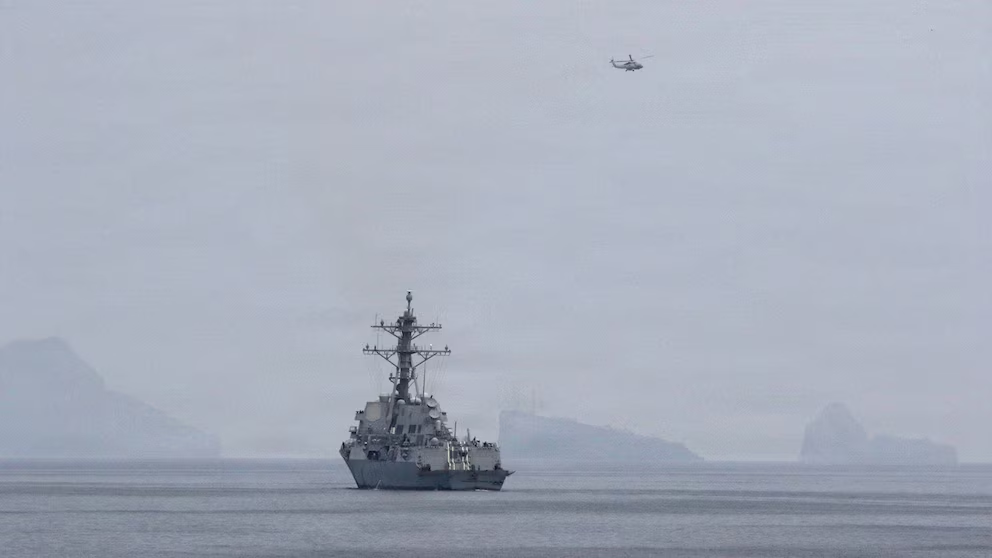
U.S. Central Command (CENTCOM) elements initiated preparations for mine clearing operations in the Strait of Hormuz on April 11, coinciding with maneuvers carried out by a pair of U.S. Navy guided-missile destroyers. (U.S. Central Command Photo)Sgt. 1st Class Michael Hunnisett/U.S. Central Command Public Affairs
The American armed forces initiated a cordon of Iranian seaports this past Monday, as the reopening of the Strait of Hormuz is still a contentious point in discussions between the U.S. and Iran regarding conflict resolution.
In the waning hours of Tuesday, the chief of U.S. Central Command Adm. Brad Cooper stated that the maritime cordon had been "completely put into effect" and furthermore, that "American forces have thoroughly impeded financial trade both entering and leaving Iran by sea lanes."
According to CENTCOM, in excess of 10,000 U.S. mariners, Marines, and air personnel, together with over a dozen naval vessels and numerous airplanes, are carrying out the cordon against ships entering or exiting Iranian seaports and littoral territories.
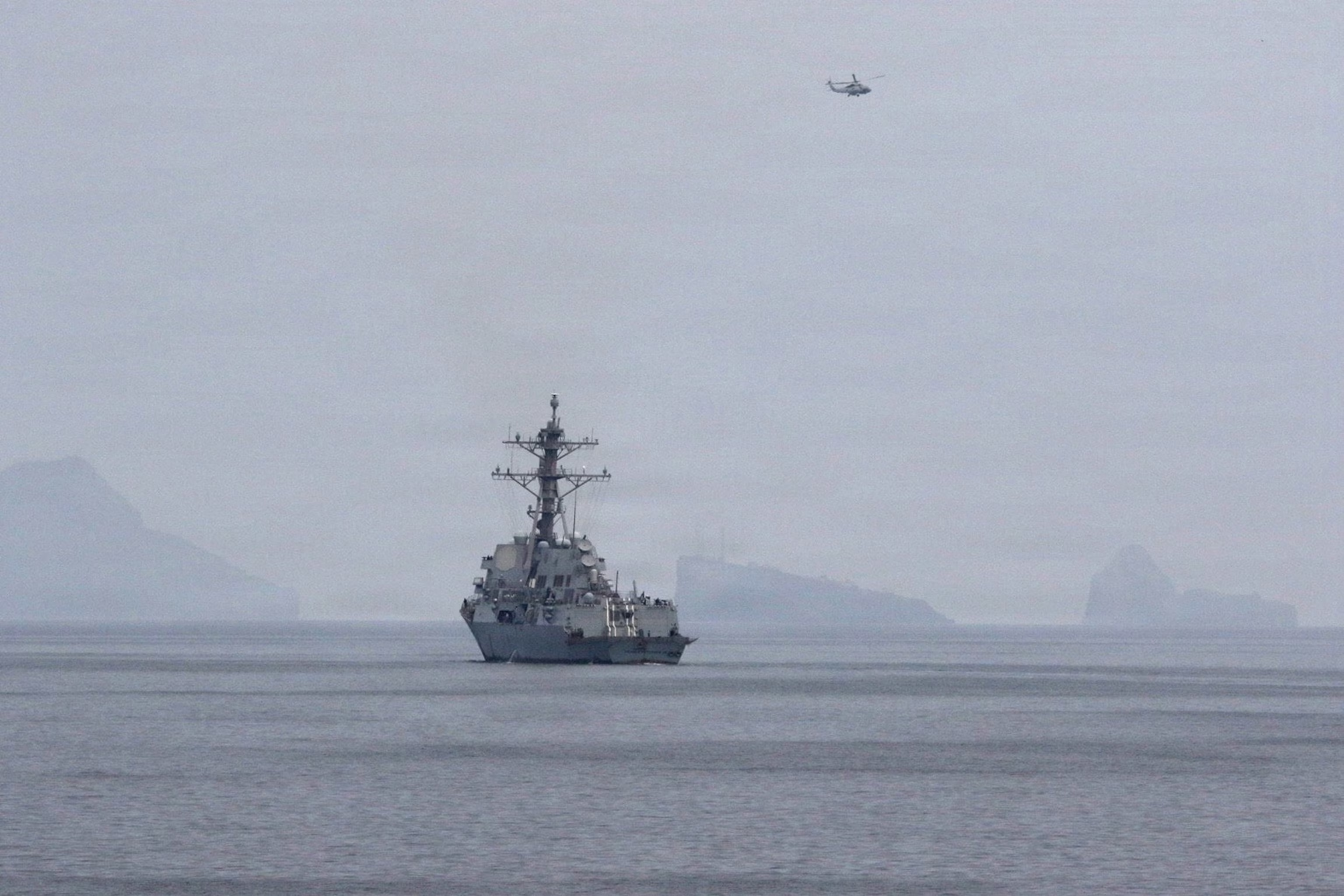
U.S. Central Command (CENTCOM) forces began setting conditions for clearing mines in the Strait of Hormuz, April 11, as two U.S. Navy guided-missile destroyers conducted operations. (U.S. Central Command Photo)Sgt. 1st Class Michael Hunnisett/U.S. Central Command Public Affairs
A maritime cordon can be implemented by naval surface ships and aerial vehicles.
Successfully conducting a cordon also necessitates having precise intelligence concerning which port a ship may have departed from or is destined for, which is critical given that the U.S. Navy's cordon is solely applicable to vessels departing or headed towards Iranian ports.
Here is a comprehensive look at the functionality of a maritime cordon.
Cordon from the sea
Among the existing 16 U.S. Navy vessels in the Middle East, 11 are destroyers equipped for maritime vessel interception.
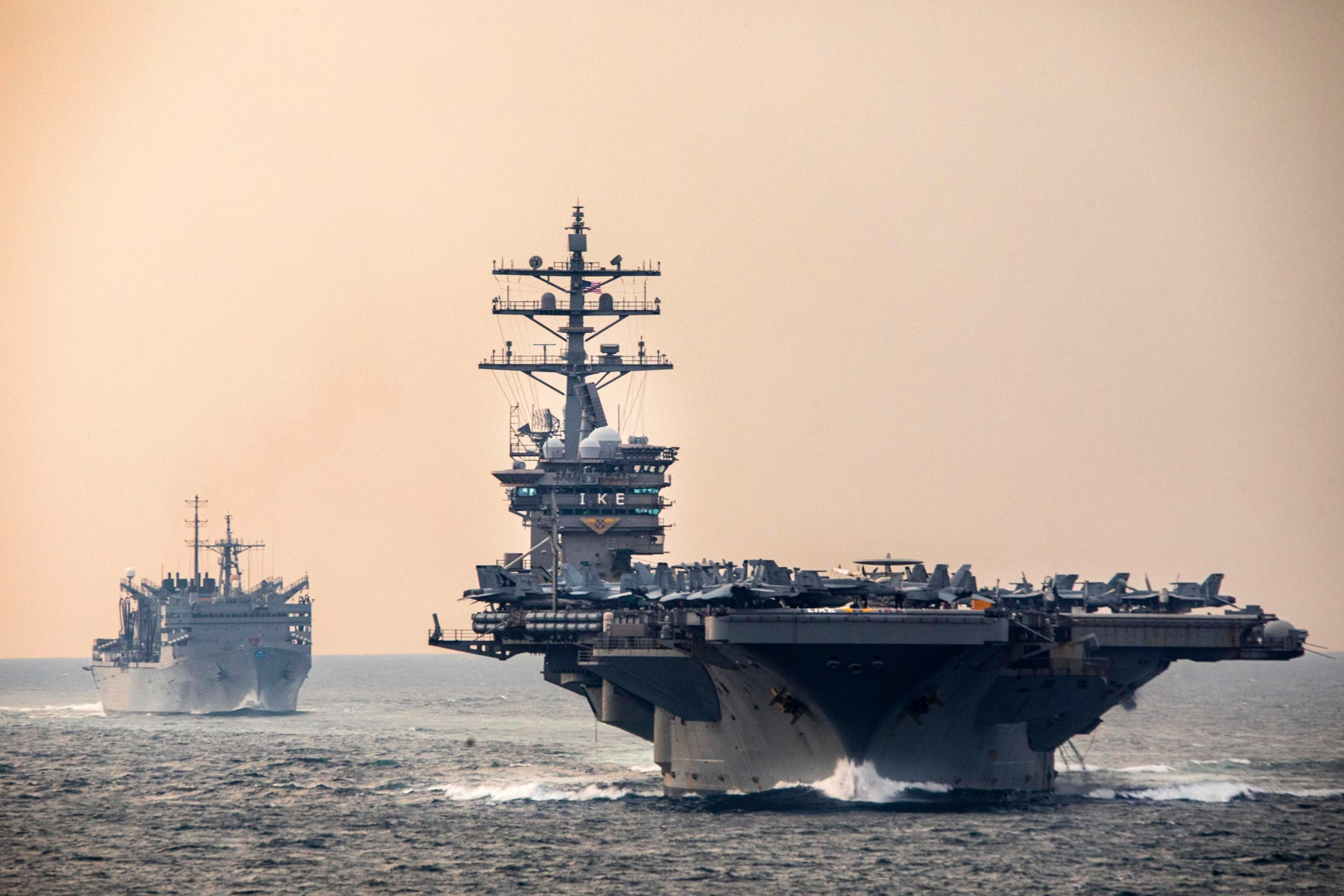
Components of the Dwight D. Eisenhower Strike Group (IKECSG) and the fast combat support ship USNS Supply (T-AOE 6) transit the Strait of Hormuz, Dec 14, 2023.Mass Communication Specialist 2nd Class Keith Nowak/U.S. Navy
A crucial aspect of enforcing a cordon is also possessing superior situational comprehension, according to experts. This might entail utilizing UAVs to track a ship's navigation, leveraging intelligence to ascertain a ship's origin or final destination, deploying reconnaissance aircraft such as the E-2 Hawkeye, or utilizing helicopters launched from an aircraft carrier.
This suggests that all Navy vessels currently in the Middle East have a potential function in the implementation of a cordon.
Each destroyer features a pair of SH-60 Sea Hawk helicopters capable of venturing out to vessels that might conceivably be nearing the cordon perimeter and affording visual reconnaissance of the approaching ship.
The destroyers are additionally outfitted with advanced Aegis radar infrastructures adept at monitoring ships across considerable distances.
Warning message US is sending
Should a ship be encountered at sea, the destroyer's personnel will issue a cautionary message via radio to the incoming ship, adhering to a carefully formulated statement.
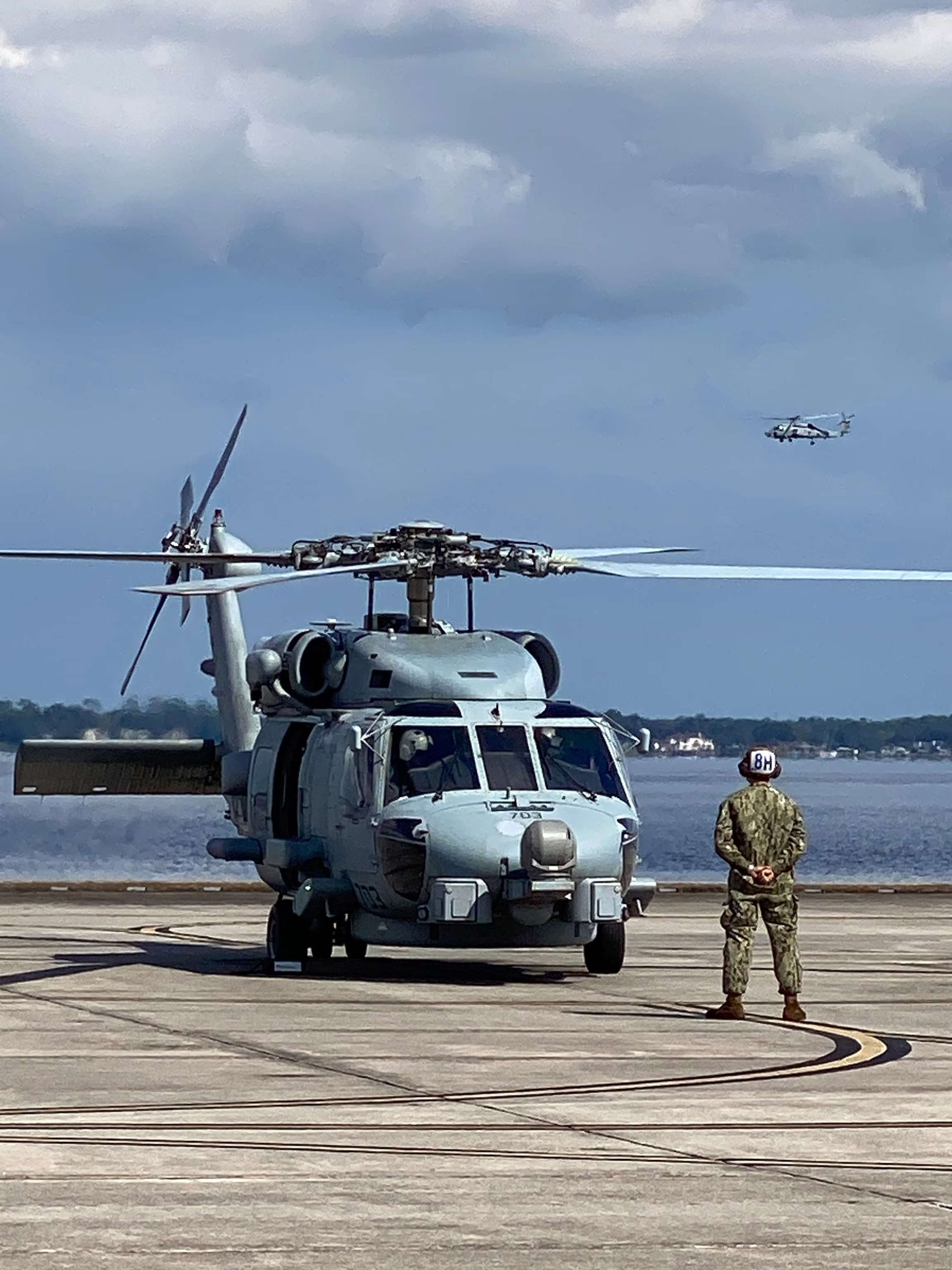
SH-60 Seahawk, Helicopter Maritime Strike Squadron 60, based out of Naval Air Station Jacksonville, FL takes off for Functional Check Flight (FCF), prior to returning to fleet operations, on Sept. 18, 2024.Nutan Chada/Defense Logistics Agency
In this scenario, the statement is: "The U.S. has formally declared a cordon of Iranian ports and coastal regions. This is a justified action … Should you fail to observe this cordon, we shall resort to the use of force. The entirety of the United States Navy is prepared to enforce compliance. Over."
The cordon could be enforced by dispatching a unit of service members to board any approaching vessels. The boarding unit might comprise of sailors, Marines, or special operations forces, contingent on the circumstances.
Boarding operations
Boarding operations are meticulously orchestrated. Marines, or other armed forces, generally approach a vessel either by fast-roping from helicopters onto the vessel or by scaling from small craft, striving to overpower a crew before they can react.
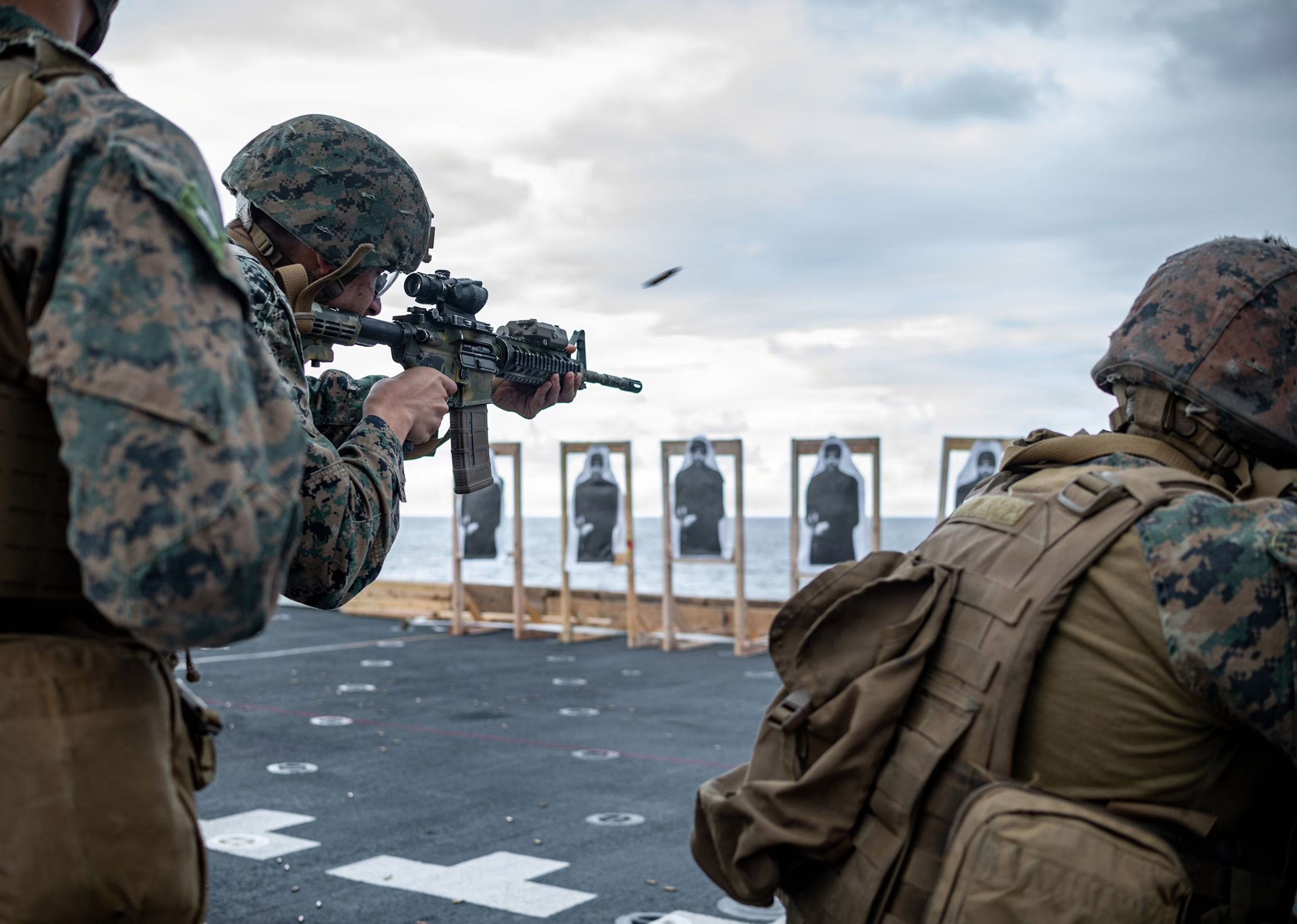
U.S. Marines, with the Battalion Landing Team 3rd Battalion, 1st Marines (3/1), 31st Marine Expeditionary Unit (MEU), conduct a live fire evolution on the flight deck of San Antonio-class amphibious transport dock ship USS New Orleans (LPD 18), while underway, Feb. 11, 2026.Mass Communication Specialist 2nd Class Sade’ Anita Wallace/U.S. Navy
Units are educated to swiftly secure critical areas of the ship, which may encompass the bridge, engine compartment, and communications hubs, while isolating and managing the crew. The intention is velocity and dominance, but also moderation, particularly when interacting with civilian mariners who might be caught in the midst of a military maneuver.
"If you're searching for illicit deliveries of weaponry or petroleum or anything else, you must go on board. And that's the reason we maintain boarding units," stated Retired Adm. and Dean of the Center for Maritime Strategy James Foggo. "If it's an oil tanker, you're reviewing the logs. I mean, oil is oil. It's challenging to ascertain from observing black oil what reservoir it came from. However, you scrutinize the records, and you seek to identify in the records where they originated."
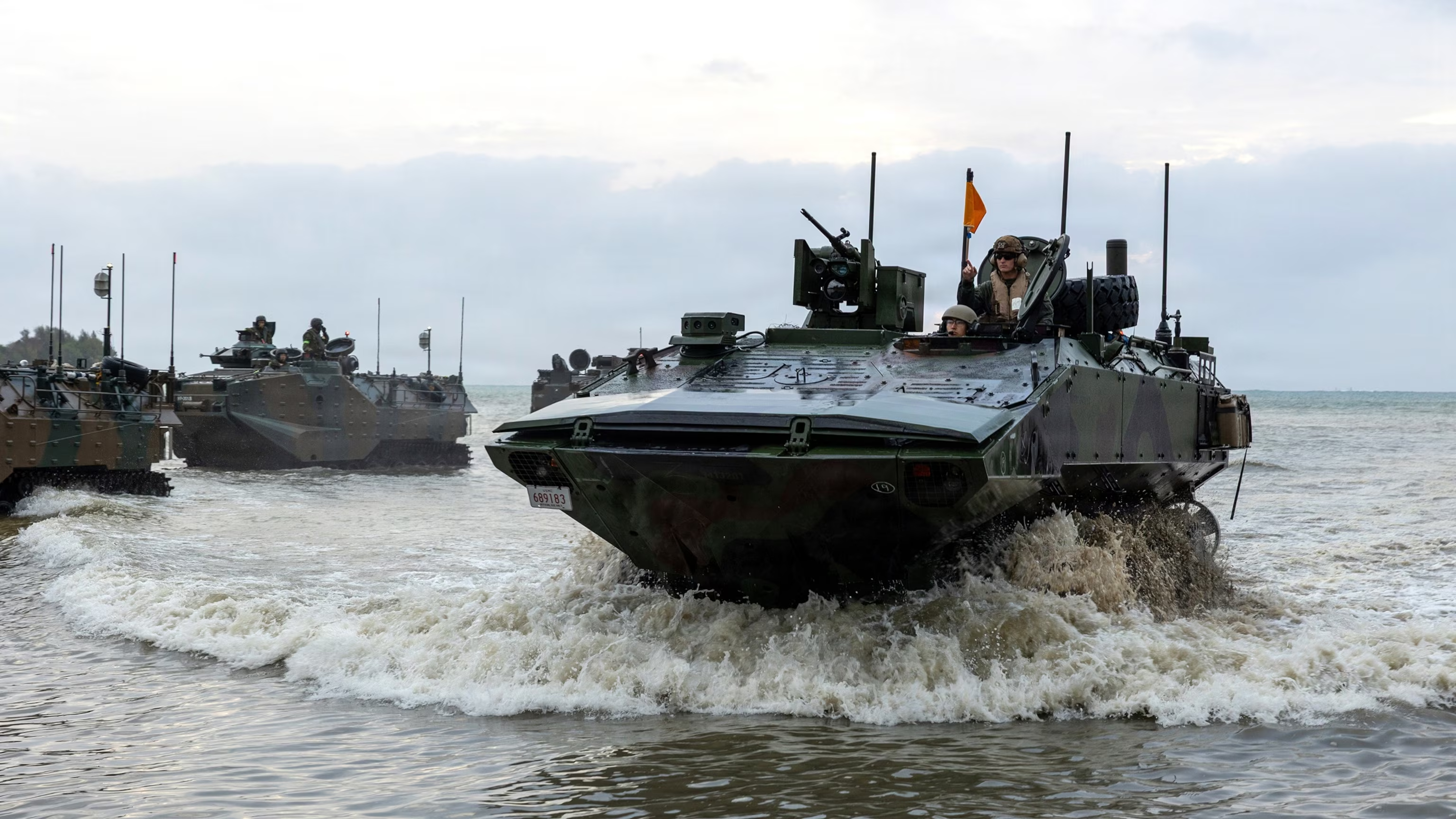
U.S. Marines with Kilo Company, Battalion Landing Team, 3rd Battalion, 1st Marine Regiment, 31st Marine Expeditionary Unit, operate an amphibious combat vehicle alongside Japan Ground Self-Defense Force service members during exercise Iron Fist 26 at Kushi Crossing, Okinawa, Japan, March 4, 2026.Lance Cpl. Eadan Avramidis/U.S. Marine Corpe
The 31st Marine Expeditionary Unit (MEU) is positioned on three amphibious vessels, but they could additionally be transferred to destroyers if necessitated.
These Marines are trained in what is termed VBSS (Visit, Board, Search, and Seizure), which can be executed by approaching a ship via a rigid hull inflatable boat or a helicopter. VBSS are sanctioned boardings by armed service personnel who can board a vessel to conduct an examination for smuggling or other illicit conduct.
"If you encounter something that's wicked, if you find something that's criminal, if you notice something that's inappropriate, consequently, you know, you can impound the vessel and compel the vessel to navigate to a neutral port," Foggo remarked.
Occasionally, VBSS inspections can be carried out by highly specialized units chosen from a ship's crew or by exceptionally trained SEAL squads, predicated on the inherent hazards.
Cordon from the air
The P-8 Poseidon, a maritime patrol and reconnaissance plane with extended range, alongside SH-60 helicopters, UAVs, and essentially all U.S. aircraft stationed in the region, can function to construct an operational depiction of the marine environment beneath.
Former CENTCOM commander John "Fozzie" Miller conveyed that these depictions are indispensable in sustaining a cordon, as radar possesses restrictions emanating from the water surface. Airplanes and helicopters can furnish a more extensive perspective, Miller elucidated, particularly across the expansive coastline of Iran.
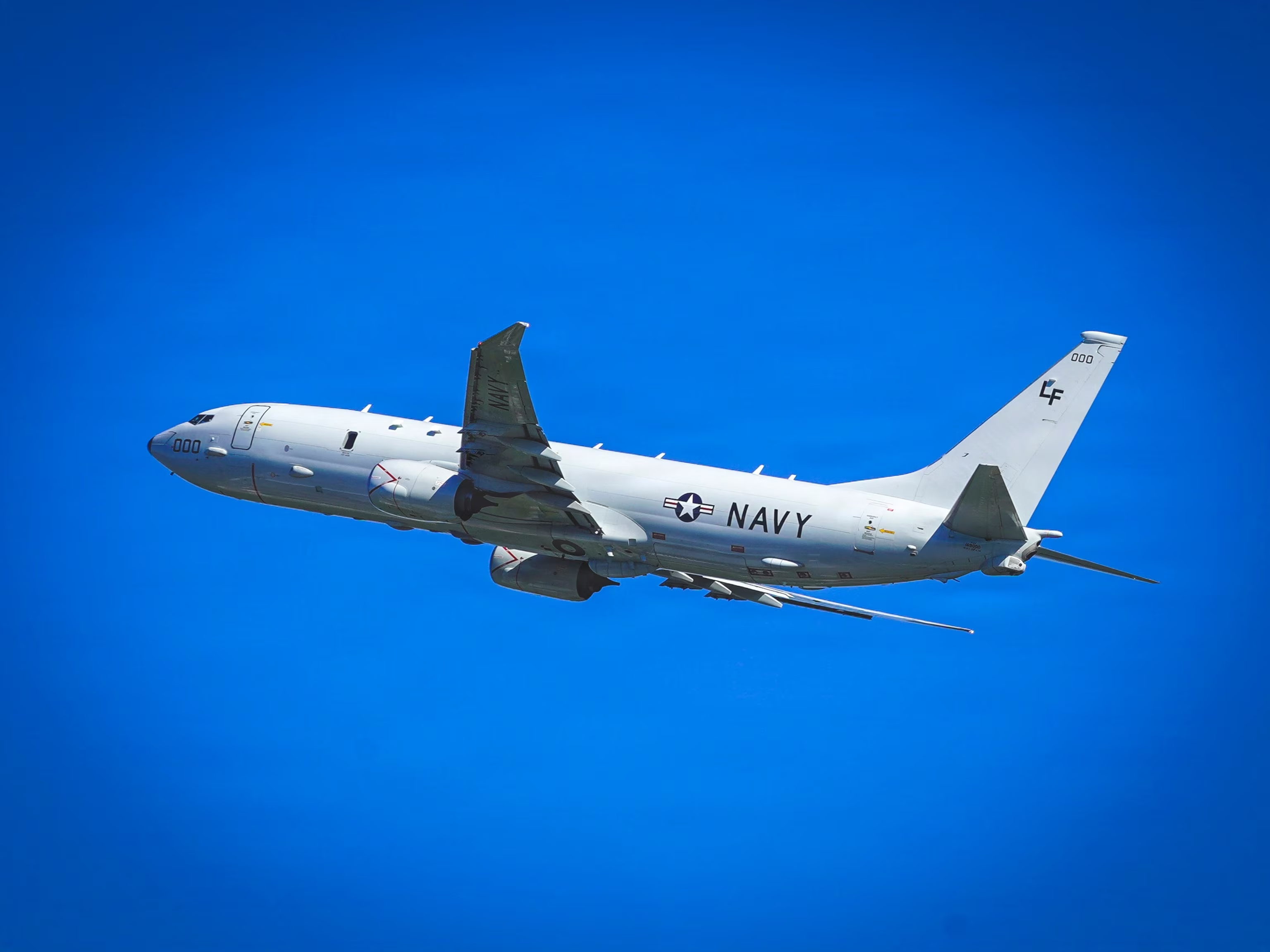
A U.S. Navy P-8A Poseidon departs from Naval Air Station Jacksonville, March 20, 2026.Petty Officer 2nd Class William Bennett IV/U.S. Navy
"The larger the territorial scope that you possess an accurate visual representation of, the more apt you are at assuring that your cordon, or any endeavor you're undertaking, is efficacious," Miller stated. "Our Navy dedicates considerable duration every minute of every single day, comprehending the oceanic territory enveloping them as extensively as we are capable."
Once a ship is marked, the Navy can contact that vessel to ascertain its provenance. If service personnel do board, Miller mentioned it's akin to being pulled over by law enforcement.
Educated military operatives pose inquiries concerning the ship's manifest, documentation, or origin, to verify if it synchronizes with the Navy's surveillance.
"These are planes that will travel for an extensive duration. There aren't likely to be numerous surprises," Miller indicated. "It'd be exceedingly challenging for a ship to infiltrate through the cordon, and for us to discover ourselves in a scenario where we abruptly had to, you know, sort of pursue one down because it slipped through the region."
Sourse: abcnews.go.com