
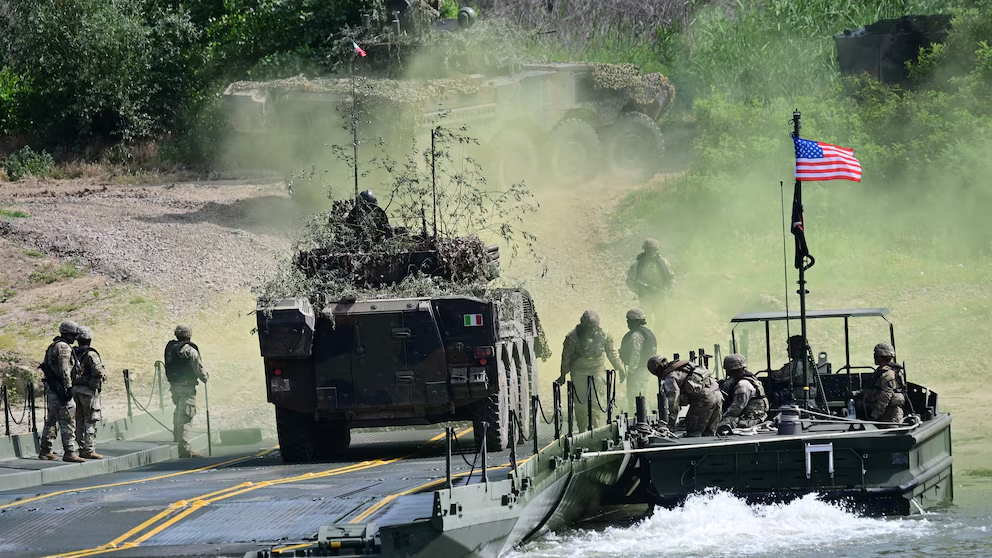
US Army soldiery is transporting Italian army mechanized vehicles utilizing a constructed sectional barge amid the NATO Saber Guardian 25 military drills adjacent to Frecatei, eastern Romania, June 13, 2025. Daniel Mihailescu/AFP via Getty Images
The Trump government is contemplating penalizing certain NATO partners, deemed unsupportive throughout the dispute with Iran, by relocating U.S. forces away from those nations, an administration source discloses to ABC News.
The source includes that the forces would probably be moved to nations regarded by the administration as having been more encouraging of its war campaigns. It’s uncertain how far along the scheme is and which nations would be affected should the judgment be enacted.
Upon inquiry as to whether Trump is mulling over retribution for NATO partners who disregarded his appeals and whether this proposition was presented to Secretary General Mark Rutte during his discussion with Trump on Wednesday, a White House official directed attention to prior comments from Secretary of State Marco Rubio, wherein he challenged why the U.S. would persist in stationing forces in Europe if it were barred from employing collectively managed bases.
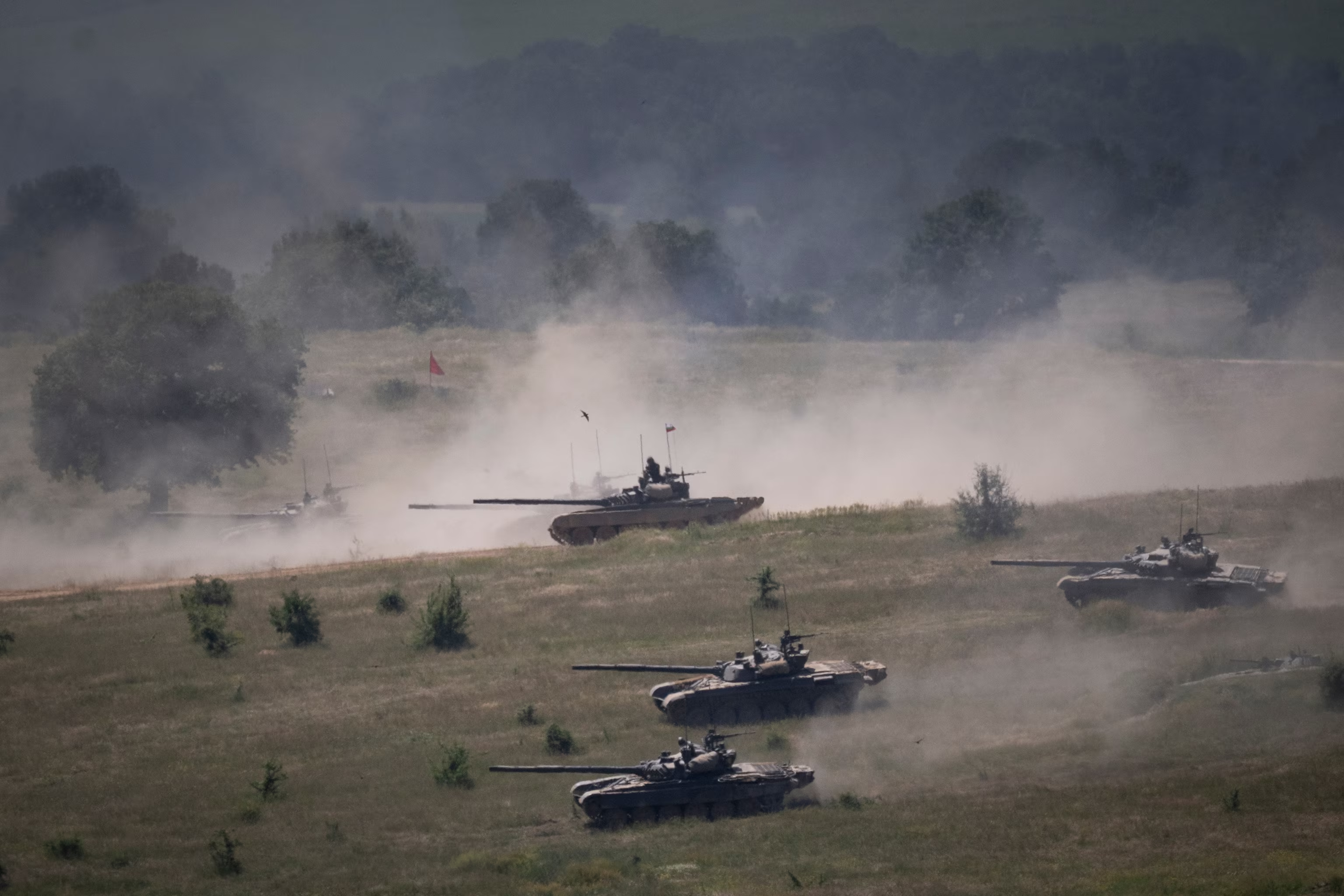
NATO troops from Bulgarian, US, and Italy are participating in the multinational tactical live-fire exercise “Balkan Sentinel 25” at the Koren Training Area, June 9, 2025.Nikolay Doychinov/AFP via Getty Images
"Why do we engage in NATO? You must ponder that query. Why do we disburse trillions of dollars and possess all these American troops positioned in the region, if, when we’re in need, we won't have authorization to use those facilities?" Rubio expressed during an interview with Fox News in early April.
White House deliberation over a blueprint to penalize NATO partners by reallocating troops was initially documented by the Wall Street Journal.
During a public appearance the day subsequent to his engagement with Trump, Rutte mentioned Thursday that allies were a tad sluggish in endorsing Operation Epic Fury, but that European backing was indispensable, and certain allies could be excused for hesitancy, considering the unexpected essence of the war.
"Let’s contemplate the most recent circumstances when the moment came to furnish the logistical and supplementary aid the United States required in Iran. Some partners were rather tardy, to put it mildly. To be objective, they were somewhat taken aback as well," Rutte articulated at the Reagan Institute in Washington.
The secretary general refrained from stating if NATO had a direct function to play in inaugurating the Strait of Hormuz, as Trump has requested, but lauded the United Kingdom’s endeavors to institute a coalition to facilitate its reopening.
Rutte additionally advocated for NATO’s practicality in U.S. safeguarding.
"At times it requires a couple of days, but consequently, we integrated, and nearly the entirety of Europe acted for the U.S. to exhibit influence on the world scene by means of its confederates in Europe," he stated. "And NATO is there, naturally, to safeguard the Europeans, but additionally to safeguard the United States. As Jonas Støre, the Norwegian prime minister, remarked, ‘These massive nuclear submarines in Russia are not positioned to assault Norway. They are positioned to assault the United States, and consequently, thanks to the alliance, we are equipped to assure that they are unable to position themselves to perpetrate that."
German Chancellor Friedrich Merz expressed Thursday that he and Trump "addressed the trajectory of NATO," during a telephone conversation on Wednesday, yet the matter of withdrawing U.S. troops from bases in Germany didn’t arise.
"We do not desire — I do not desire NATO to fracture," Merz said. "NATO serves as a guarantor of our security, notably and dominantly in Europe."
Foreign basing privileges that empower the U.S. to station troops and apparatus across Europe were a noteworthy subject of discourse during Rutte’s gatherings in Washington, as per the administration representative.
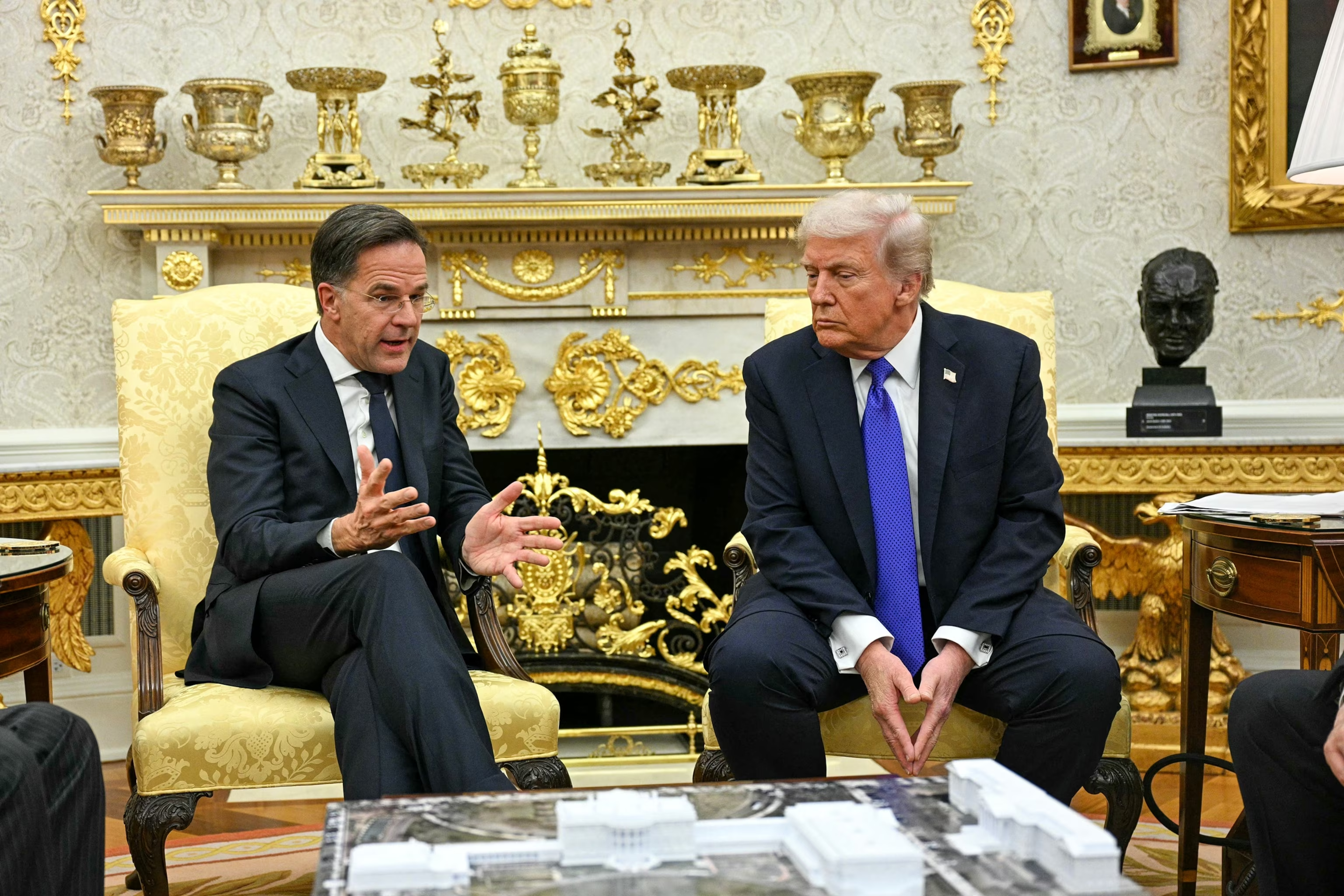
President Donald Trump attends to NATO Secretary General Mark Rutte amid their meeting in the Oval Office of the White House in Washington, October 22, 2025.Jim Watson/AFP via Getty Images
Basing privileges are indispensable to both U.S. military undertakings overseas and satisfying the logistical, deterrent, and safeguarding roles of the NATO coalition, yet the diplomatic agreements that construct their substructure are intricate.
While NATO affiliates are party to a multilateral Status of Forces Agreement, basing privileges are predominantly administered by distinct, bilateral pacts between host countries and the U.S.
Trump and figures within his administration have voiced grievances against a considerable roster of NATO partners, yet conspicuously toward Spain. Spain’s administration has denounced U.S. and Israeli offensives on Iran as infringements of international law and rejected the U.S.’s request to utilize joint bases at Rota and Morón for its operations.
At present, there are more than 3,600 active-duty U.S. military operatives situated in Spain, as indicated by Statista. The U.S. European Command (EUCOM) conveys that there are upwards of 80,000 American military and civilian personnel stationed across the continent of Europe.
ABC News' Chris Boccia aided in this report.
Sourse: abcnews.go.com