

Tourists drink water as they walk along the National Mall near the Washington Monument, July 25, 2025.Saul Loeb/AFP via Getty Images
As worldwide temperatures escalate, individuals are becoming less physically engaged, and this alteration could result in hundreds of thousands of extra untimely deaths across the globe in the decades ahead, a recent study indicates.
Investigators from a collection of Latin American universities scrutinized World Health Organization (WHO) global health surveys and temperature statistics from the Climatic Research Unit dataset at the University of East Anglia that encompassed 156 nations spanning from 2000 to 2022.
They discovered that for each extra month featuring average temperatures exceeding 82 degrees Fahrenheit, physical inactivity augmented by 1.4 percentage points globally, according to the research documented in the journal The Lancet Global Health.
Increasing temperatures might contribute to an additional 470,000 to 700,000 deaths worldwide annually by 2050, prompted by hotter conditions that could render individuals less physically inclined.
Presently, only about 65% of individuals globally attain sufficient exercise, but inactivity already accounts for approximately 5% of global deaths, as per the WHO.
In the computational simulations employed in the study, escalating heat intensified the matter. Tropical low- and middle-income countries in regions such as the Caribbean and sub-Saharan Africa would probably be affected most severely, the study indicated.
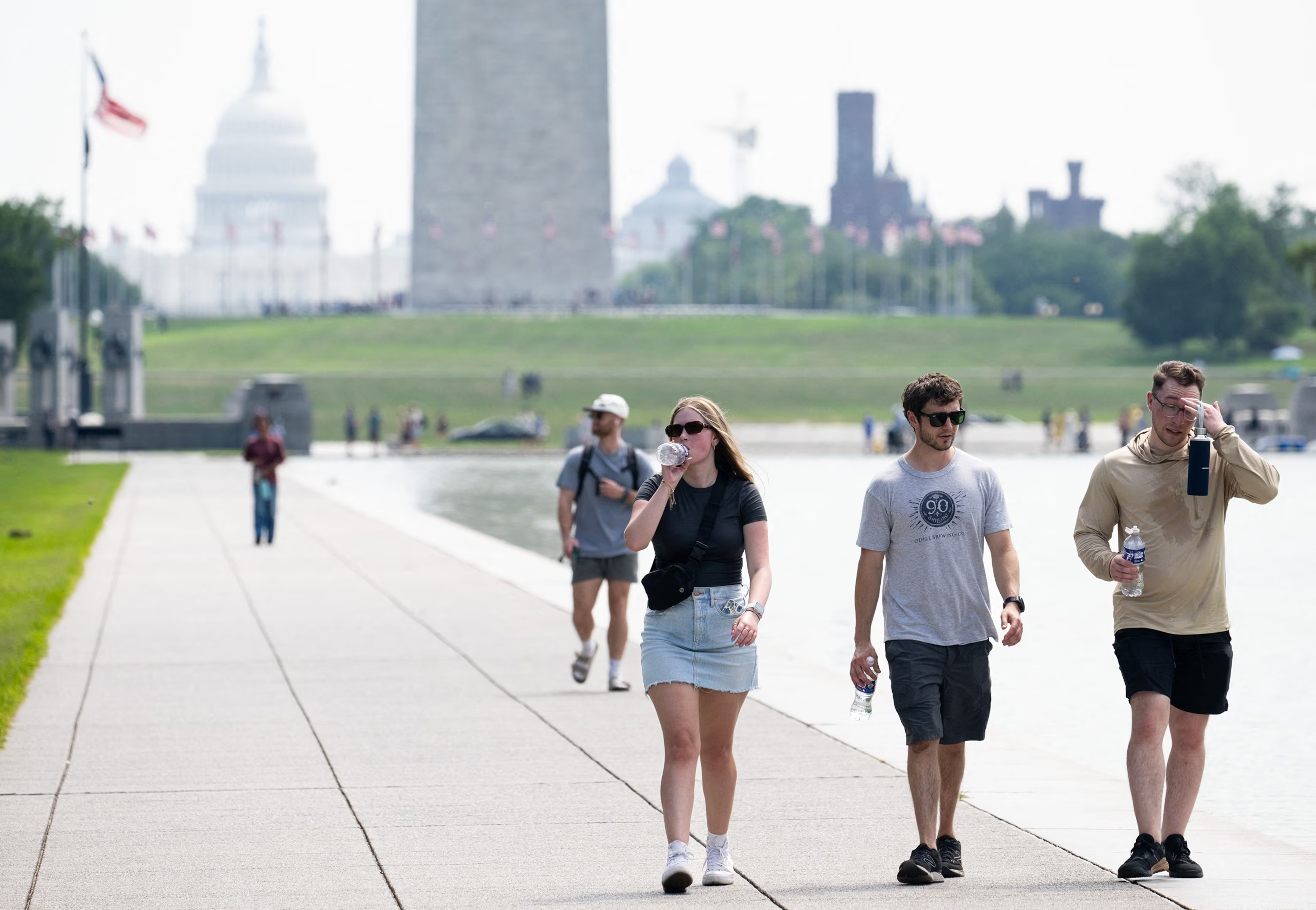
Tourists drink water as they walk along the National Mall near the Washington Monument, July 25, 2025.Saul Loeb/AFP via Getty Images
For instance, in Somalia, fatalities could reach as elevated as 70 per 100,000 individuals by 2050 because extreme heat will significantly impair the ability to move outdoors comfortably and safely.
Many of the most impacted tropical zones are also the least prepared to handle the health repercussions of surging temperatures, the study pointed out. These areas already exhibit heightened degrees of physical inactivity and frequently lack provisions, such as air-conditioned spaces, that aid individuals in remaining active amid extreme heat.
Warm conditions discourage physical activity because movement evolves into both psychologically and physically more demanding, prompting individuals to be less active, the study revealed.
Women and more mature individuals may experience the impacts more intensely because their bodies frequently encounter greater challenges in cooling down, Christian García-Witulski, principal study creator and research associate at the Lancet Countdown Latin America and a professor at the Pontifical Catholic University of Argentina, conveyed to ABC News.
“What this informs us is that heat is not simply a comfort issue, but that it is transforming behavioral patterns on a large scale,” he stated.
“And because physical inactivity constitutes a key risk element for non-communicable diseases, this suggests significant repercussions for health and the economy,” García-Witulski stated, incorporating that an expanding compilation of evidence has correlated heat exposure with an amplified likelihood of cardiovascular stress and dehydration.
Even affluent countries such as the United States will not be shielded from soaring temperatures. The study anticipates the U.S. could experience roughly 2.5 deaths per 100,000 individuals from heat-linked physical inactivity by 2050, an escalation from comparatively diminished levels at present.
“Enhanced adaptive capability, such as air conditioning, climate-regulated gyms and indoor physical activity infrastructure, mitigates the effect,” García-Witulski stated. “However, this can also engender a deceptive impression of security, because air conditioning, while it safeguards against heat, tends to foster sedentary conduct.”
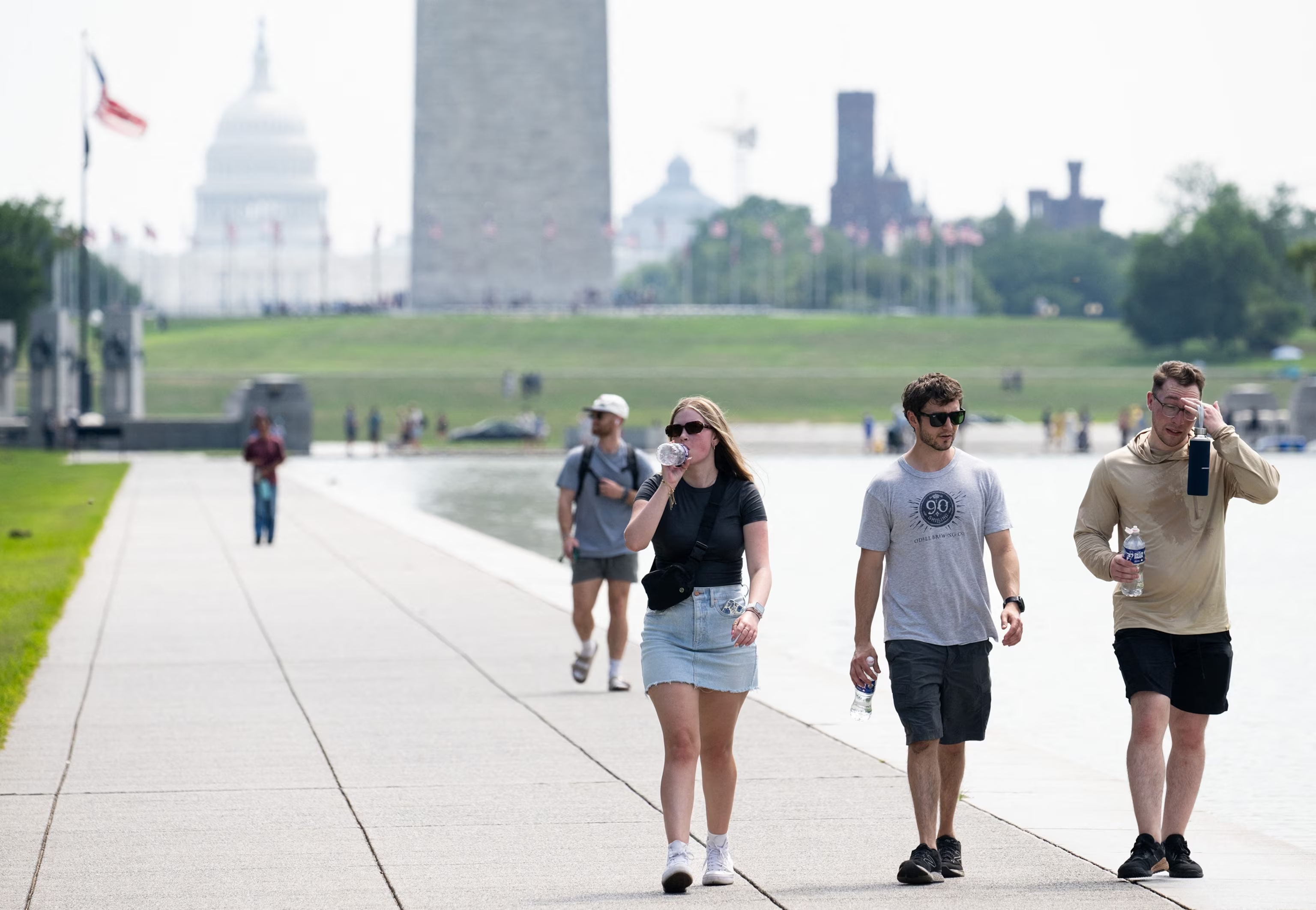
Tourists drink water as they walk along the National Mall near the Washington Monument, July 25, 2025.Saul Loeb/AFP via Getty Images
The researchers assert that policymakers ought to reconfigure cities to assist individuals in remaining active in torrid conditions. They additionally advocate for more explicit public health messaging concerning how to exercise securely in elevated temperatures and broadening accessibility to climate-controlled locations where individuals can persist in being physically engaged.
Nevertheless, those modifications do not confront the fundamental catalyst of the predicament: mounting global temperatures.
“Our findings demonstrate that the disparity between a low-emissions scenario and a high-emissions scenario is immense,” García-Witulski stated. “We transition from 470,000 to 700,000 supplementary deaths globally, and from 2,400 to 3,680 million international dollars in losses. This underscores that ambitious emissions mitigation is vital to avert a heat-induced transition toward sedentary behavior.”
Sourse: abcnews.go.com