
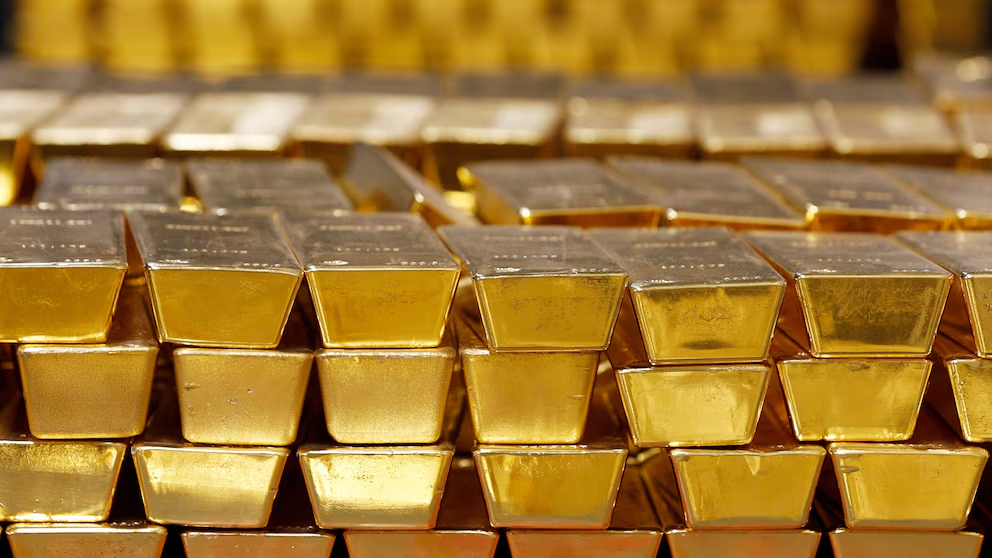
Gold bars are arranged inside a depository at the U.S. Mint on July 22, 2014, in West Point, N.Y.Mike Groll/AP
The value of gold has decreased 13% since the start of hostilities with Iran, defying the precious metal’s reputation as a secure investment.
Numerous other assets have fared better during the Middle East crisis. The S&P 500 has declined 7% since the beginning of the Middle East conflict, while the Nasdaq, which is heavily weighted with tech stocks, has decreased 8%. Bitcoin has only seen a 2% drop.
"Unbelievable! The unexpected behavior in markets amid the Iran war has been the weakness of gold," Deutsche Bank Research stated earlier this week.
The gold selloff is due to several converging reasons, according to some experts. These reasons include the inflated price of gold preceding the war, the relative appeal of other low-risk investments, and an inconsistent history of living up to its safe-haven status.
Occasionally, gold can "diverge from established trends and operate independently," Adam Turnquist, chief technical strategist at LPL Financial, conveyed in a message to ABC News on Tuesday.
The recent downturn follows a period of outstanding gains for gold over several months. Last year, amplified geopolitical and economic instability increased the demand for gold and silver, which typically show some independence from fluctuations in share values.
As recently as January, gold reached a record high of almost $5,600 per ounce. Even after dropping to its present value of approximately $4,490 an ounce, gold remains about 50% pricier than its valuation from the prior year.
The outstanding performance made gold susceptible to a selloff, Campbell Harvey, a professor at Duke's Fuqua School of Business specializing in commodity prices, explained to ABC News. He added that bullion usually yields meager or unfavorable returns after attaining an all-time peak.
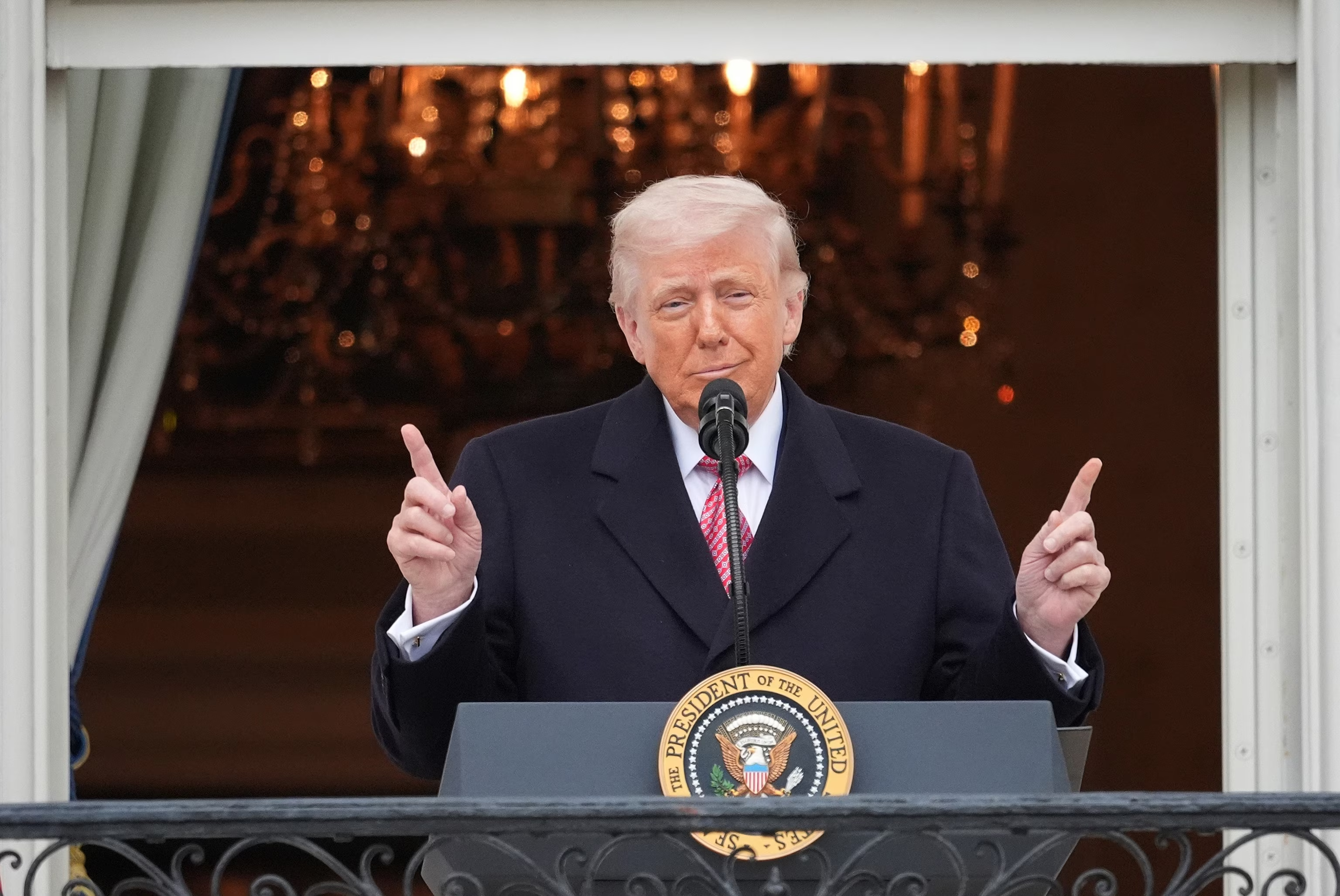
President Donald Trump speaks during an event with farmers on the South Lawn of the White House, March 27, 2026, in Washington.Alex Brandon/AP
"What I find unusual is the surge in gold’s price. We’re discussing a decrease from that highest point," Harvey stated.
The assumption of increased gold prices during times of economic uncertainty is rooted in a solid historical record, yet this rule does not always apply, according to some analysts.
Decades of data support gold’s status as a safe-haven asset, as indicated by a study co-written in 2025 by Harvey. Researchers discovered that gold prices rose during eight of the last 11 significant stock market downturns dating back to the late 1980s.
Nonetheless, Harvey commented, gold can be "unreliable as a safe haven."
Gold prices have their own fluctuations, potentially resulting in losses instead of acting as a safety net. "Gold won’t mirror every single geopolitical crisis," Harvey stated.
The drop in gold’s price also arises from a concurrent increase in Treasury bond yields, providing investors with a secure asset that, unlike gold, guarantees annual payouts.
The yield on a 10-year Treasury bond, or the amount paid yearly to a bondholder, is approximately 4.45%, representing an increase of nearly half a percentage point from one month prior.
The increase in bond yields partly reflects the anticipation that the Federal Reserve will maintain elevated interest rates for an extended period to prevent price increases driven by the war.
High interest rates, in turn, diminish gold’s attractiveness. "Gold offers no interest," Turnquist noted.
Certain analysts cautioned about possible gold volatility in the weeks and months ahead, but they expressed optimism about future gold valuations. Gold prices have surged almost 160% in the last five years.
"In the long run, those holding gold have fared quite well," Harvey concluded.
Sourse: abcnews.go.com