
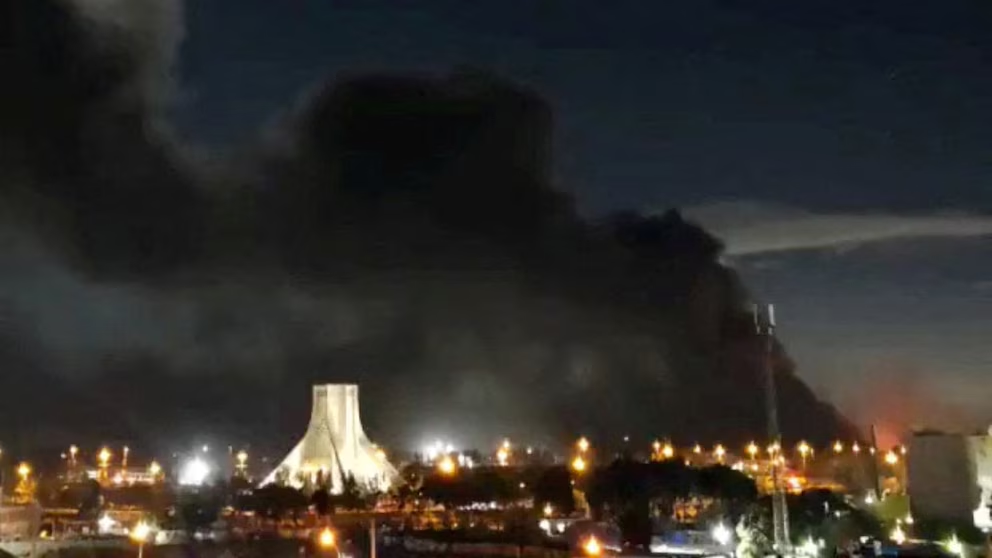
In this captured image from a social media video, plumes ascend above Azadi Square after an attack, during the U.S.-Israeli confrontation with Iran, located in Tehran, Iran, April 6, 2026.Social Media via Reuters
President Donald Trump is issuing a threat to Iran involving an offensive that legal war authorities deem potentially unlawful.
Trump declared on Sunday that should Iran fail to accept agreeable stipulations for a peaceful resolution to the conflict, "they're going to forfeit every electric facility and every other facility they possess in the entire nation."
The chief executive suggested that Iranian civilians would back the assaults, as it would accelerate the Tehran government’s move toward the surrender Trump seeks.
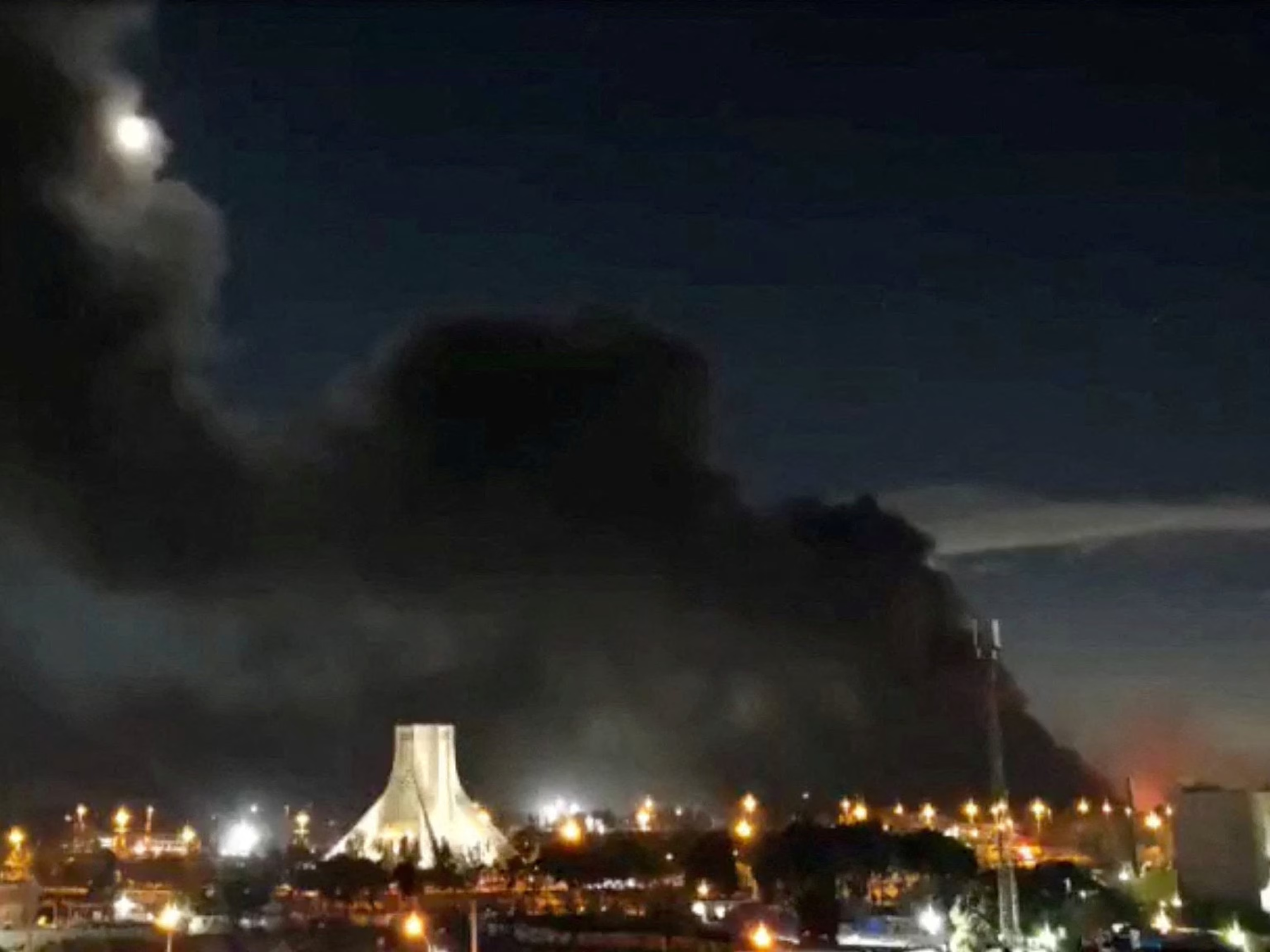
In this captured image from a social media video, plumes ascend above Azadi Square after an attack, during the U.S.-Israeli confrontation with Iran, located in Tehran, Iran, April 6, 2026.Social Media via Reuters
"We possess — we possess a strategy, thanks to the might of our military, by which every bridge in Iran will face destruction by twelve o'clock tomorrow night, where every power station in Iran will be defunct, ablaze, detonating, and rendered unusable," Trump stated at a White House press briefing on Monday, predicting the operation would last merely four hours.
Trump has expressed his desire for the Strait of Hormuz, where Iran exerts control over passage, to reopen by 8 p.m. Tuesday.
When queried on Monday whether his pledges to obliterate Iran's infrastructure represented war crimes, Trump responded, "You understand the genuine war crime? The genuine war crime involves permitting Iran to obtain a nuclear arsenal."
Specialists in the regulations of conflict assert that Trump's overarching threat embodies a potential commitment to several war crimes. Collective reprisal against a populace and the intentional targeting of shielded civilian installations are forbidden under international statutes. Trump has further voiced a desire to seize Iran's petroleum resources, possibly constituting plundering, which is also outlawed.
The U.S. has woven the Geneva Conventions, which establish humanitarian benchmarks during armed clashes, into its national legal framework, thus obligating service personnel to comply with them.
Retired Air Force Lt. Col. Rachel VanLandingham, formerly the chief of international law at U.S. Central Command during the Iraq conflict, alongside Margaret Donovan, a previous assistant U.S. attorney with service in the Army's Judge Advocate General Corps, conveyed in Just Security that Trump has menaced "total warfare" in Iran, signifying "a comprehensive repudiation of the legal constraints the United States has embedded within the statutes governing U.S. military endeavors for both realistic and ethical motives," they penned.
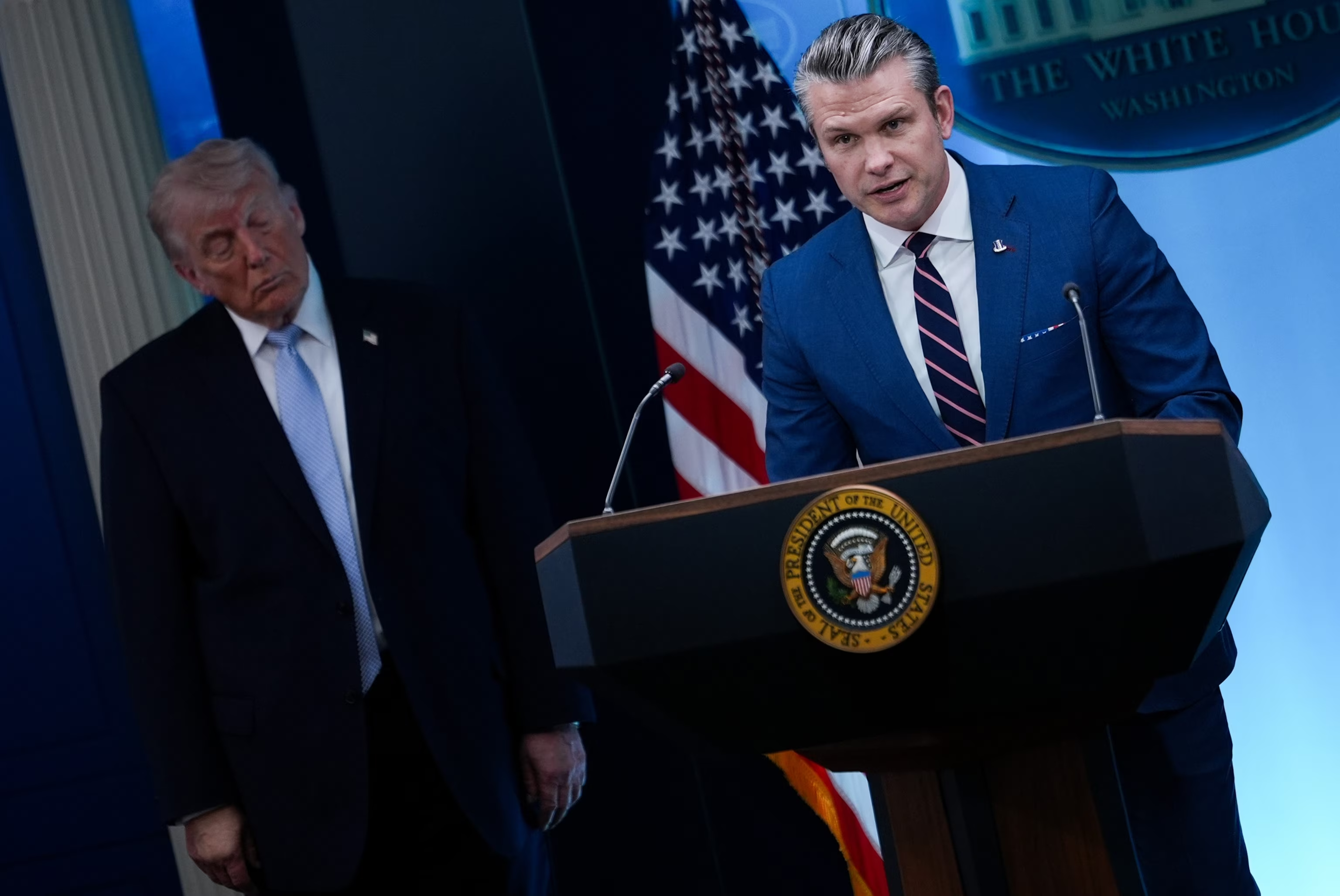
President Donald Trump observes as Defense Secretary Pete Hegseth addresses reporters in the James Brady Press Briefing Room at the White House, April 6, 2026.Julia Demaree Nikhinson/AP
Brian Finucane, an erstwhile attorney-advisor at the State Department from 2011 to 2021, commented that any verdict that Iranian armed forces were utilizing civilian infrastructure for military intentions would necessitate a "fact-intensive" appraisal.
"Fundamentally, a power-generating plant could qualify as a military target permissible for engagement, contingent upon demonstrating its substantial contribution to the adversary's military operations and the attainment of a concrete military edge via its obliteration," Finucane articulated.
A power facility dedicated solely to supplying energy for a missile manufacturing site, for example, would represent an acceptable target.
"[The] difficulty lies in the president's pronouncement, asserting, 'No, we're annihilating them all,'" Finucane elucidated. "It is not accurate that all power facilities within Iran constitute military objectives."
During the 1999 U.S. and NATO-led aerial campaign over Yugoslavia, the Pentagon zeroed in on power distribution nodes while deliberately avoiding generation centers, according to Human Rights Watch. Rather than employing explosives, the majority of assaults employed carbon fiber ordnance to incapacitate the installations instead of inflicting outright destruction.
VanLandingham described this as an "operationalization" of implementing "preemptive actions during attacks." These methods are "mandated legally" to guarantee the swift restoration of crucial civilian-benefitting infrastructure, she affirmed.
Trump asserted on Monday that Iranians "yearn to perceive blasts because they crave emancipation." No substantiating proof buttresses his assertion.
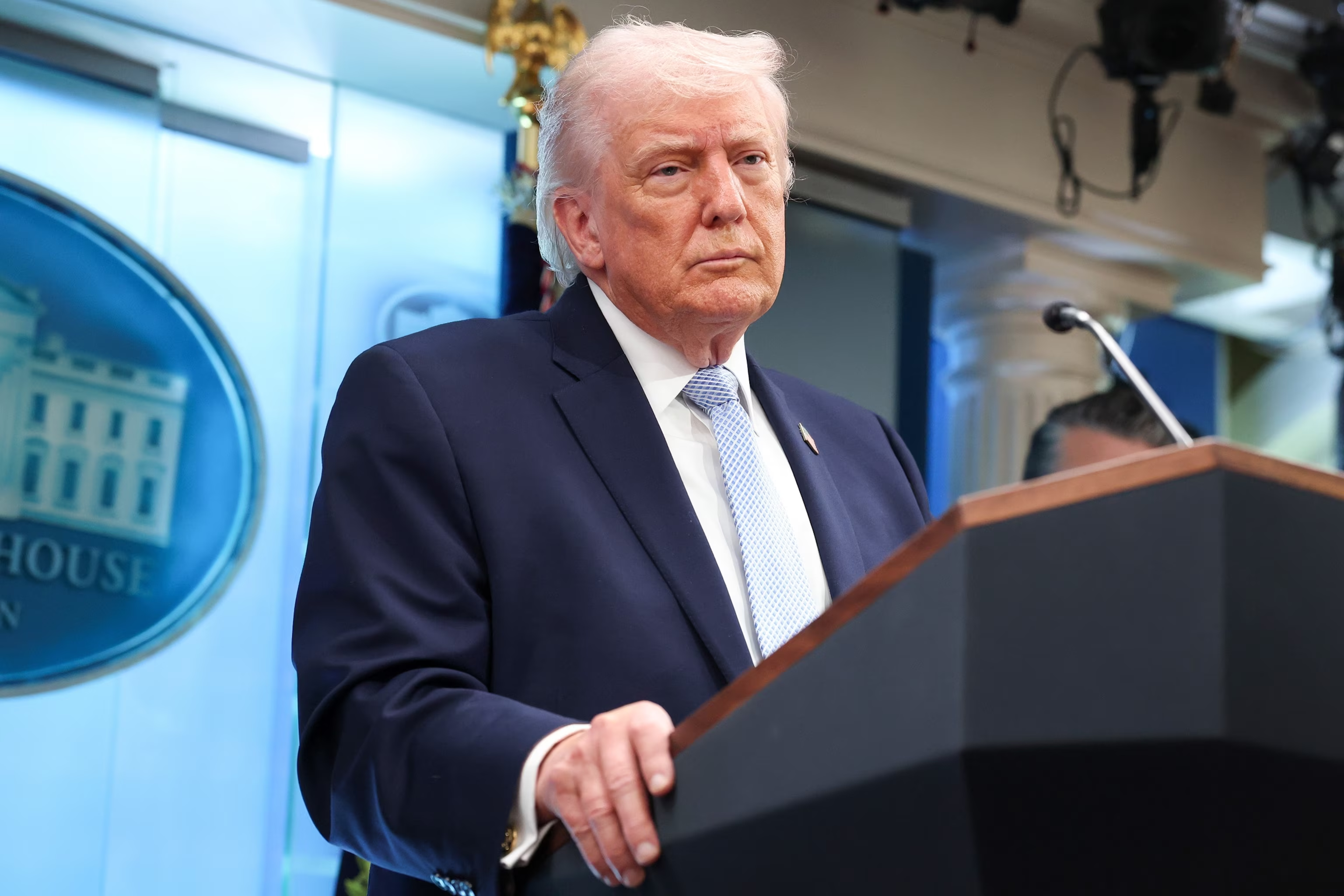
President Donald Trump speaks during a news conference in James S. Brady Press Briefing Room of the White House, April 6, 2026.Anna Moneymaker/Getty Images
During a hearing convened on Capitol Hill in March, Air Force General Alexus Grynkewich, commanding officer of U.S. European Command, conveyed his vigilant monitoring of the comprehensive targeting of civilian power infrastructure by Russia within Ukraine.
"My observations stemming from the scrutiny of airborne power throughout history reveal a recurring trend: instances of targeting civilian demographics invariably culminate in the fortification of their determination," the general conveyed to senators.
In dialogues with ABC News, specialists in the regulations governing armed conflict underscored that, whilst the statutes aim to curtail civilian detriment and tribulation, their foundational intent centers on precluding conflict itself.
VanLandingham contended that the administration is "lauding the decimation, the brutality, the visual portrayals of aggression" in its oratory and social media communications, characterizing this as a "perilous deviation."
"We are witnessing a weakening of the pledge to the central tenet that warfare constitutes adversity — regrettable due to the affliction it engenders and deserving of circumvention at almost any expense," she stated.
The U.S. "assented to these stipulations for compelling justifications," Finucane expressed.
"The foremost precept resides in the overarching guideline prohibiting the exercise of force in the wake of the atrocities witnessed during the two World Wars and the Holocaust. The U.S. assumed a pivotal role in formulating the [United Nations] Charter, which … restricts the initiation of warfare absent legitimate self-defense or authorization from the U.N.," he articulated. "And the U.S. has contravened this critical guideline through the instigation of this war."
Sourse: abcnews.go.com