

A person fills their automobile with gasoline at a service station on April 6, 2026, in Miami, Florida.Joe Raedle/Getty Images
Markets grew buoyant after Iran and the U.S. declared a cessation of hostilities earlier in the week, but a blazing inflation report on Friday dampened the sentiment, exposing an increase in costs spurred by the dispute.
The mixture of respite and realism encapsulated the precarious period for the U.S. financial system, according to numerous observers, as a solution to the global petroleum situation remains questionable.
The two-week truce may enable the U.S. to steer clear of a downturn by hindering an intensification of the conflict and preserving petroleum costs under the elevated amounts feared at the commencement of the battle, certain experts suggested.
Nevertheless, they included, the monetary harm will probably become apparent even if the truce results in enduring accord, placing pressure on family finances and delaying economic expansion for months ahead.
"The positive element is — should the truce persist — we will most likely sidestep a recession," Mark Zandi, the chief economist at Moody's Analytics, informed ABC News.
"However, there has already been a significant setback and further impact is still forthcoming," Zandi continued, indicating that petroleum and gasoline costs remain noticeably greater than they stood prior to the war.
The Middle East disagreement encouraged Iran’s de facto shutdown of the Strait of Hormuz, a crucial waterway that supports the movement of approximately one-fifth of the world’s supply of oil and natural gas.
As a component of the ceasefire understanding, Iran states it will authorize tankers to pass through the Strait of Hormuz provided they coordinate with the nation’s military.
The recommencement of tanker activity remains uncertain, however. It was halted on Wednesday following Israeli strikes on Lebanon, Iran’s semi-official Fars News Agency reported.
U.S. oil values escalated more than 75% across the initial days of the war. Gasoline costs achieved their most significant single-day increase since March 2022, shortly after the Russian intrusion of Ukraine, according to GasBuddy petroleum analyst Patrick De Haan.
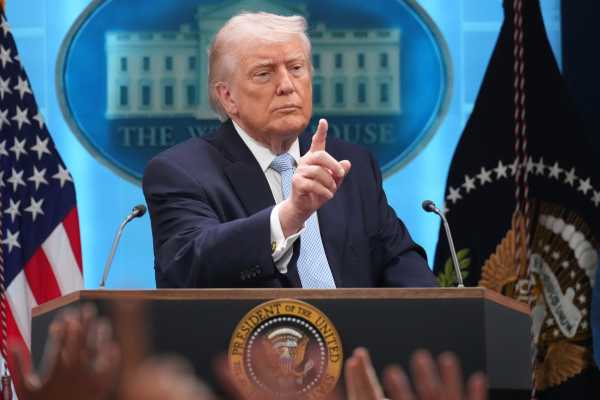
President Donald Trump converses with journalists during a press briefing inside the James Brady Press Briefing Room at the White House, April 6, 2026, in Washington.Mark Schiefelbein/AP
The potential of a severe and sustained petroleum deficiency threatened to elevate costs for a wide range of commodities, depleting vitality from consumer expenditure, which supports a majority of the nation’s financial development. Various notable analysts delivered grim projections throughout the opening weeks of the battle concerning the heightened likelihood of a U.S. economic downturn.
A robust ceasefire would likely minimize the possibility of a recession and avert worst-case circumstances involving widespread job cuts and unrestrained inflation, some experts indicated.
"The ceasefire curtails the possibility of a further surge in energy costs, which will reduce inflation, diminish the motivation for rate escalations and lower the threat of recession should the ceasefire persist," Joseph Brusuelas, principal and chief economist at RSM, told ABC News in a statement.
Following the ceasefire, petroleum costs plunged and bond yields declined, lightening some of the cost burden for consumers and businesses in equal measure. Gasoline costs in the U.S. reached $4.15 typically per gallon on Friday, denoting an uncommon dip in gas prices during the conflict, although costs remain $1.17 greater than prior to the war, AAA data revealed.
Even if the U.S. avoids a recession, certain analysts stated, the financial effects of the war might prove considerable.
An inflation report on Friday provided a preliminary evaluation of the scope of the disturbance. Costs increased by 3.3% in March relative to the prior year, representing a sharp escalation from an annual inflation rate of 2.4% in the previous month. Yearly inflation rose to its highest mark in almost two years, U.S. Bureau of Labor Statistics (BLS) figures demonstrated.
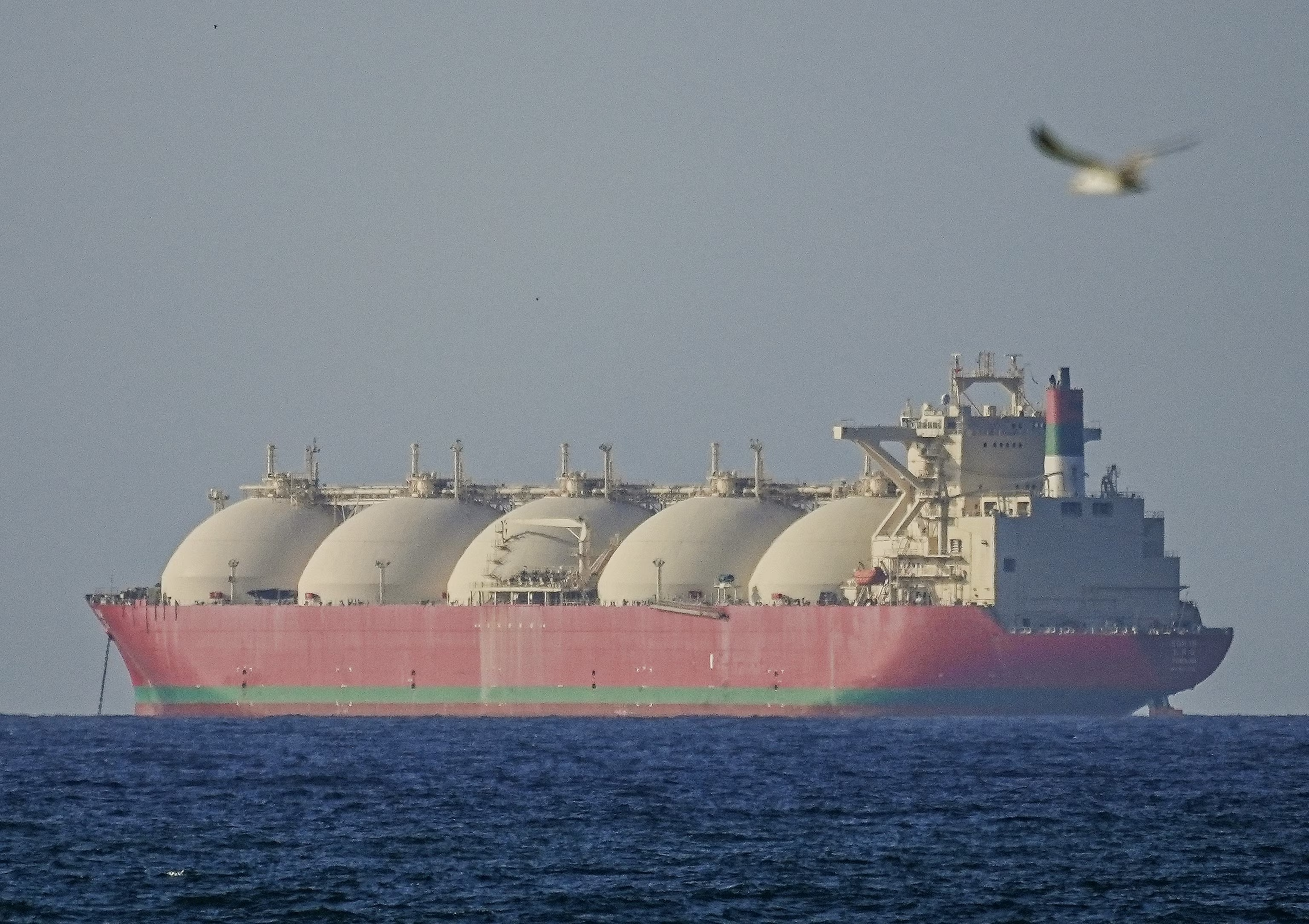
A ship navigates through the Strait of Hormuz following the two-week provisional ceasefire accomplished involving the United States and Iran on the condition that the strait be reopened, as seen in Oman on April 8, 2026.Shady Alassar/Anadolu via Getty Images
The cost pressure will likely persist, numerous analysts observed. Unrefined material prices receded following the ceasefire announcement yet persisted at substantially raised rates. U.S. oil values exceeded $98 per barrel on Friday, standing nearly 50% greater than their pre-war value.
"We anticipate global oil supply normalization to necessitate time, with prices projected to remain increased relative to pre-conflict values in the months approaching," Brock Weimer, investment strategy analyst at Edward Jones, informed ABC News in a statement.
Elevated costs might constrain consumer expenditure and harm business income, instigating a deceleration in economic progression, various experts stated.
Gregory Daco, chief economist at accounting firm EY, predicted that U.S. annualized gross domestic product (GDP) would decelerate to a lethargic speed of 1.6% near the end of this year. As recently as the third quarter of the preceding year, GDP surged at a rate approximately three times swifter.
Certain analysts indicated the outlook remains burdened with uncertainty, because numerous current projections depend upon the durability of the ceasefire and the recommencement of tanker activity through the Strait of Hormuz.
Mark Blyth, a professor of political economy at Brown University, declared a broad spectrum of consequences is in progress for the U.S. economy as rapidly evolving developments modify the prospects for the termination of hostilities.
"Everything could be invalidated in a week," Blyth expressed.
Sourse: abcnews.go.com