
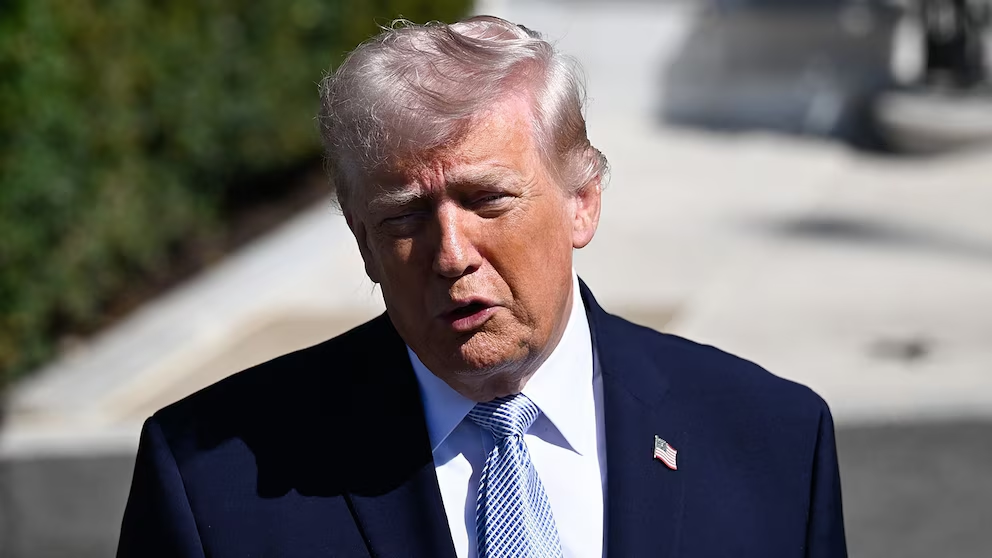
President Donald Trump addresses the press during the annual Easter Egg Roll on the South Lawn of the White House in Washington, April 6, 2026.Daniel Heuer/EPA/Shutterstock
On Monday, President Donald Trump referred to an initiative to conclude the conflict with Iran as a "notable advance" but insufficient to induce him to cease his military operation.
"They are currently in discussions, and they have achieved a very considerable milestone," Trump communicated to journalists while present at the annual White House Easter Egg Roll. "We shall observe the developments."
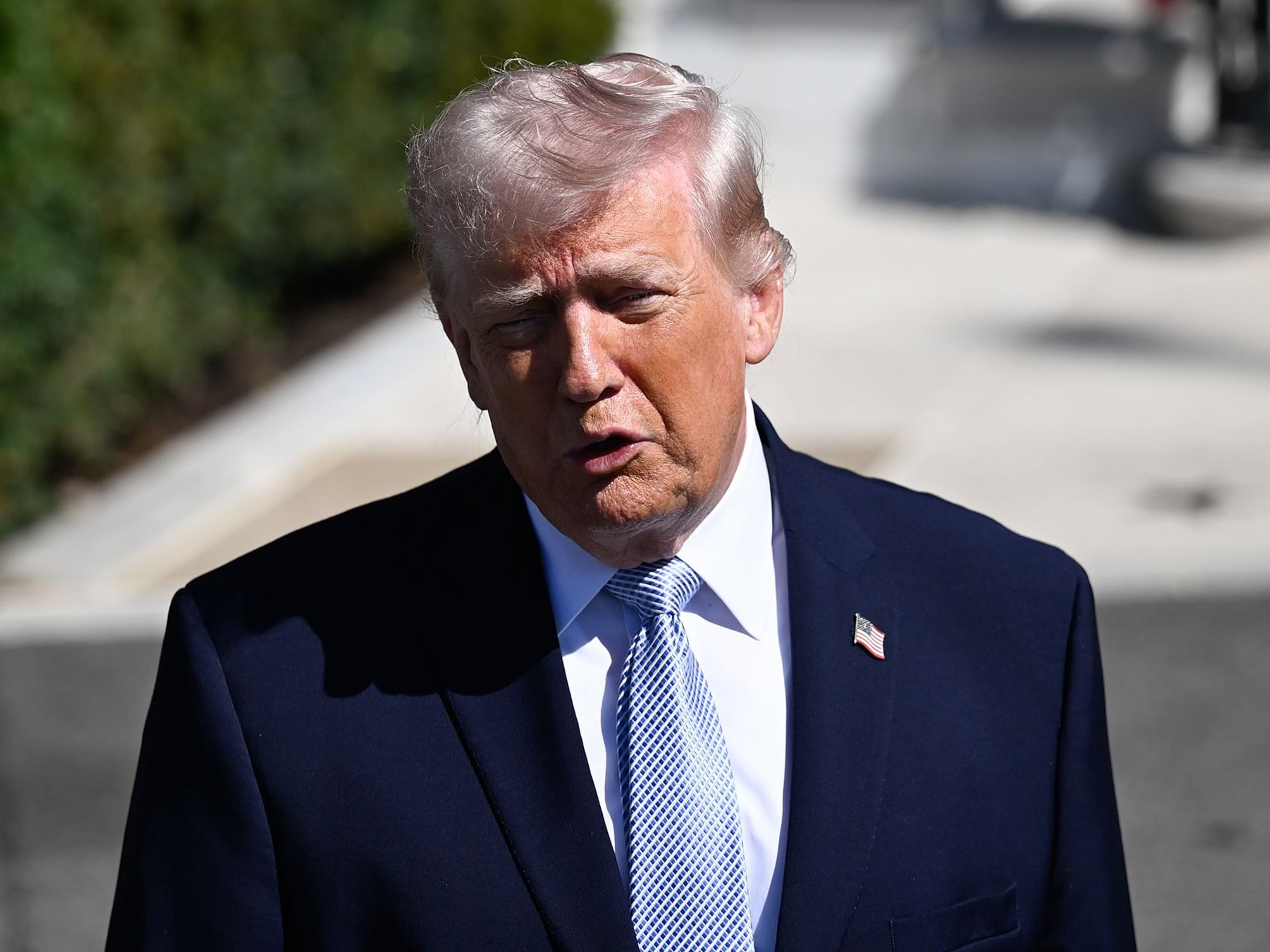
President Donald Trump speaks to members of the media during the annual Easter Egg Roll on the South Lawn of the White House in Washington, April 6, 2026.Daniel Heuer/EPA/Shutterstock
The specific proposal to which Trump alluded was not immediately known. The president had highlighted ongoing dialogues with more "temperate" factions, but tensions heightened over the weekend following the destruction of an American warplane.
According to a U.S. official, as well as another individual with knowledge of the ongoing discourse, intermediaries are endeavoring to negotiate a 45-day cessation of hostilities between the U.S. and Iran before Trump’s latest ultimatum, which stipulates that Iran must fully open the Strait of Hormuz by 8 p.m. ET on Tuesday or encounter assaults on bridges and power infrastructure.
Iran indicated on Monday that it would decline the mediators' suggestion, instead issuing its own 10-point blueprint, which a U.S. official characterized as extremely demanding.
In the past, Iran has expressed a desire for a lasting commitment from the U.S. to cease the offensives rather than a temporary truce.
Trump has postponed the deadline on multiple occasions, citing advancements in continuous negotiations, only to reinstate the threat of military annihilation once more.
Both sources diminished expectations that an agreement could be reached promptly, stating that, up to this point, Iran has refused to surrender what it perceives as its primary advantage in the discussions: authority over the Strait of Hormuz and its reserve of highly enriched uranium.
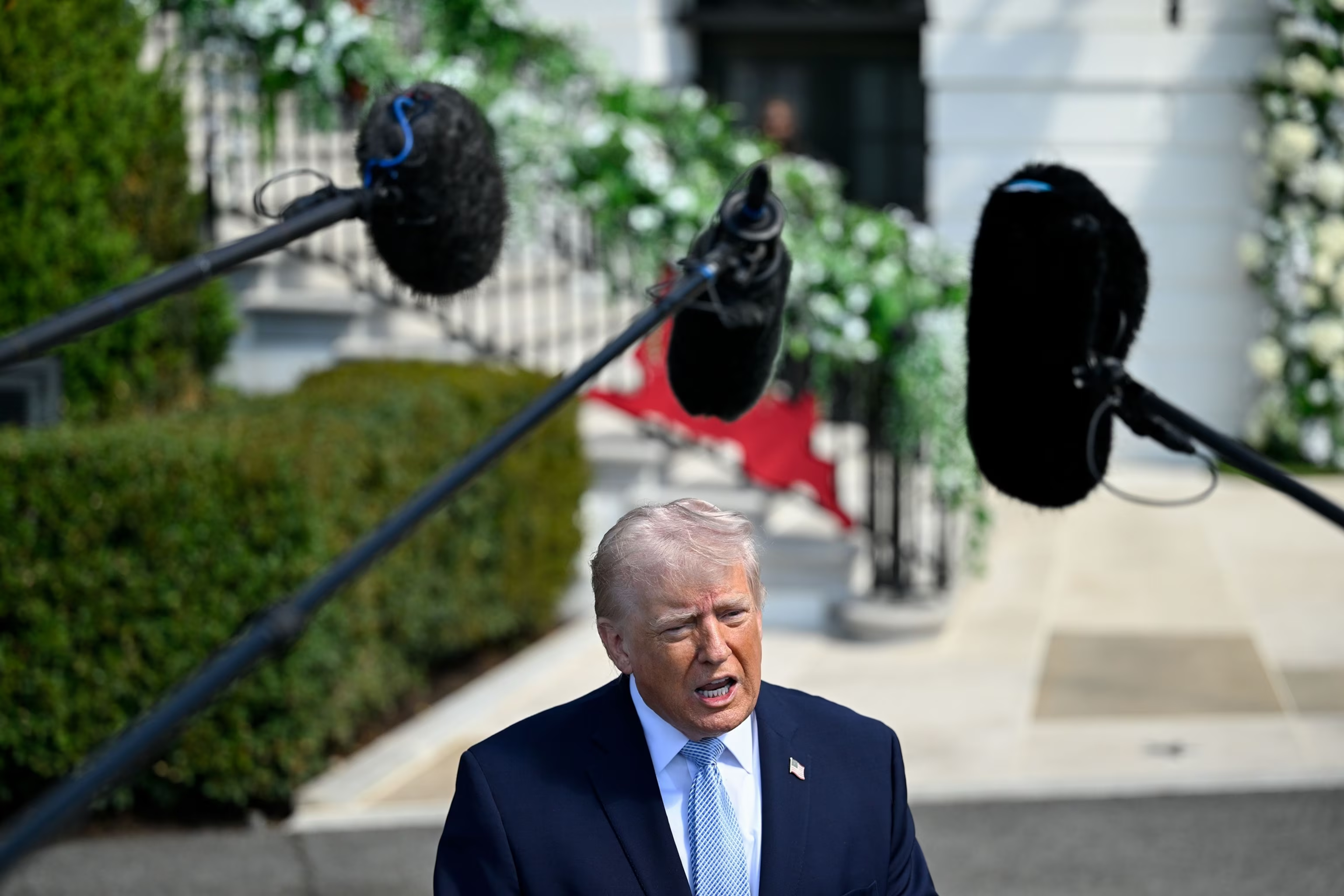
President Donald Trump speaks to members of the media during the annual Easter Egg Roll on the South Lawn of the White House in Washington, April 6, 2026.Daniel Heuer/EPA/Shutterstock
"We are decimating their nation. And I regret doing it, but we are decimating, and they simply refuse to concede. They don’t want to admit defeat, as the saying goes. But they eventually will," Trump stated. "And if they fail to do so, they will have no bridges, no power plants, absolutely nothing."
However, the president also appeared to recognize that the conflict was unpopular within the country.
"Regrettably, the citizens of America would prefer to see our troops return home," he remarked.
Earlier on Monday, a White House official commented that the proposition was merely "one among several concepts" and suggested that the president had not endorsed it.
According to sources, intermediaries are suggesting confidence-building strategies intended to bring both parties closer to a resolution, emphasizing to the Iranian government that, despite Trump having previously extended deadlines, Tehran would likely need to demonstrate a desire to make significant compromises in order to secure additional time for discussions to proceed.
In their public statements, Iranian leaders have indicated minimal flexibility for settlement, issuing demands that the U.S. regards as highly ambitious.
Intermediaries have proposed the notion that perhaps access to the Strait of Hormuz and the removal of Iran’s uranium stockpile could be completely resolved following the establishment of a truce. Nevertheless, a U.S. official indicated that it appeared exceedingly improbable that the Trump administration could be persuaded to consent to those conditions–particularly concerning the Strait of Hormuz.
Sourse: abcnews.go.com