
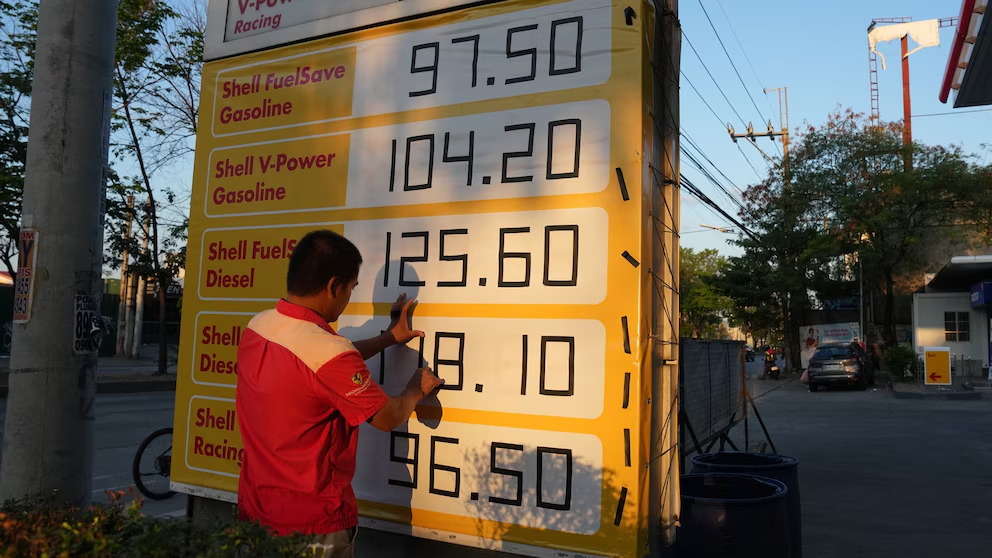
A worker uses black tape to adjust the prices of their sign at a gasoline station as oil prices continue to rise, March 24, 2026, in Quezon City, Philippines. Aaron Favila/AP
The Philippines has announced a nationwide energy crisis amid the U.S. and Israeli conflict with Iran, representing the most recent indicator of pressure within Asia as the Middle Eastern dispute impedes petroleum shipping and presages a fuel shortfall.
Philippine President Ferdinand Marcos Jr. mentioned partly that the present war imperiled "the existence and soundness of the nation's power provision."
The crisis announcement permits the Philippine government to take command of gasoline costs and expedite imports from alternate vendors, such as Russia. Philippine authorities affirm they hold adequate gasoline to last approximately 45 days at usual consumption rates.
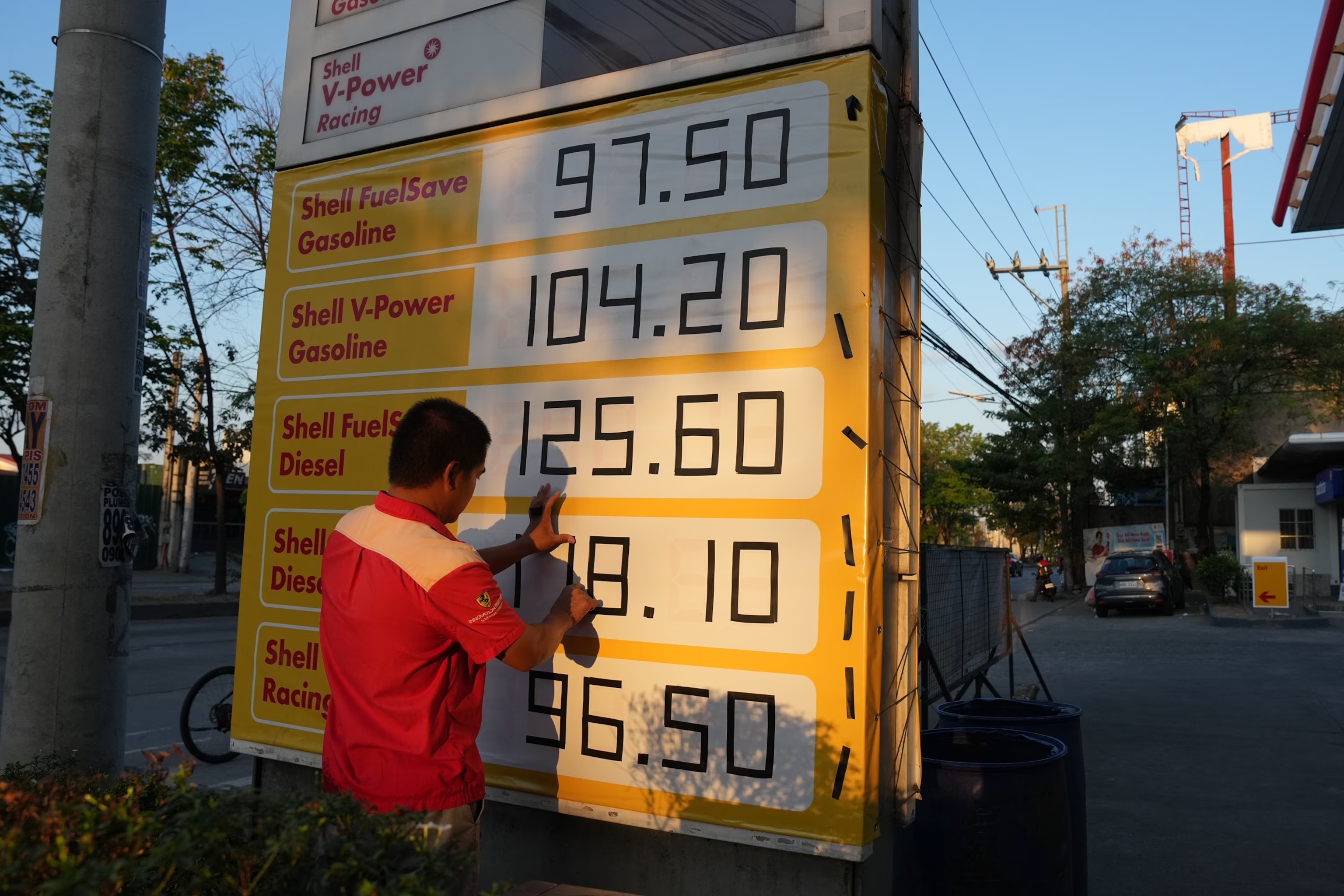
A worker uses black tape to adjust the prices of their sign at a gasoline station as oil prices continue to rise, March 24, 2026, in Quezon City, Philippines.Aaron Favila/AP
The pronouncement arrives one day following South Korea initiated a countrywide energy-conserving initiative, requesting individuals to employ bicycles for brief travels and lessen shower times. Japan, meanwhile, communicated Wednesday that it will soon commence dispensing petroleum from its emergency stockpile, comparable to a 30-day reserve. Thailand and Vietnam have also implored inhabitants to adopt actions to curtail energy depletion.
Fatih Birol, the executive director of the International Energy Agency (IEA), earlier this week expressed the ongoing petroleum crunch had surpassed the combined consequence of international energy jolts during the 1970s.
The world’s economy is confronting a “major, major danger,” Birol stated at a gathering in Canberra, Australia, mentioning that no country would be “invulnerable to the repercussions of this predicament if it proceeds in this course.”
Worldwide oil prices have surged lately after the war caused the shutting of the Strait of Hormuz, a vital channel for petroleum conveyance. The strait enables the transportation of approximately one-fifth of the worldwide supply of crude oil, totaling nearly 20 million barrels per day.
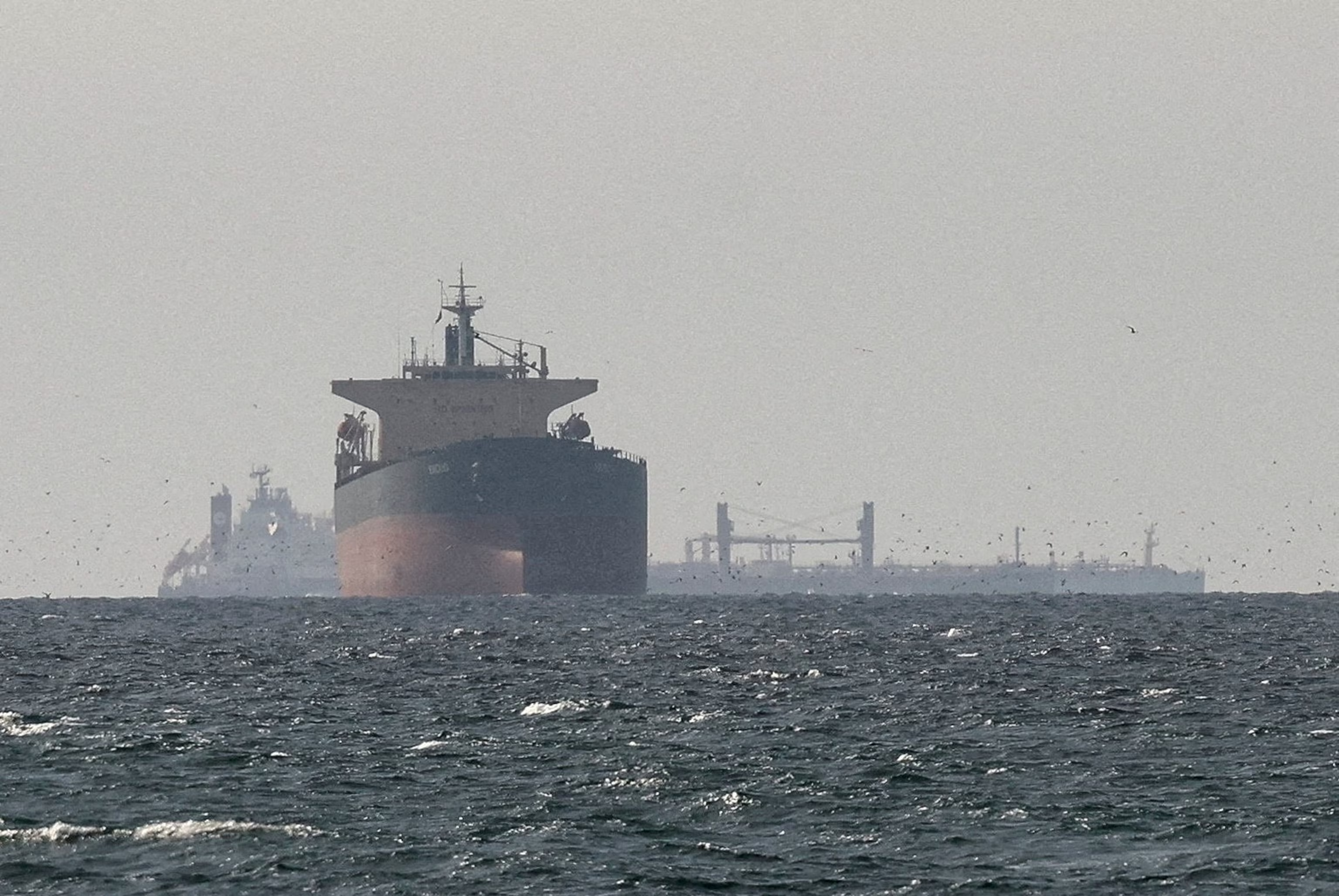
Cargo ships in the Gulf, near the Strait of Hormuz, as seen from northern Ras al-Khaimah, near the border with Oman’s Musandam governance in United Arab Emirates, March 11, 2026.Reuters
The waterway represents the singular sea lane that extends from the Persian Gulf toward the open ocean, rendering it a crucial transport junction for petroleum and gas stemming from the Gulf and destined for Asia.
About 80% of the petroleum that ordinarily transits through the strait is targeted for Asian marketplaces, according to the IEA.
Roughly 5.4 million barrels of petroleum reached China through the Strait of Hormuz each day throughout the initial quarter of the preceding year, the U.S. Energy Information Administration (EIA) indicated, whereas slightly over two million barrels of petroleum moved through the strait terminated in India on a day-to-day footing, succeeded by 1.7 million imported by South Korea and 1.6 million barrels by Japan. Additional Asian countries accounted for two million barrels imported on a daily basis, according to the EIA.
In contrast, the U.S. imported merely 400,000 barrels of petroleum each day through the Strait of Hormuz within the corresponding quarter, according to EIA statistics.
The U.S. is a net exporter of petroleum, signifying it generates greater petroleum than it uses. But considering petroleum values are fixed on a global commerce arena, U.S. values shift in response to variations in international supply and demand.
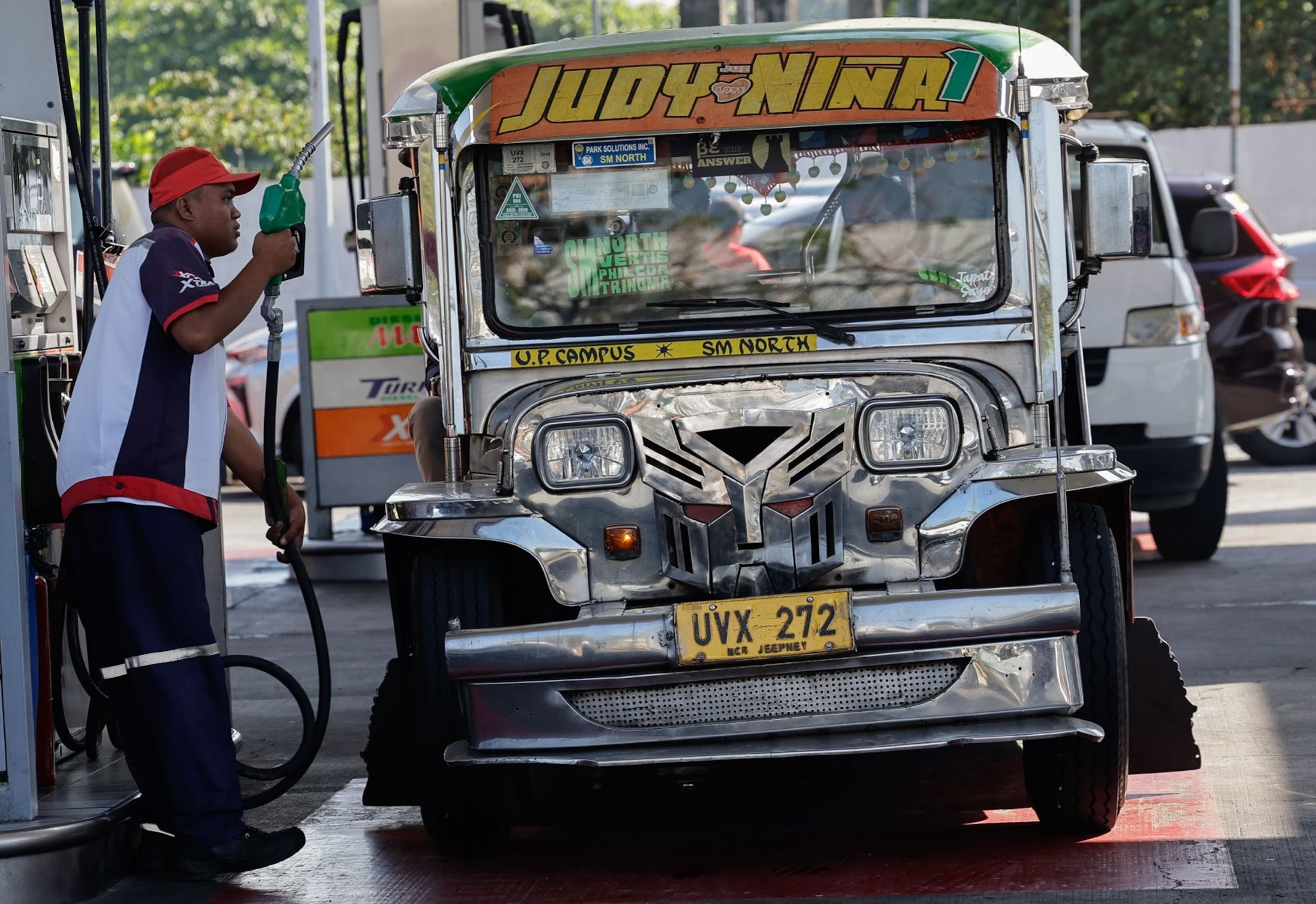
A fuel station worker prepares to refuel a jeepney, or local minibus, in Quezon City, Metro Manila, Philippines, March 25, 2026.Rolex Dela Pena/EPA/Shutterstock
Asia, conversely, is a primary petroleum importer, accounting for 44% of the world’s crude imports, IEA data revealed.
Member countries of the IEA intend to release 400 million barrels of petroleum from its strategic inventory, representing the greatest petroleum release in the 32-nation group's history, Birol indicated previously this month.
The Trump administration is scheduled to perform the second-largest-ever delivery from the nation’s emergency stockpile, which will comprise nearly half of the IEA’s projected release. Trump also alleviated restrictions on Russian petroleum and suspended a crucial ordinance of domestic petroleum conveyance. The president has also pursued to reinstate tanker traffic within the Strait of Hormuz.
ABC News' Britt Clennett added to this report.
Sourse: abcnews.go.com