

In this archived photograph from Feb. 22, 2026, customers are seen shopping at a Trader Joe’s market in New York City.Ryan Murphy/Getty Images, FILE
Inflation remained stable in February, sustaining price rises at heightened levels in the period just prior to the U.S.-Israeli conflict with Iran that instigated a rise in gasoline costs and fueled growing apprehension regarding affordability. This figure aligned with forecasters’ projections.
Prices increased by 2.4% in February compared to the preceding year, with the inflation rate holding constant from January, according to data released by the U.S. Bureau of Labor Statistics. The inflation rate is presently marginally above the Federal Reserve’s desired level of 2%.
Crude prices have escalated since the conflict with Iran in late January, amplifying the expense of gasoline and airline tickets, while also threatening to elevate prices for a wide variety of commodities reliant on diesel-fueled transportation, multiple experts previously stated to ABC News.
Gasoline expenses saw a rise in February as investors foresaw the potential eruption of hostilities with Iran, according to governmental data. Pump prices saw an increase of over 3% in February from the month before, as detailed in the inflation summary.
Food expenses grew by 3.1% in February in relation to the prior year, exceeding overall inflation and sustaining the rate of expansion witnessed in the previous month.
An uninspiring jobs announcement this past week signaled that the U.S. economy shed 92,000 posts in February, indicating a shift in momentum for the labor landscape and reversing the majority of employment gains noted in 2026.
The jobless figure crept up from 4.3% in January to 4.4% in February, the BLS reported. Unemployment remains comparatively low when assessing long-term trends.
Subdued employment growth has happened concurrently with persistent inflation, potentially signaling an era of “stagflation.”
These challenging economic conditions established the backdrop before the onset of war with Iran, triggering a surge in crude prices and posing a threat of increasing costs for numerous items delivered using diesel fuel.
The price of U.S. crude oil lingered near $86 a barrel on Tuesday, climbing over 30% since the prior month.
The national average for a gallon of gasoline in the U.S. increased to $3.53 on Tuesday from $2.92 the month prior, according to AAA statistics.
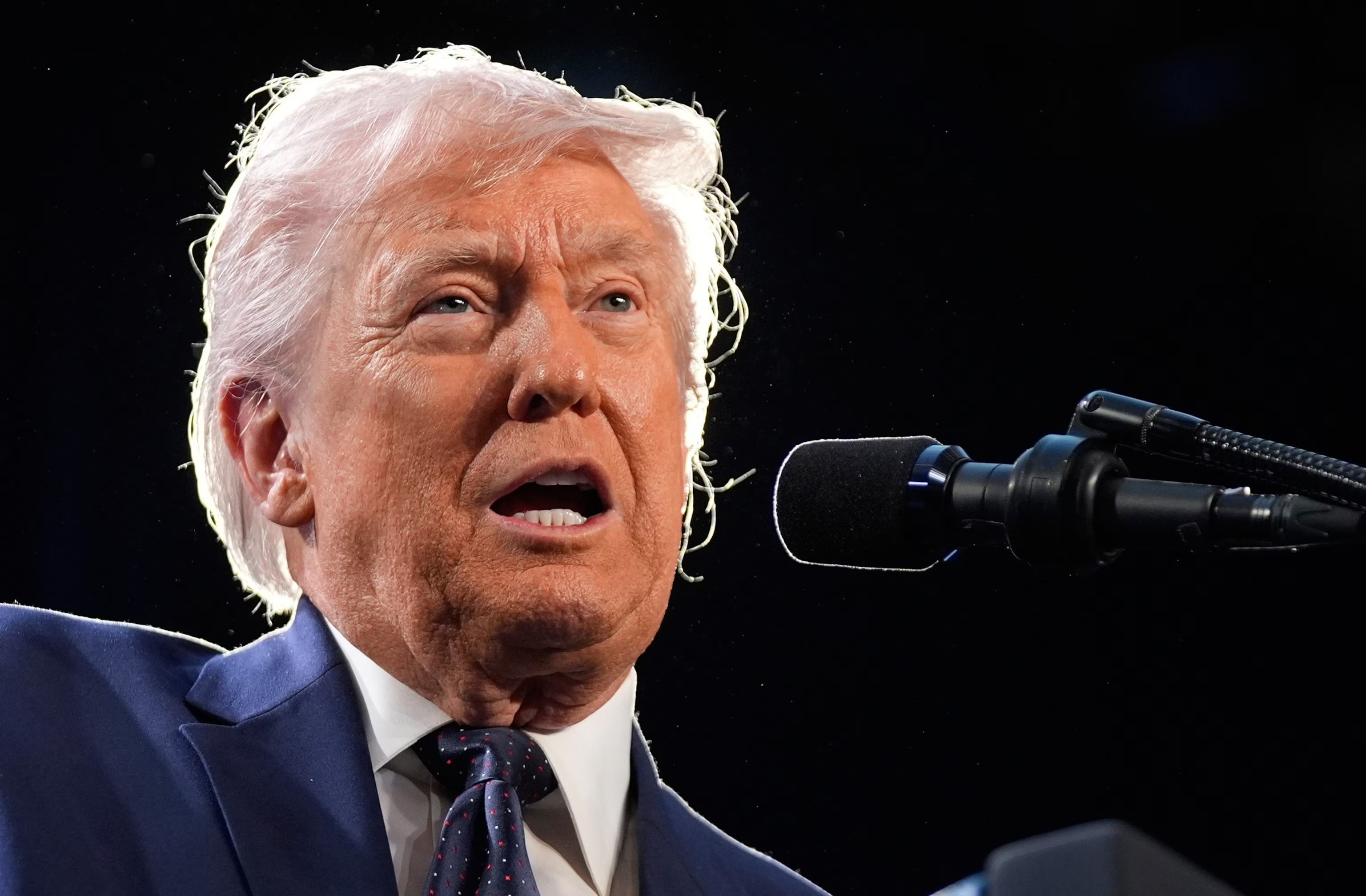
President Donald Trump delivers remarks at the Republican Members Issues Conference, March 9, 2026, at Trump National Doral Miami in Doral, Fla.Mark Schiefelbein/AP
Even so, the comprehensive economic scenario is still mixed.
A government report released in February regarding gross domestic product (GDP) pointed to the economy expanding at a weak annualized speed of 1.4% in the last three months of 2025. This statistic revealed a notable slowdown from the solid annualized growth of 4.4% reported in the quarter prior, as shown by data from the U.S. Commerce Department.
The Iran conflict poses a risk of slowing American financial advancement, given that oil-influenced price increases could negatively affect both customers and enterprises, sources previously relayed to ABC News.
The possible mixture of accelerated inflation paired with decelerated advancement might also create hurdles for the Fed, increasing strain on both sides of its objectives to moderate prices and safeguard maximum employment.
Should the Fed determine to decrease borrowing expenses, it could encourage advancement but risk elevated inflation. Conversely, a decision to increase interest rates may curb price escalations, but could threaten to restrain economic activity.
The central bank opted to maintain interest rates at their existing levels at their most recent session in January, ceasing a sequence of three successive quarter-point rate reductions. Policy shapers will decide their next interest rate plan on March 18.
Sourse: abcnews.go.com