
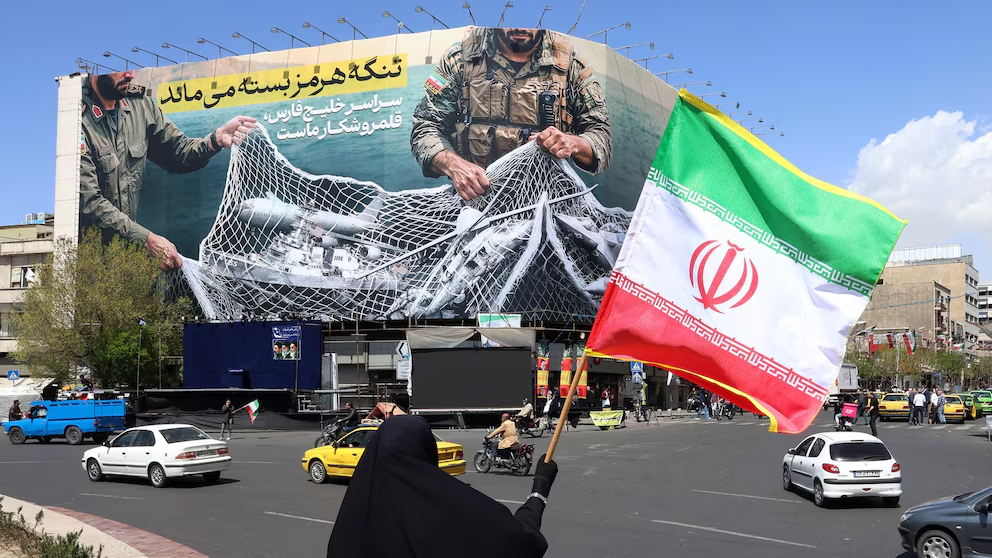
A woman displays the Iranian flag while positioned close to an advertisement stating “The Hormuz Strait is still blockaded” in Enqelab Square, Tehran, dated April 5, 2026.AFP via Getty Images
President Donald Trump asserted Sunday that lacking a peaceful accord with Iran within the next 48 hours, "we're going to obliterate the whole nation."
The president conveyed this threat to ABC News' chief political reporter Rachel Scott on Sunday, answering a query about the reliability of his earlier estimation of needing two to three weeks for a settlement.
Worry has surfaced regarding potential assaults on Iranian civilian establishments and the repercussions thereof.
"It ought to be a matter of days, not weeks," Trump remarked, further commenting that Iran "has been devastated, totally devastated. And the situation is only going to worsen."
"Each day, they will need to reconstruct more bridges, erect additional energy facilities, and everything in between," the president stated. "No nation has ever endured such severe damage."
Catch exclusive coverage on Nightline, entitled "War with Iran," nightly on ABC, as well as streaming services Disney+ and Hulu.
Trump indicated Iran possessed a 48-hour timeframe to consent to an arrangement for opening the Strait of Hormuz or to initiate peace.
"Should it materialize, then good. And if not, we are demolishing the entire country. As I said, it will become bridge and power station demolition day in Iran."
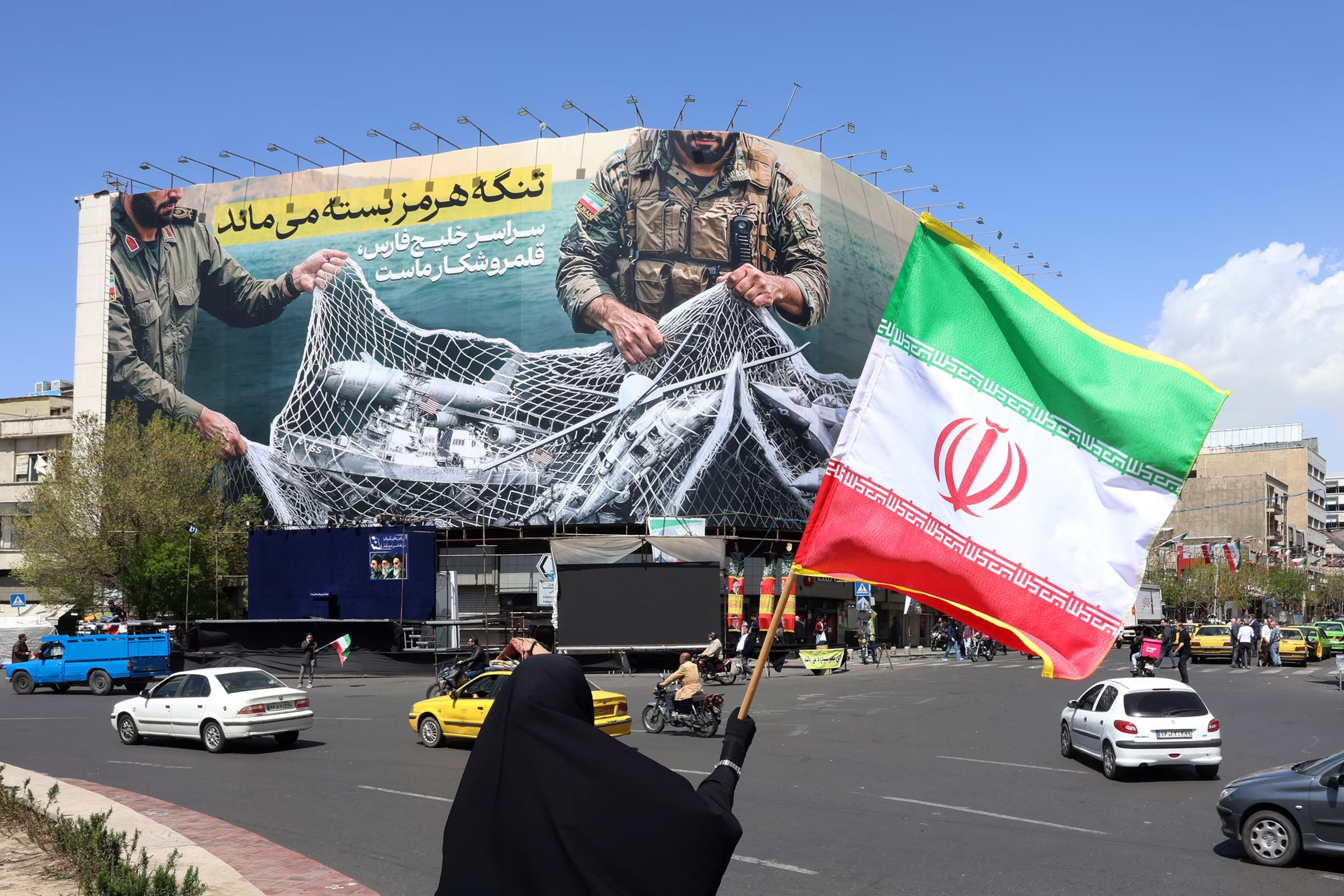
A woman holds Iran’s national flag while standing near a billboard that reads “The Strait of Hormuz remains closed” at the Enqelab Square in Tehran, on April 5, 2026.AFP via Getty Images
The president seemingly alluded to an ultimatum he shared on his social media platform Sunday, addressing Iran to permit access through the Strait of Hormuz.
Following two prior deadline extensions for opening the strait, Trump cautioned the Iranian leadership, stating that failing to fully enable access to the vital maritime route for both oil and commerce by Tuesday would result in them "living in Hell."
"Tuesday will represent a combined Power Plant and Bridge Destruction Day in Iran, unlike anything ever seen!!!" Trump expressed in a message laced with strong language. He alerted Tehran that non-compliance would ensure "a hellish existence – JUST WATCH!"
On March 26, Trump prolonged the ultimatum a second instance within the same week, calling for Iran to grant complete access through the Hormuz Strait to international maritime traffic, while claiming that discussions of peace "are progressing ideally." Trump mentioned in the post that, upon a request from Iran’s government, he was "postponing the Power Plant obliteration period by 10 days."
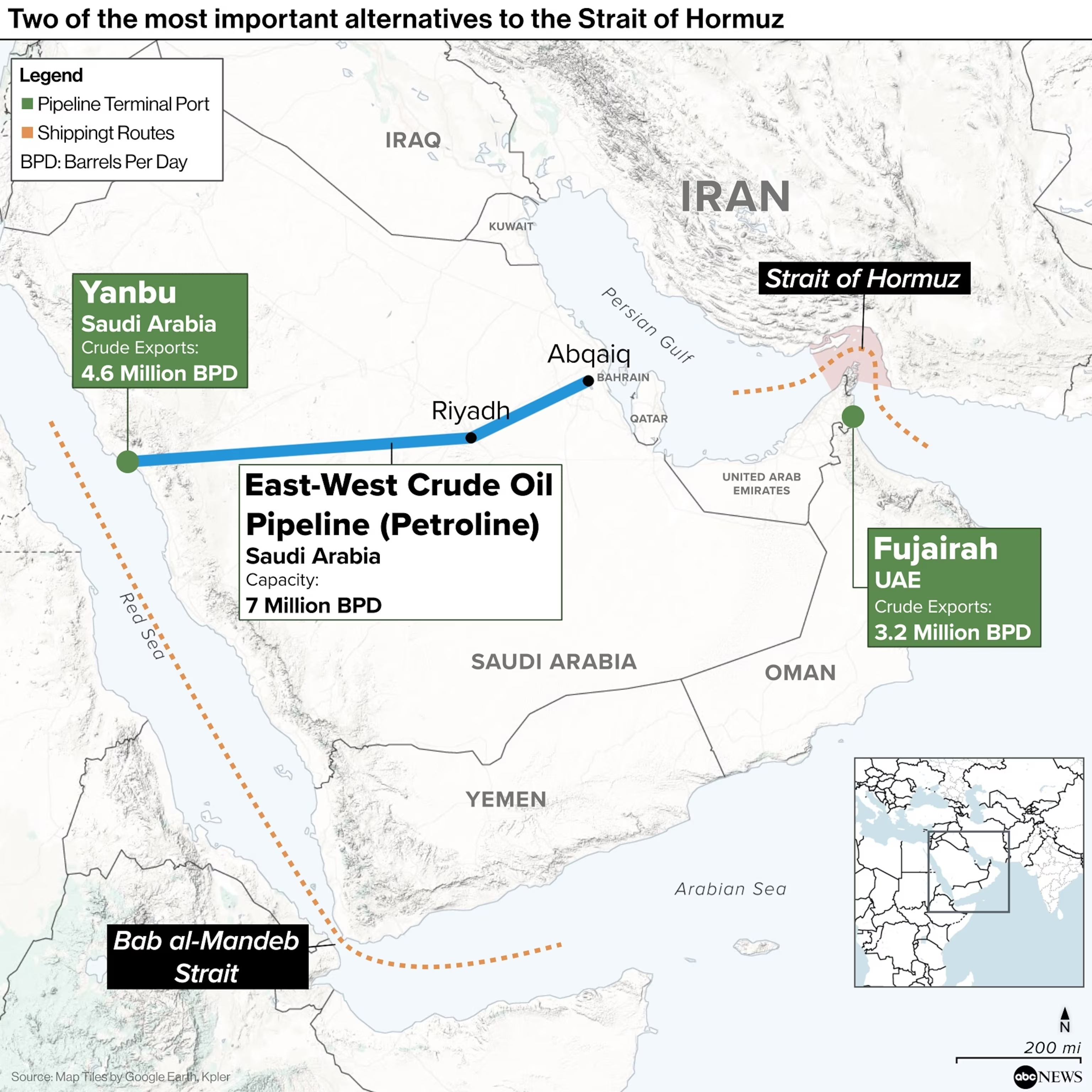
Two of the most important alternatives to the Strait of HormuzMap Tiles by Google Earth, Kpler
Trump stretched the deadline for Iran to meet the demand to Tuesday at 8 p.m. ET.
Fox News documented Sunday that Trump stated during a phone interview that he believed a pact with Iran would be achieved by Monday, adding that failing to reach a deal would lead him to "consider demolishing everything and commandeering the oil."
However, during a later phone discussion on Sunday with Rachel Scott of ABC News, Trump refuted the above depiction, conveying that "there may be an agreement, or there may not. I can’t predict anything. I have no clue what these people are up to; they’re getting thoroughly beaten, and honestly, that’s all I can say. Never before has a nation faced such intense pounding."
The president further implied that "very little" would remain exempted should no agreement be finalized.
Mohammad-Bagher Ghalibaf, the speaker for Iran’s legislative body, responded to Trump’s threats in a post on X.
“Your heedless actions are driving the United States towards an existence akin to HELL for each and every family, with our entire vicinity set ablaze due to your insistence on heeding Netanyahu’s directives,” Ghalibaf penned.
“Do not err: committing acts of war will reap no rewards. The one and only viable recourse is to respect the entitlements of the Iranian populace while ceasing this perilous game," his post elaborated.
The U.S. has forwarded to Iran a comprehensive 15-point proposal intended to bring the hostilities to a close. The negotiations are being facilitated by the Pakistani government.
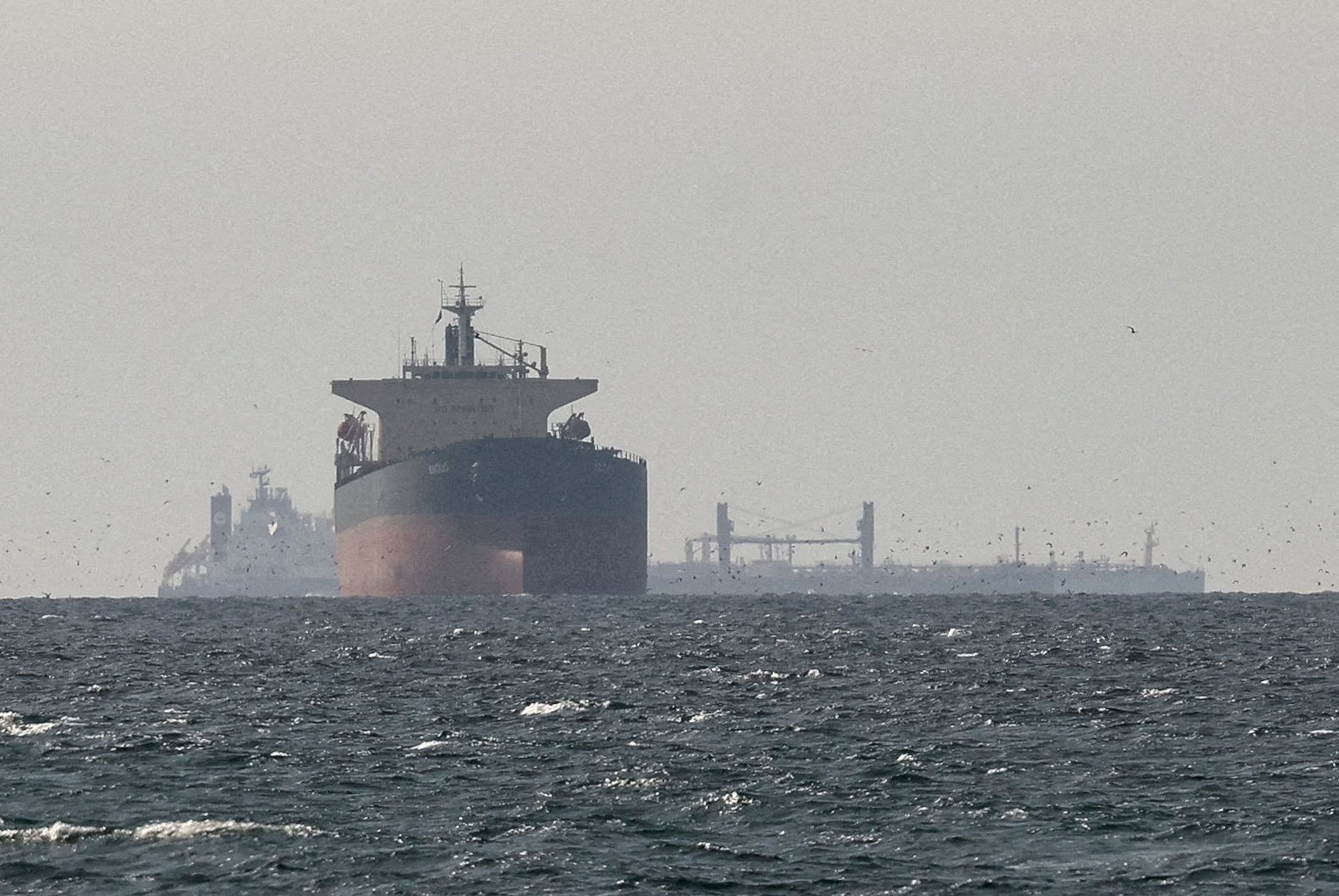
Cargo ships in the Gulf, near the Strait of Hormuz, as seen from northern Ras al-Khaimah, near the border with Oman’s Musandam governance, amid the U.S.-Israeli conflict with Iran, in United Arab Emirates, March 11, 2026.Reuters
On March 25, Press TV, Iran’s state media outlet issuing reports in English, quoted an Iranian figure stating the proposal had been rejected following denials from regime representatives that negotiations were underway. That same day, in a separate interview, Iranian Foreign Minister Abbas Araghchi stated on state television that "Iran’s true strength lies in the Hormuz Strait."
"I wish to state here also that, from our standpoint, the Hormuz Strait is not completely sealed; it is exclusively sealed to our established adversaries," Araghchi clarified, following the declaration by Iran’s Ministry of Foreign Affairs in a March 22 correspondence addressed to the U.N.'s International Maritime Organization, that the Strait of Hormuz remained available to "non-belligerent" ships.
Within the written statement, the Iranian officials defined "non-belligerent" vessels as those originating from nations that "neither participate in nor provide support to actions of aggression against Iran" as carried out by the United States and Israel.
"We are presently in a wartime state; the region is a contested zone," Araghchi commented. "There exists no sound justification to allow the transit of ships belonging to our foes and their allies, yet the strait is open for every other entity."
Araghchi shared a social media post on Saturday, stating, "We are deeply thankful to Pakistan for all their efforts and have, at no point, declined an invitation to convene in Islamabad. Our main concern is for definitive and enduring TERMS to conclude the illegitimate war levied against us."
During a March 26 cabinet meeting, Trump asserted that Iran was "pleading to secure a deal" to put an end to the conflict.
Trump declared within the cabinet session that Iran had honored a commitment, permitting ten oil tankers under the Pakistani flag safe passage through the strait as a "present." He added that this gesture communicated to him "that we have the right counterparts in our negotiations for peace."
While Iran has provided passage to ships from countries perceived as friendly, ships affiliated with hostile countries have suffered attacks.
The Islamic Revolutionary Guard Corps, which serves as Iran’s military arm, announced on Saturday that it engaged an Israeli-linked container vessel, identified as the MSC Ishyka, utilizing a drone situated near the Strait of Hormuz. Neither Israel nor the U.S. have offered public corroboration of this incident.
In an address delivered to the nation on Wednesday evening, Trump asserted that Iran no longer posed a threat to the U.S., adding that the conflict in Iran was "approaching its end." The president pledged in his statement to strike Iran "extremely severely" over the coming weeks.
"We intend to revert them to the primitive ages from which they originated," Trump conveyed.
Responding, Araghchi shared a social media statement on Thursday noting, "A striking divergence exists between our present era and the Stone Age: specifically, that there was no oil or gas being extracted in the Middle East back then."
Araghchi proceeded by asking, "Can POTUS and the American electorate that placed him in power be certain they desire turning back time?"
Sourse: abcnews.go.com