
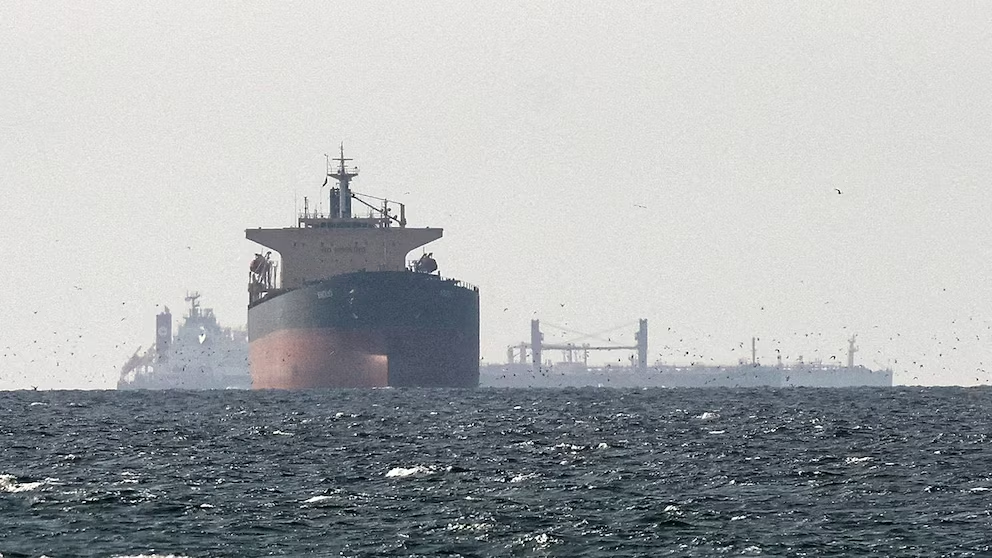
Tankers navigate the Gulf, in proximity to the Hormuz Strait, viewed from northern Ras al-Khaimah, bordering Oman’s Musandam province, during the U.S.-Israeli tensions with Iran, in the United Arab Emirates, March 11, 2026.Stringer via Reuters
The Iranian Ministry of Foreign Affairs asserted in a communication to the U.N.'s International Maritime Organization (IMO) that the Strait of Hormuz, the crucial seaway for the petroleum and cargo industries, remains accessible to "non-hostile" ships.
Within the correspondence, marked with a March 22 date, the Iranians specify "non-hostile" vessels as those originating from nations that "do not engage in or endorse acts of hostility directed at Iran" by the United States and Israel. The communication proceeds by stating that non-hostile vessels transiting the strait must "adhere entirely to the stipulated safety and security measures," which the Iranians did not detail.
"It is additionally emphasized that vessels, equipment, and any assets belonging to the aggressor parties — specifically the United States and the Israeli government — and other participants in the aggression, do not qualify for secure or non-hostile passage," the Iranians stated in the letter.
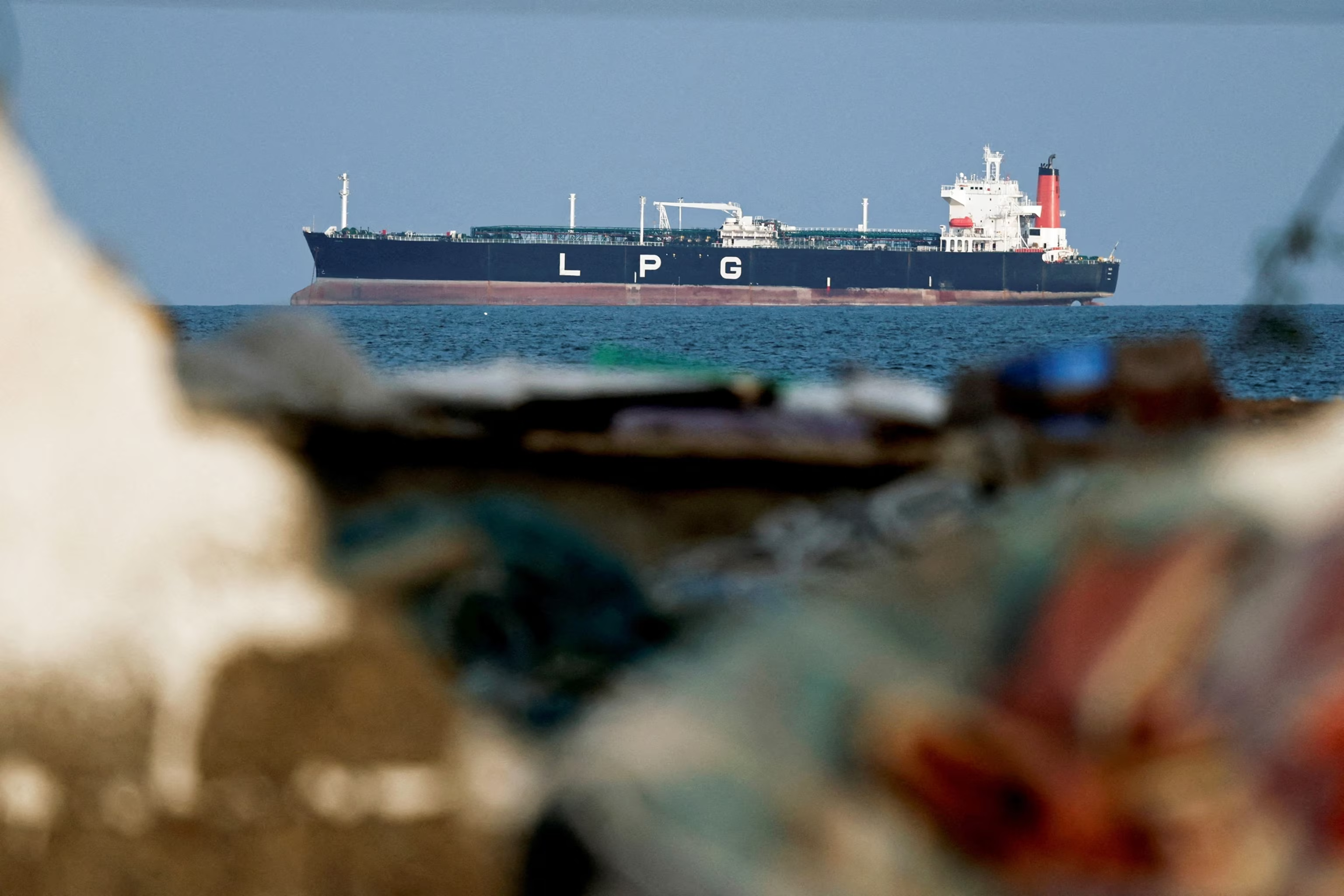
A liquefied petroleum gas tanker at anchor with reduced traffic in the Strait of Hormuz, amidst the U.S.-Israeli discord with Iran, in Shinas, Oman, March 11, 2026.Benoit Tessier/Reuters
The communication further indicates that for purposes of self-preservation, Iran has, "besides targeting U.S. military sites and installations in the area, instituted vital and appropriate actions to obstruct the aggressors and their backers from leveraging the Strait of Hormuz to initiate hostile operations against Iran."
This action by Iran coincides with the Trump administration presenting the Iranian government with a 15-point blueprint designed to bring an end to the armed confrontation, which commenced on Feb. 28 with a combined assault by the U.S. and Israel.
On Wednesday, Press TV, Iran's state-operated media outlet in English, cited an Iranian representative as stating that Iran has turned down the proposal.
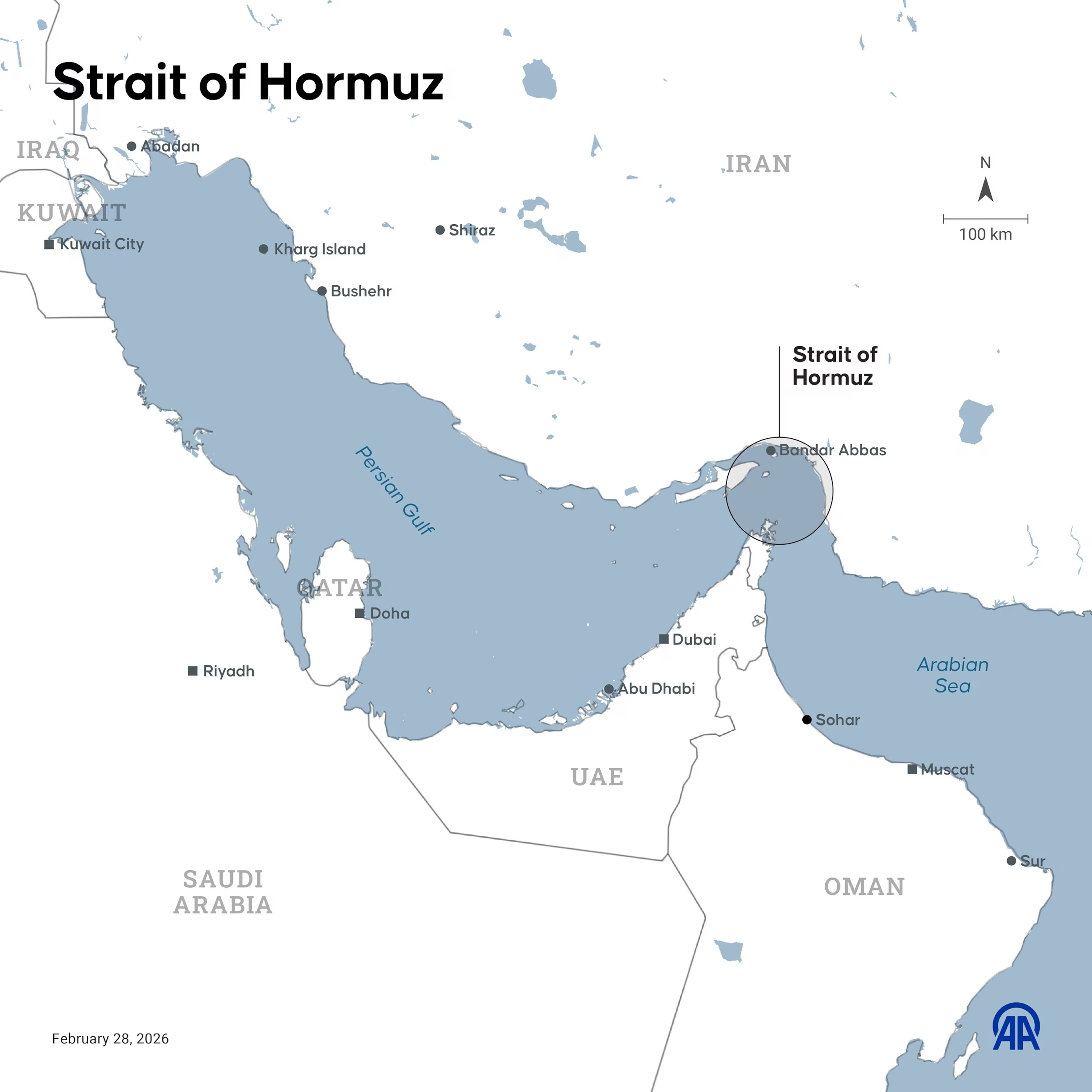
Map of the Strait of HormuzAnadolu via Getty Images
"Iran will conclude the hostilities when it resolves to do so and when its own stipulations are fulfilled," the Iranian representative conveyed. According to Press TV, Iran's demands encompass recognition of its authority over the Strait of Hormuz.
In a separate discussion, the Iranian Foreign Minister Abbas Araghchi communicated on state television that "Iran's strength resides in the Hormuz Strait."
"I also wish to express here that, from our perspective, the Hormuz Strait is not entirely inaccessible; it is solely inaccessible to our inherent adversaries," Araghchi stated. "We are experiencing a wartime scenario; the region is an active battleground. There is no rationale to authorize the passage of vessels belonging to our enemies and their partners, yet it is unobstructed for all others."
During a press briefing on Wednesday, White House press secretary Karoline Leavitt emphasized the administration's dedication to tackling the increasing oil instability, stating "our military maintains its acute focus on neutralizing the regime's endangerment to the unrestricted movement of energy resources through the Strait of Hormuz."
"Over the weekend, we launched numerous 5,000-pound explosives on a subterranean facility utilized for storing equipment, including anti-ship cruise missiles and mobile missile launch systems positioned along the coastline of the strait. Our military endeavors are increasingly effective each day, progressively diminishing Iran's capacity to intimidate commercial ships," Leavitt remarked.
When questioned regarding when the oil tankers might be anticipated to traverse the strait without obstruction, Leavitt opted not to furnish a specific timeline.
On Tuesday, the Iranian Defense Council cautioned that it would deploy naval mines throughout the "entire Persian Gulf" should the U.S. dispatch ground forces into Iran.
As of Wednesday, it was still uncertain whether Iran's communication to the IMO would persuade ship operators who align with Iran's "non-hostile" criteria to risk sending vessels through the strait.
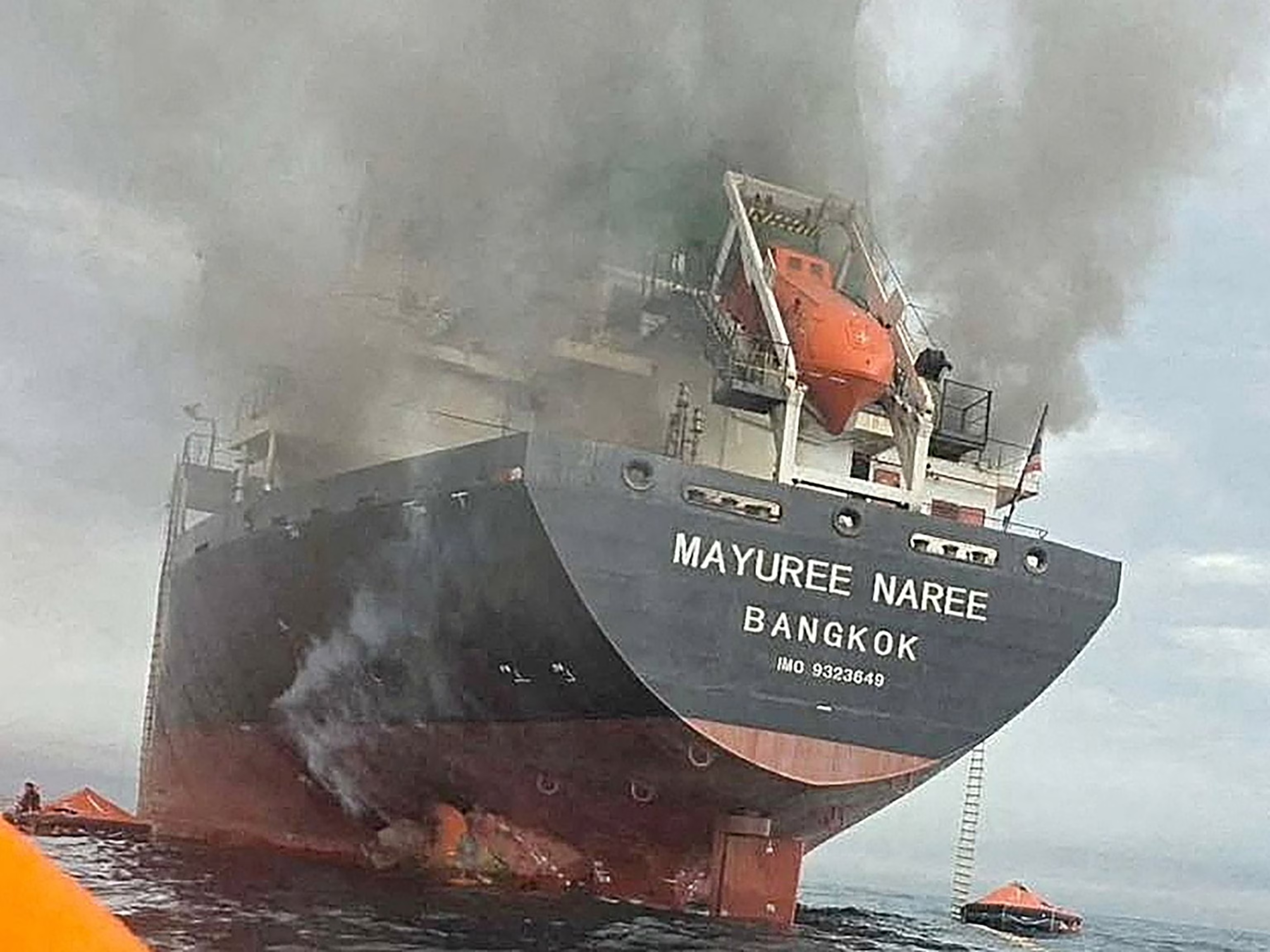
Smoke emanates from the Thai bulk carrier ‘Mayuree Naree’ in proximity to the Strait of Hormuz following an attack, March 11, 2026.Royal Thai Navy/Reuters
An IMO representative verified on Wednesday that 18 commercial vessels within the Persian Gulf in proximity to the Strait of Hormuz had been targeted in strikes, resulting in the deaths of seven sailors and one dockworker.
As indicated by an ABC News analysis, at least five oil and gas tankers have previously been targeted by Iranian attacks within the Persian Gulf.
The IMO representative communicated that approximately 20,000 seafarers are marooned in the Persian Gulf due to the strait's closure and are "undergoing psychological stress, exhaustion and depleting supplies."
Ed Finley-Richardson, a shipping investment analyst with Contango Research, mentioned to ABC News on Wednesday that Iran's letter to the IMO "is quite misleading."
"Iran has attacked impartial commercial vessels lacking connections to the U.S. or Israel with the objective of cultivating a climate of fear which prevents an indispensable trade passage from operating effectively," Finley-Richardson explained.
In 2024, approximately 20 million barrels of petroleum on average transited the strait each day, which corresponds to about 20% of global consumption of liquid petroleum, according to the U.S. Energy Information Administration (EIA).
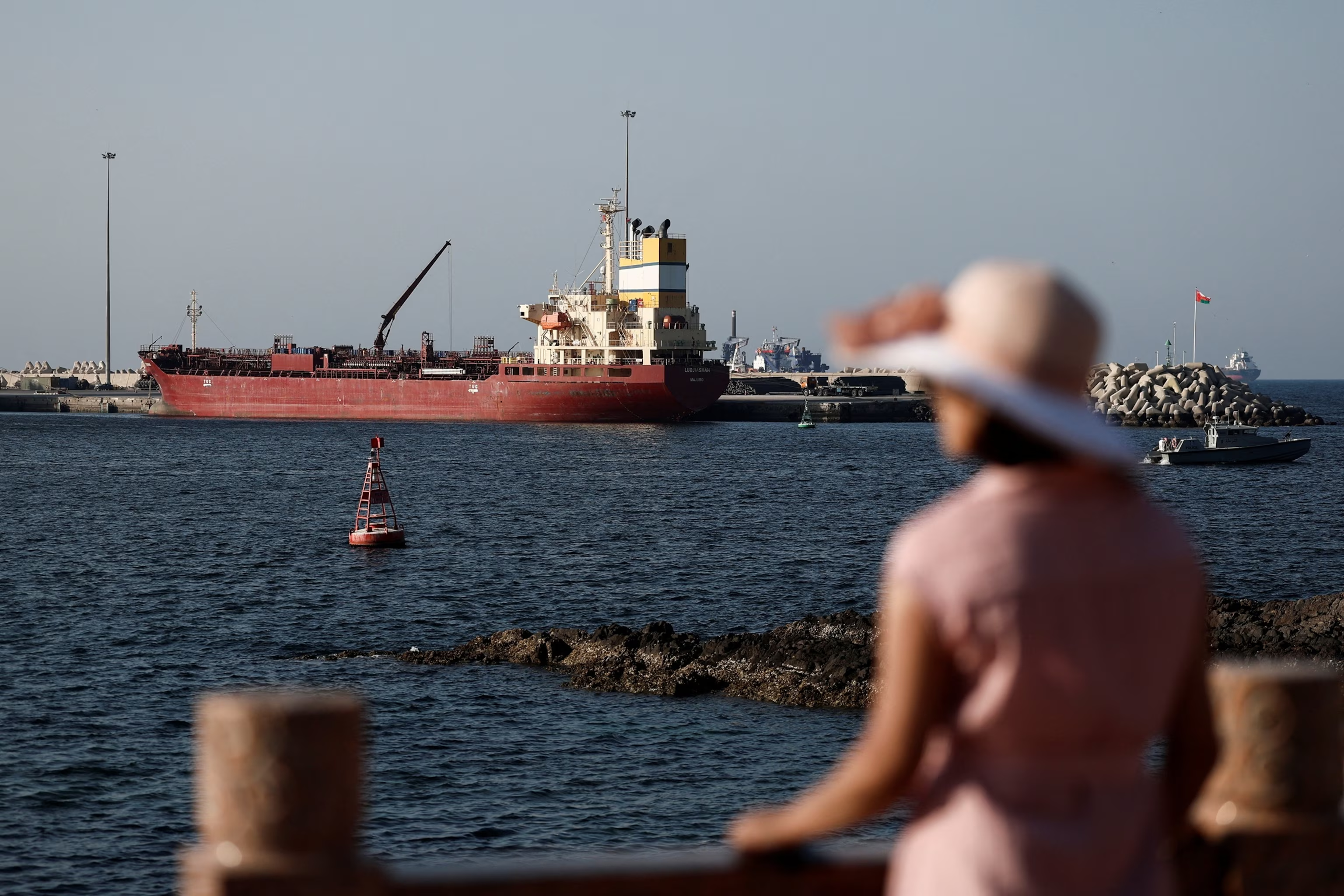
The Luojiashan tanker remains anchored in Muscat, as Iran pledges to blockade the Strait of Hormuz, amidst the U.S.-Israeli dispute with Iran, in Muscat, Oman, March 7, 2026.Benoit Tessier/Reuters
The large proportion of petroleum that navigates the strait, the vital narrow passage connecting the southern coast of Iran and the northern coast of Oman which flows into the Arabian Sea, is destined for markets in Asia. Close to 5 million barrels of petroleum reached China by way of the strait daily in 2024, the EIA noted, whereas about 2 million barrels of petroleum per day ended up in India.
Based on data offered by MarineTraffic, which monitors worldwide ship movements, some activity may be resuming within the strait. Nine vessels — encompassing those registered under the flags of India, Palau, Comoros, Curacao and Panama — have all successfully navigated the strait since Tuesday, according to MarineTraffic.
"We are currently seeing sporadic access granted to Indian and other Asian vessel operators, but it seems to occur on an inconsistent, individual basis," Finley-Richardson stated.
Ramanan Krishnamoorti, a petroleum engineering professor at the University of Houston, informed ABC News on Wednesday that Iran seems to be aiming to placate countries such as China and India by opening up the strait to their vessels.
"I believe those nations have not been the target of Iranian aggression due to their trade affiliations and established partnerships. A considerable portion of their oil is routed to China and India," he expressed.
However, Krishnamoorti added that Iran appears resolute in instigating "economic discord between the U.S. and China and India."
"In certain aspects, the Iranians are engaging in this international strategy of satisfying specific factions to prevent being labeled as the world's antagonists," Krishnamoorti said.
He suggested that Iran might also be attempting to generate "divisions within the connections between the United States and Europe," which are heavily reliant on petroleum transported through the strait.
"A portion of this will alleviate the strain on Europe. Europe has remained consistent in its stance that this is not a war for them," Krishnamoorti remarked.
He observed that the Iranians are "executing a very astute political maneuver here."
"Thus, while we may have eliminated a significant portion of the leadership, they are still adept at identifying avenues to introduce instability within our network," he stated.
Sourse: abcnews.go.com