
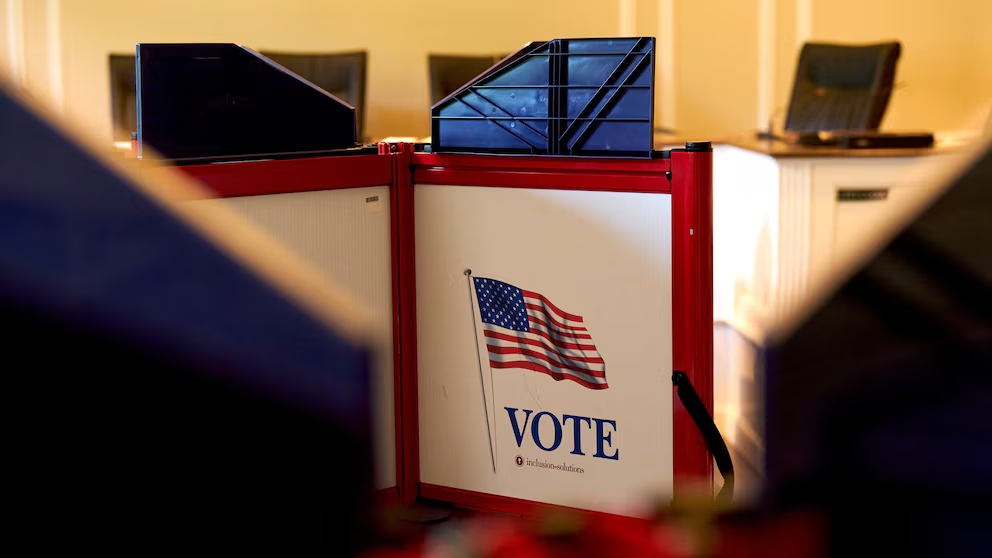
Voting places at a polling center housed within Rye City Hall in Rye, New York, June 25, 2024. Bing Guan/Bloomberg via Getty Images
The difference between the percentage of Americans identifying as Democrats or independent voters leaning toward the Democratic Party and those identifying as Republicans or independent voters leaning toward the Republican Party is greater than any point since 2015, based on quarterly averages compiled by Gallup.
The proportion of Americans declaring themselves Republicans or Republican-leaning independents in the initial quarter of 2026, standing at 39%, represents a low point since 2015. It has, however, reached as low as 40% on several prior occasions, most recently in the concluding quarter of 2025, showing no substantial divergence.
Concurrently, the proportion of Americans expressing allegiance to the Democratic Party or identifying as Democratic-leaning independents has ascended to 49%, mirroring peak levels observed at the close of 2020 and the commencement of 2021.
Democrats have shown a slight increase since the two major parties exhibited even affiliation in the first quarter of 2025, coinciding with President Donald Trump’s return to the White House, although the change from the last quarter of 2025 to the first quarter of 2026 is not meaningful.
Over the duration since the initial quarter of 2025, during which 45% professed alignment with each respective party (or independents inclined in that direction), Democrats have incrementally risen, initially to 46%, then to 48%. Republicans have seen a consistent reduction, beginning with 43%, then 41%, and finally 40%.
In the opening quarter of 2020, preceding the 2020 election cycle, the two parties also registered a tie at 45% apiece. Throughout that year, Democratic supporters and leaners sustained their upward trajectory: The last instance of a difference of this magnitude occurred when President Joe Biden entered the White House in the first quarter of 2021, with 49% declaring themselves Democrats or Democratic leaners, against 40% identifying as Republicans or Republican leaners.
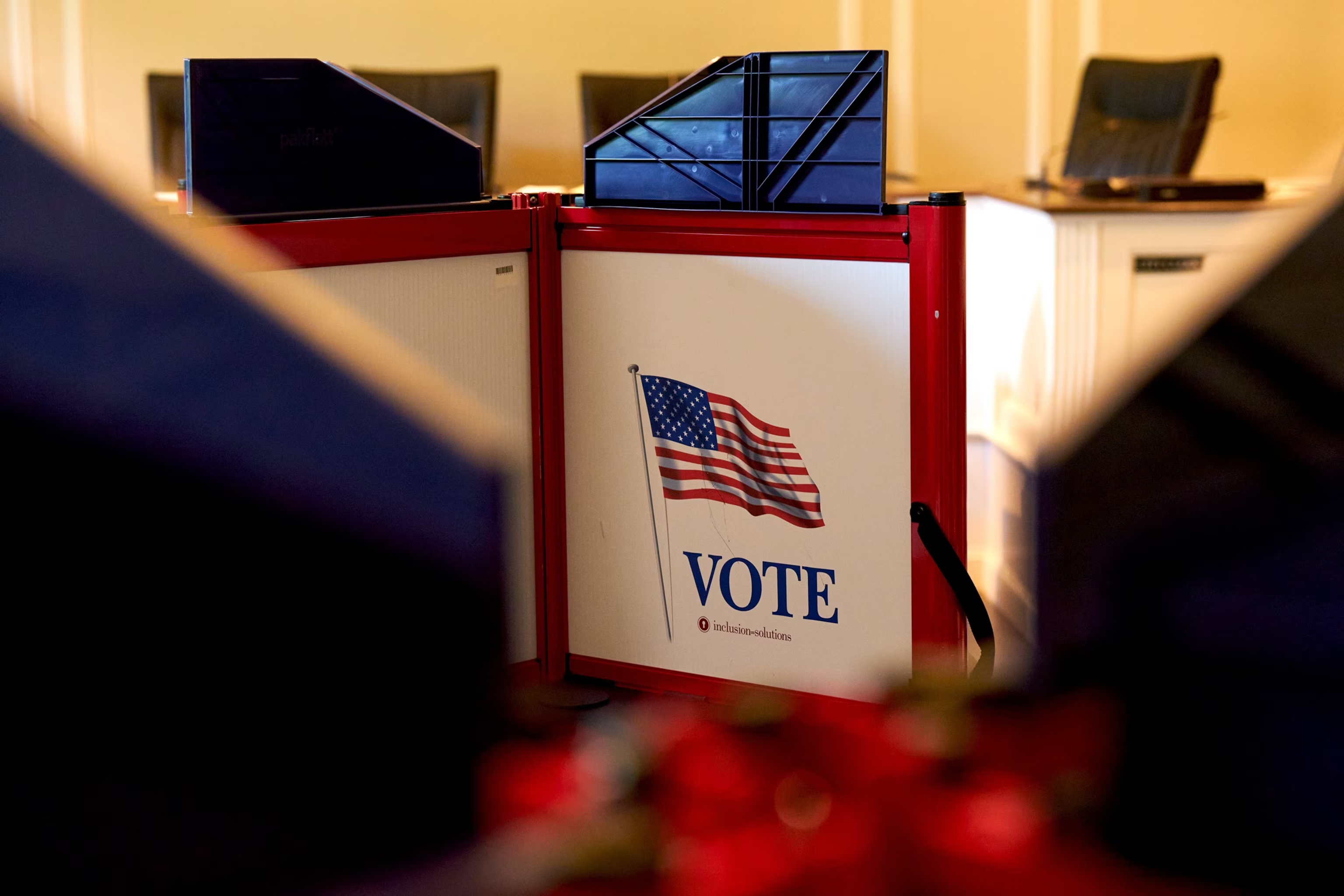
Voting places at a polling center housed within Rye City Hall in Rye, New York, June 25, 2024. Bing Guan/Bloomberg via Getty Images
Generally, the majority of independents exhibit a tendency towards one of the major parties, so excluding the independents who express a preference for either party, presently, 43% identify as independents, 30% as Democrats, and 25% as Republicans.
The fractions of Americans regarding themselves as adherents of either dominant party have remained close over the past several years, with Republicans reaching a high of 32% in the final quarter of 2022 and Democrats achieving 31% on a few occasions since 2020. Throughout this period, a larger proportion have considered themselves to be independents.
The Gallup findings incorporate quarterly averages pertaining to party affiliation throughout each respective quarter.
Sourse: abcnews.go.com