
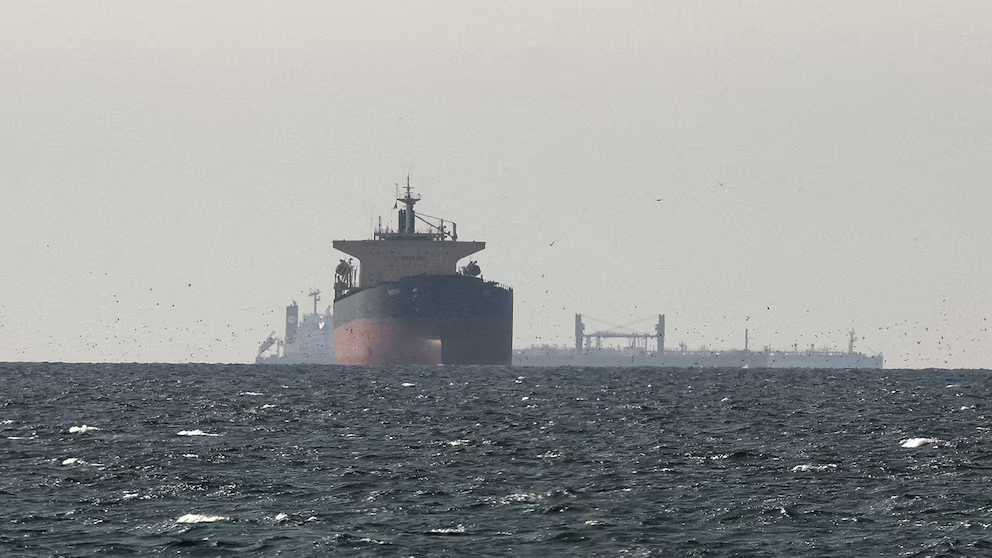
Tankers navigate the Gulf, close to the Strait of Hormuz, in a view from northern Ras al-Khaimah, adjacent to the border with Oman’s Musandam region, in the midst of the U.S.-Israeli conflict with Iran, in the United Arab Emirates, March 11, 2026. Reuters
The de facto shutdown of the Strait of Hormuz amid the Iran conflict has throttled the world’s oil supply. Two crucial substitutes exist, although any impediment to them could render transporting oil from the Arabian Peninsula "nearly impossible," an expert noted, given anxieties regarding Iran's targeting of energy infrastructure in Gulf nations.
On any given day, a considerable portion of petroleum shipments from the Arabian Peninsula relies on a limited set of vital channels and facilities — making the system exceptionally susceptible to disruption, according to Matt Smith, head oil analyst at Kpler, an energy consulting firm.
The Strait of Hormuz, a slender seaway off Iran’s southern shore, typically manages around 20% of the planet’s oil use. In 2024, approximately 20 million barrels daily transited through it, as stated by the U.S. Energy Information Administration. After Iran assailed multiple oil tankers following the war’s onset in late February, practically all maritime activity through the strait has ceased, upsetting global petroleum markets.
Tankers sail in the Gulf, near the Strait of Hormuz, as seen from northern Ras al-Khaimah, near the border with Oman’s Musandam governance, amid the U.S.-Israeli conflict with Iran, in United Arab Emirates, March 11, 2026.Reuters
According to Kpler, two of the most significant stand-ins for the Strait of Hormuz are Saudi Arabia's East-West conduit, which concludes at the Red Sea harbor of Yanbu, and the United Arab Emirates' ADCOP pipeline, which services the export site at Fujairah.
Historically, exports from Yanbu have averaged roughly 750,000 barrels of crude oil each day. But in recent weeks, volumes have escalated, as per Kpler.
"The current rate is up to 2.5 million [barrels daily] so far this month, and based on ships en route, should increase considerably beyond that," Smith specified.
In the meantime, the Fujairah terminal generally manages approximately 1 million barrels of unrefined exports daily through the ADCOP pipeline. Smith indicated that this number recently soared to 2.25 million barrels daily before declining sharply following reported drone attacks in the region.
Smith claims that if both Yanbu and Fujairah were jeopardized, moving oil out of the Arabian Peninsula would become "virtually impossible."
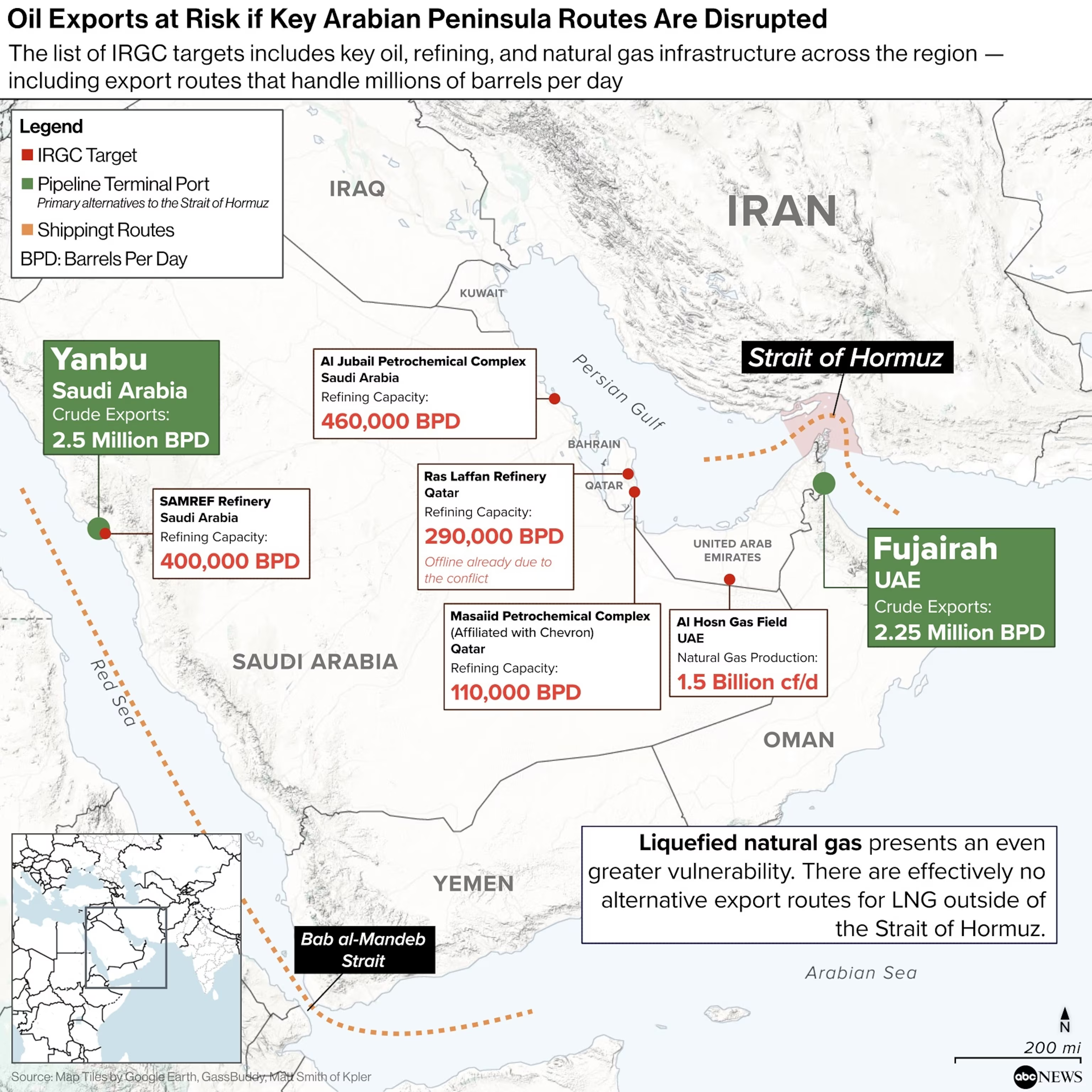
Oil Exports at Risk if Key Arabian Peninsula Routes Are DisruptedMap Tiles by Google Earth, GassBuddy, Matt Smith of Kpler
There are only a handful of exceptions: Iran retains the ability to export crude via the Strait of Hormuz and from its Jask terminal, positioned just outside the Strait of Hormuz; and Northern Iraq can transport oil through a conduit from Kirkuk to the Turkish port of Ceyhan, according to Kpler.
Petroleum experts suggest a crucial point: aside from these routes, no meaningful substitutes are available — there is no equivalent contingency arrangement for the Strait of Hormuz; these alternatives represent the few remaining options.
Liquefied natural gas introduces an even more substantial vulnerability — there are essentially "no alternative" export routes beyond the Strait of Hormuz, Smith asserted.
Qatar is home to one of the world’s leading liquefied natural gas centers. This week, Iranian strikes damaged the Ras Laffan facility, reducing Qatar’s liquefied natural gas export capacity by 17% and requiring up to five years for repairs, according to QatarEnergy’s CEO on Thursday.
The Qatari Foreign Ministry denounced the assault, referring to it as a "dangerous escalation."
The Islamic Revolutionary Guard Corps identified Ras Laffan this week, among other energy resources, as "legitimate" targets after Israel attacked Iran's largest gas reserve.
The IRGC target list comprises vital oil, refining, and natural gas infrastructure across the region — including export channels that handle millions of barrels each day.
ABC News' Meredith Deliso participated in this report.
Sourse: abcnews.go.com