
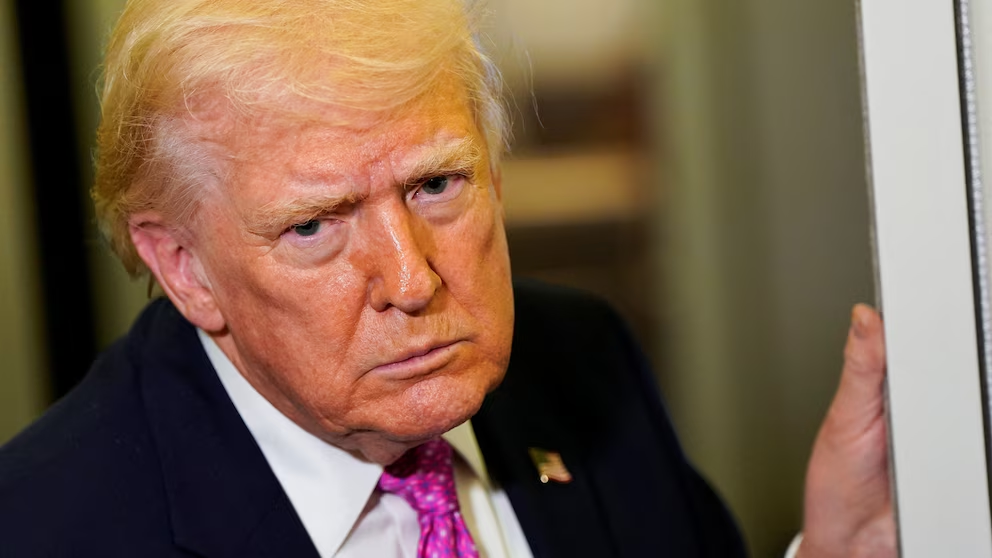
President Donald Trump addresses members of the press while onboard Air Force One on the way to Joint Base Andrews, Maryland, March 29, 2026. Elizabeth Frantz/Reuters
As petroleum and natural gas prices surge in light of Iran's control over the Hormuz Strait, President Donald Trump along with his leading advisors seem to be implying that it is not America's responsibility to resolve.
Trump on Tuesday again criticized allies for their absence in the dispute, and advised them: "Go obtain your own oil!"
"For all those nations unable to acquire jet fuel as a result of the Hormuz Strait, like the United Kingdom, who opted out of becoming engaged in Iran's downfall, I offer a recommendation: Firstly, make purchases from the U.S.; we have plenty available, and Secondly, gather some belated bravery, proceed to the Strait, and simply SEIZE IT," the president penned in a message on his social media platform.
"You'll need to commence figuring out how to protect yourselves; the U.S.A. will no longer be present to assist you, just as you were absent for us," Trump included.
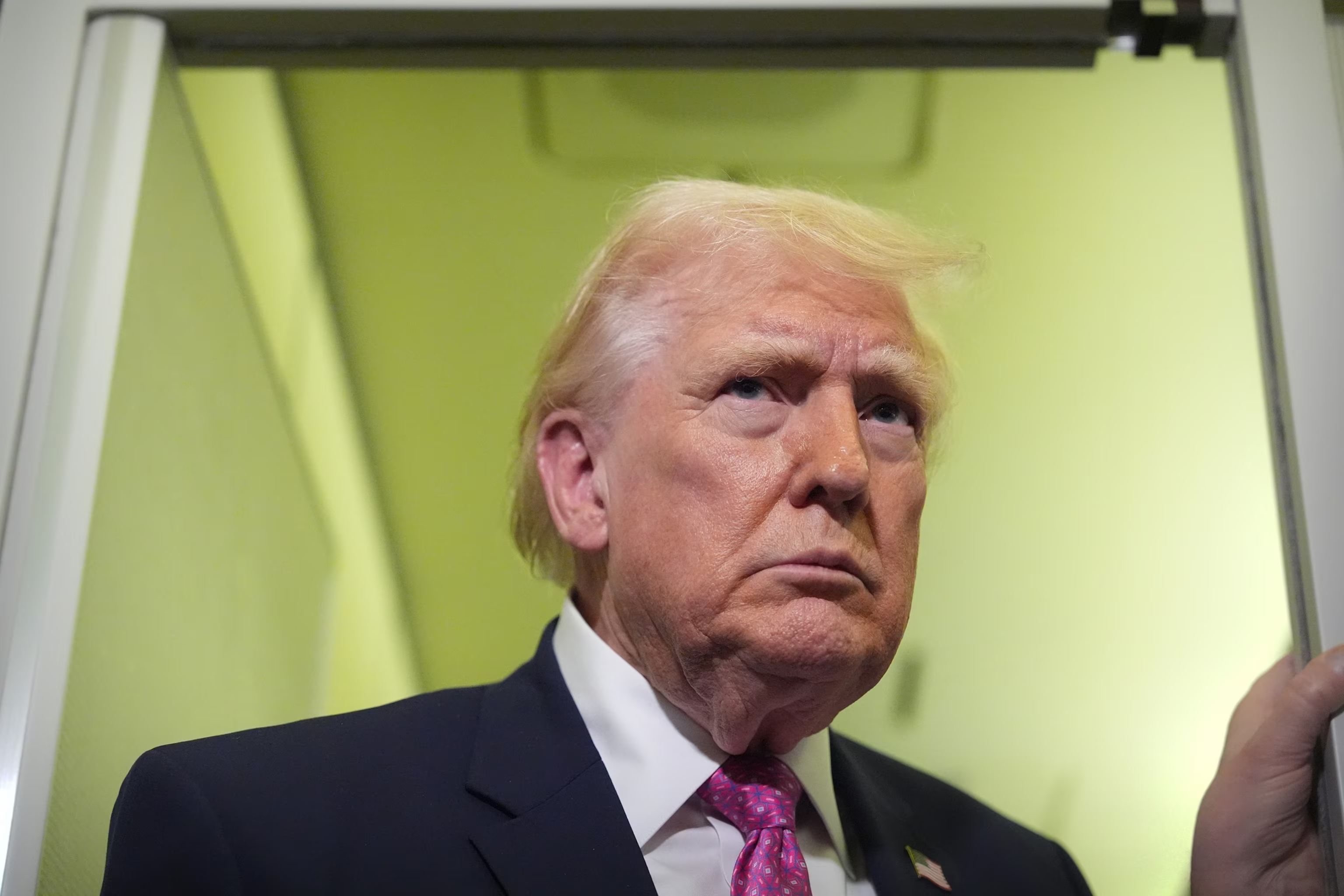
President Donald Trump speaks to members of the media aboard Air Force One en route to Joint Base Andrews, Maryland, March 29, 2026.Mark Schiefelbein/AP
Trump echoed this feeling during a conversation with ABC News Chief Washington Correspondent Jonathan Karl later on Tuesday.
"I intend to allow the nations desiring to buy oil, to police it independently. Why would I undertake it on their behalf? They offered no support to me," Trump communicated to ABC's Karl regarding the Strait of Hormuz.
These comments seem a far cry from Trump's threat towards Iran just days prior. On March 21, he posted on social media that should Iran not "FULLY OPEN" the strait within 48 hours, the U.S. would attack the country's power stations. That timeframe was extended twice following Trump's statement that negotiations were in progress.
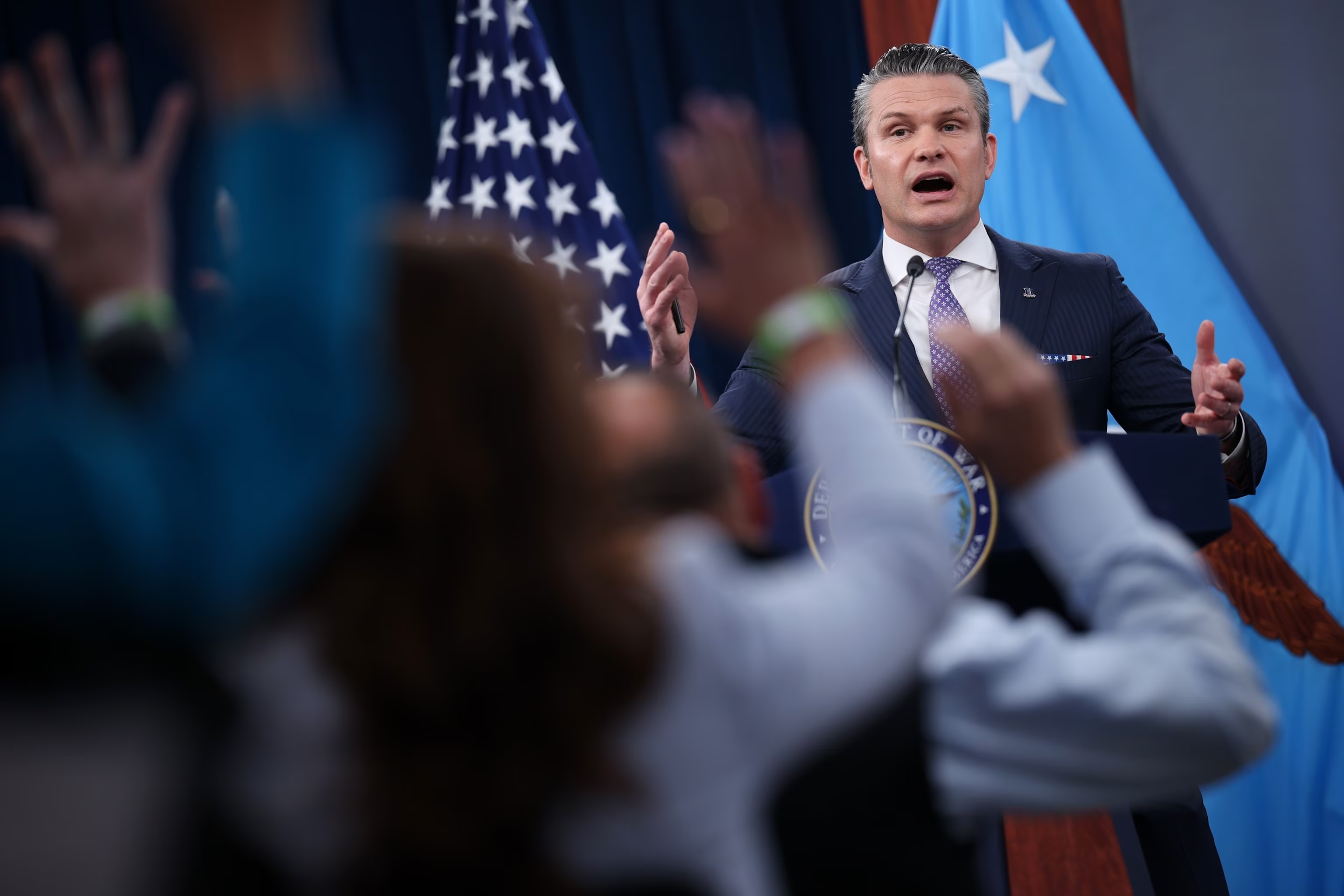
Secretary of Defense Pete Hegseth answers questions during a press briefing at the Pentagon, March 31, 2026 in Arlington, Virginia.Win McNamee/Getty Images
Defense Secretary Pete Hegseth on Tuesday supported Trump in requesting nations globally to "be willing to intensify their efforts."
"It is not exclusively the United States Navy. To my knowledge, there was supposed to be an imposing Royal Navy prepared to engage in similar endeavors as well," Hegseth mentioned, in reference to the United Kingdom's naval forces.
"President Trump has demonstrated a readiness to shoulder the main burden on behalf of the free world to confront this Iranian threat," Hegseth stated. "It won't just be our concern going forward, despite the fact that we have undertaken the greatest amount of readiness to assure the strait remains accessible, an outcome the president has articulated very clearly."
Before the conflict, upwards of 100 vessels were navigating the Hormuz Strait daily, according to data sourced from U.N. Trade and Development. Currently, it's estimated that only a small number of ships are going through on a daily basis amidst Tehran's constricting control.
The result has been a historical monthly escalation in petroleum and gas costs. In the U.S., the median cost of a gallon of gasoline exceeded $4 on Tuesday, marking the first instance since August 2022.
However, Trump administration officials have notably refrained from designating reopening the strait as a primary objective of Operation Epic Fury.
"The goals of Operation Epic Fury are detailed as: decimating the Iranian naval forces; eliminating their ballistic projectiles; disassembling their defense manufacturing structure, which produces the weaponry posing a longstanding threat to both the United States and our partners; and subsequently, preventing Iran from obtaining a nuclear capability," White House press secretary Karoline Leavitt specified during Monday's press briefing.
Leavitt was questioned by a reporter about whether Trump could proclaim victory over Iran if passage through the strait continues to be as restricted as it is presently.
"The full restoration of the strait is something the administration is striving towards, however, the main goals of the operation have been clearly defined for the American populace by the commander in chief," Leavitt answered.
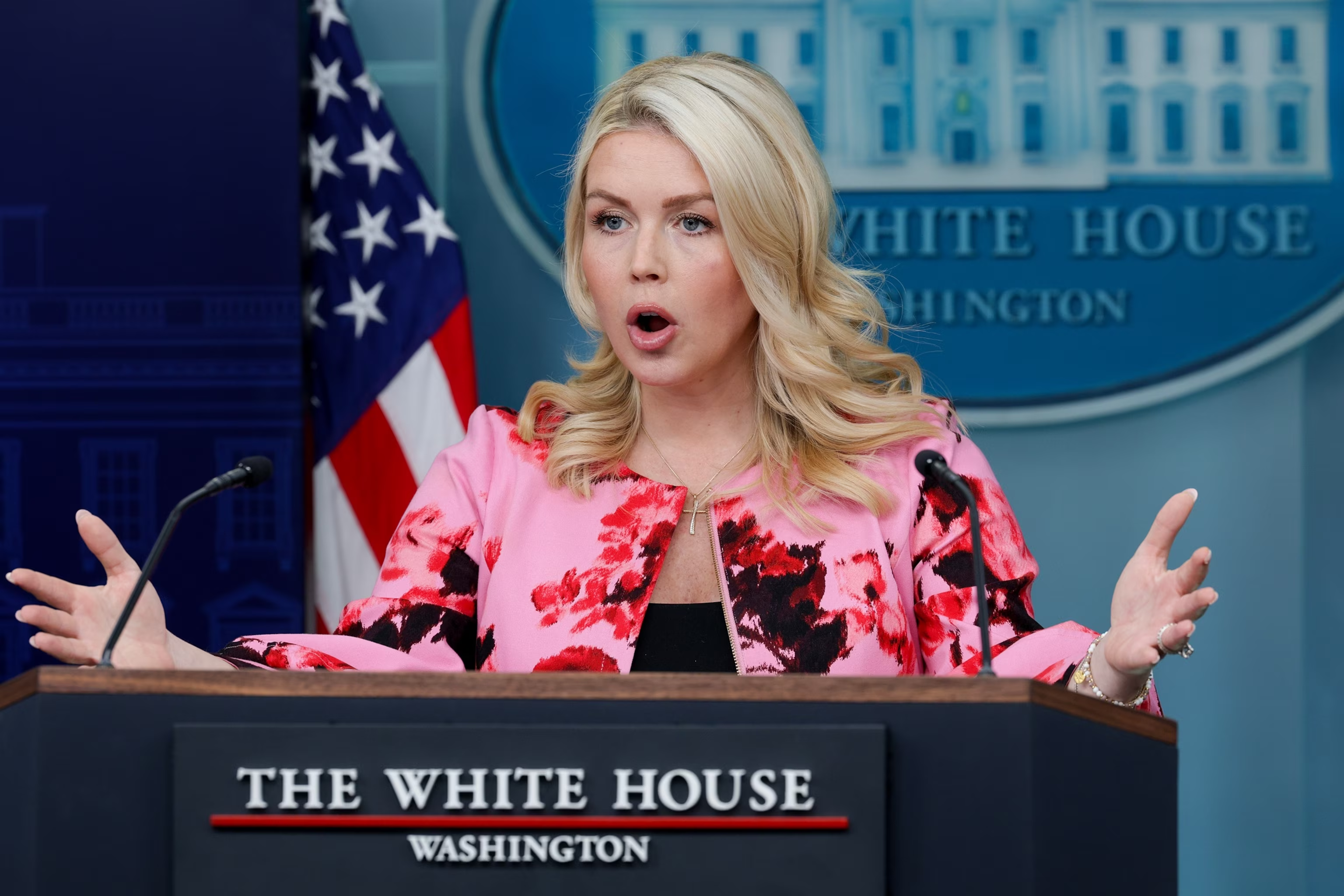
White House Press Secretary Karoline Leavitt speaks during a news briefing at the James S. Brady Press Briefing Room of the White House, March 30, 2026 in Washington.Alex Wong/Getty Images
Trump stated that he had long foreseen Iran leveraging the strait as a strategic asset and that he was aware petroleum prices would rise if the U.S. engaged Iran militarily. He has been met with disapproval for failing to express a definitive plan aimed at reopening the waterway, which handles roughly one-fifth of the globe's petroleum supply, and is now caught within the conflict's reach.
Earlier in the month, Trump issued a public request to U.S. allies in Europe and Asia, requesting aid in securing the strait. Many of these nations rejected his appeal to dispatch warships as well as other forms of assistance. Some clarified that they do not consider this their war, while others indicated their willingness to become engaged in the strait, though solely once hostilities cease.
The unenthusiastic reception led Trump to reverse his stance and assert, "We actually require no assistance."
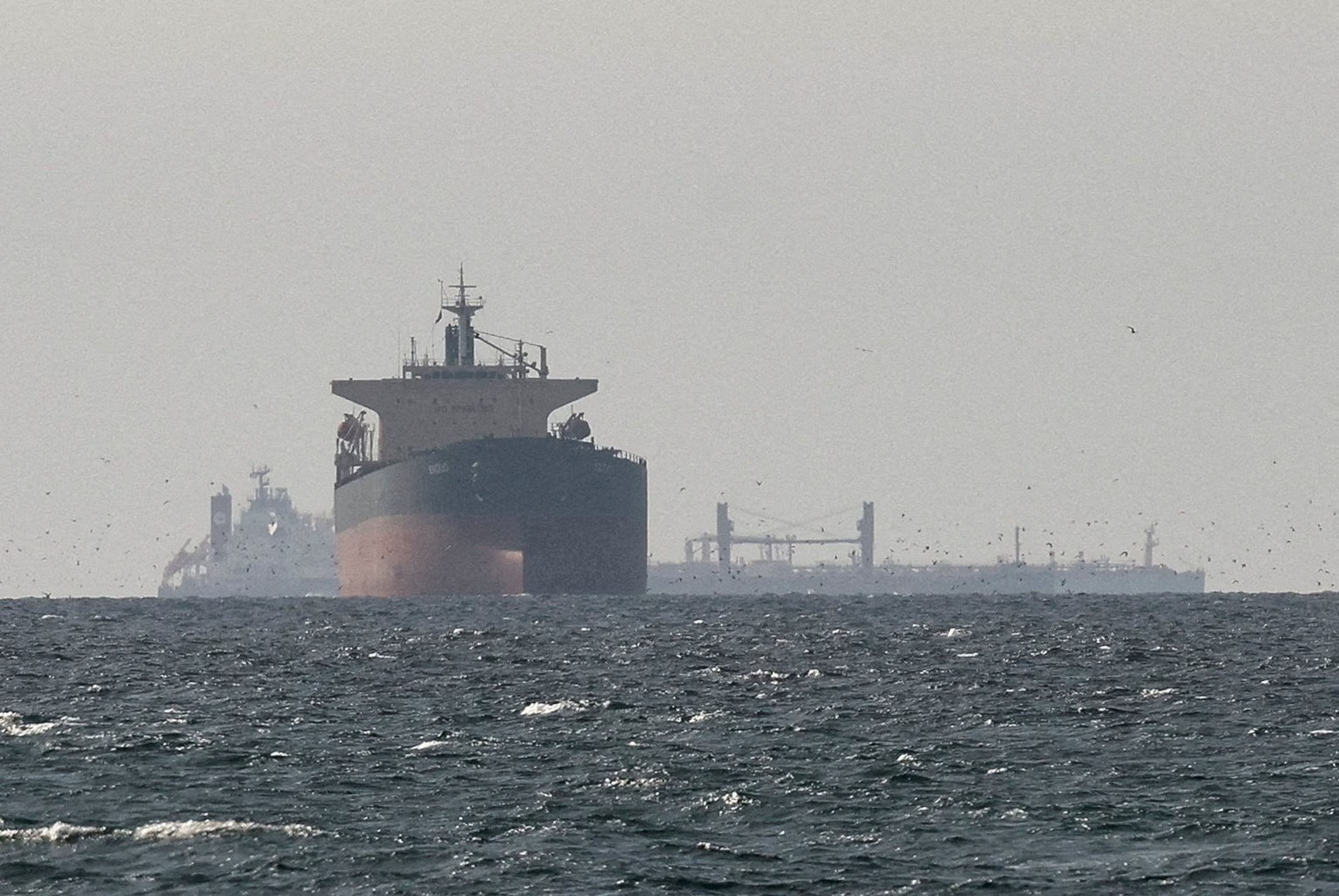
Cargo ships in the Gulf, near the Strait of Hormuz, as seen from northern Ras al-Khaimah, near the border with Oman’s Musandam governance, amid the U.S.-Israeli conflict with Iran, in United Arab Emirates, March 11, 2026.Reuters
Trump subsequently amplified threats to assault Tehran's energy and desalination installations if Iran refuses to reopen the strait.
"Should a resolution not be reached imminently, which it likely shall, and should the Hormuz Strait not be immediately 'Open for Business,' we shall conclude our delightful 'sojourn' in Iran via detonating and totally annihilating all of their Electric Generating Facilities, Oil Wells and Kharg Island (and potentially every desalinization installation!)," Trump conveyed Monday.
Trump has postponed incursions against Iran until April 6, citing ongoing discussions with new Iranian leadership, although Tehran has publicly refuted any immediate dialogues and has countered a 15-point peace proposal put forth by the U.S. by way of intermediaries.
In the midst of his renewed summons on Tuesday for other nations to intensify their support, Trump advised CBS News that he is not "currently" withdrawing U.S. resources from the Hormuz Strait, yet "at some point I will."
Afterward, during an interview with the New York Post, Trump articulated his belief that the strait would "open automatically" following the U.S. withdrawal from the conflict.
"I give it no thought, if I am truthful," Trump told the New York Post. "My exclusive purpose has been to ascertain that they do not possess a nuclear weapon. They will not possess a nuclear weapon. Upon our departure, the strait will automatically become accessible."
ABC News' Emily Chang was contributory to this report.
Sourse: abcnews.go.com