
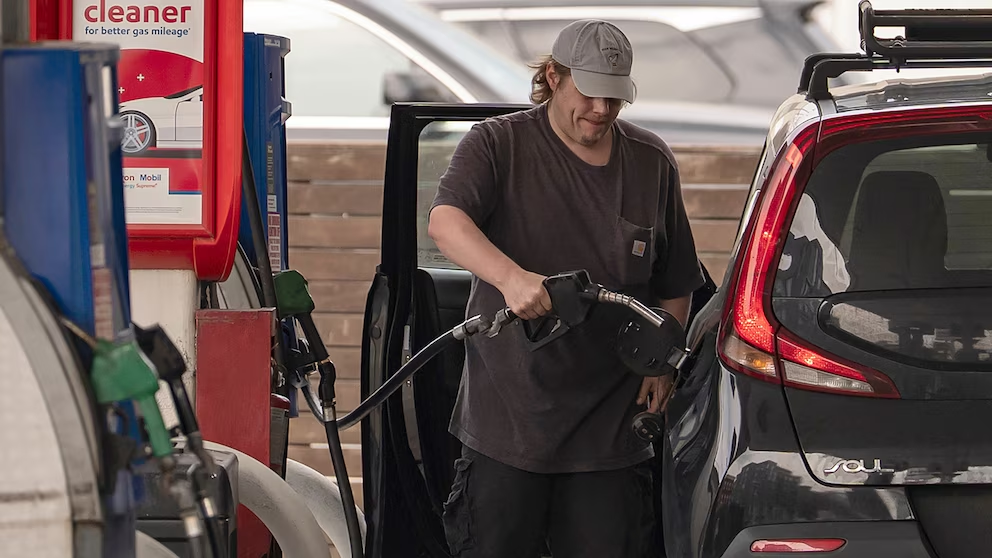
A consumer refills their automobile at a filling station in New York City, March 31, 2026. Yuki Iwamura/AP
The conflict between the U.S., Israel, and Iran has triggered a significant global petroleum crisis, leading to soaring gasoline costs and negatively impacting consumers across the globe.
In an effort to mitigate the economic burden, several nations have reduced levies or declared academic breaks, while others have encouraged citizens to commute via bicycle or public transit.
The hostilities have resulted in Iran’s de facto shutdown of the Strait of Hormuz, a sea lane emerging from the Persian Gulf responsible for conveying approximately a fifth of the world’s supply of petroleum and natural gas.
The majority of fuel transported through this waterway is destined for Asia, thereby placing the greatest pressure on the continent’s energy resources. Nonetheless, due to the global nature of the oil and gas market, the shortage has caused price increases for nearly everyone.
Below are some measures countries are adopting in response to climbing fuel prices:
Australia
Australia has implemented a variety of initiatives recently aimed at lowering fuel expenses and reducing economic harm.
The nation decreased its excise duty by 50% for the subsequent three months, offering motorists a saving of 26 cents per liter of gasoline during this period, as stated by Australian Prime Minister Anthony Albanese in a video shared on X this past Wednesday.
Legislators also briefly eliminated an extra charge for the use of sizable trucks, assisting delivery personnel in managing increased fuel costs, Albanese noted.
He also indicated that Australians should abstain from accumulating gasoline and instead utilize trains or buses for commuting whenever feasible.
"The reality is the economic disturbances caused by this war will be with us for months," Albanese stated. "No government can guarantee to eliminate the pressures that this war is causing. I can assure we will do everything we can to protect Australia from the worst of it."
European Union
On Tuesday, the European Commission, the EU’s chief executive arm, urged its 27 member states to refrain from taking actions that would escalate petroleum consumption.
Furthermore, Dan Jørgensen, the European Commissioner for Energy and Housing, sent a letter to energy ministers from member countries requesting them to “consider the promotion of demand saving measures, with particular attention to the transport sector.”
"The European Union's security of supply remains guaranteed. But we must be ready for a potentially prolonged disruption of international energy trade," Jørgensen said.
Slovenia
Slovenia publicized provisional limits on the quantity of gasoline drivers could buy the previous week. This action positioned the country as the first within the European Union to impose restrictions on fuel use.
According to Reuters, Slovenian Prime Minister Robert Golob announced on March 22 that gasoline would be limited to 50 liters daily for private individuals and 200 liters daily for specific commercial and governmental vehicles.
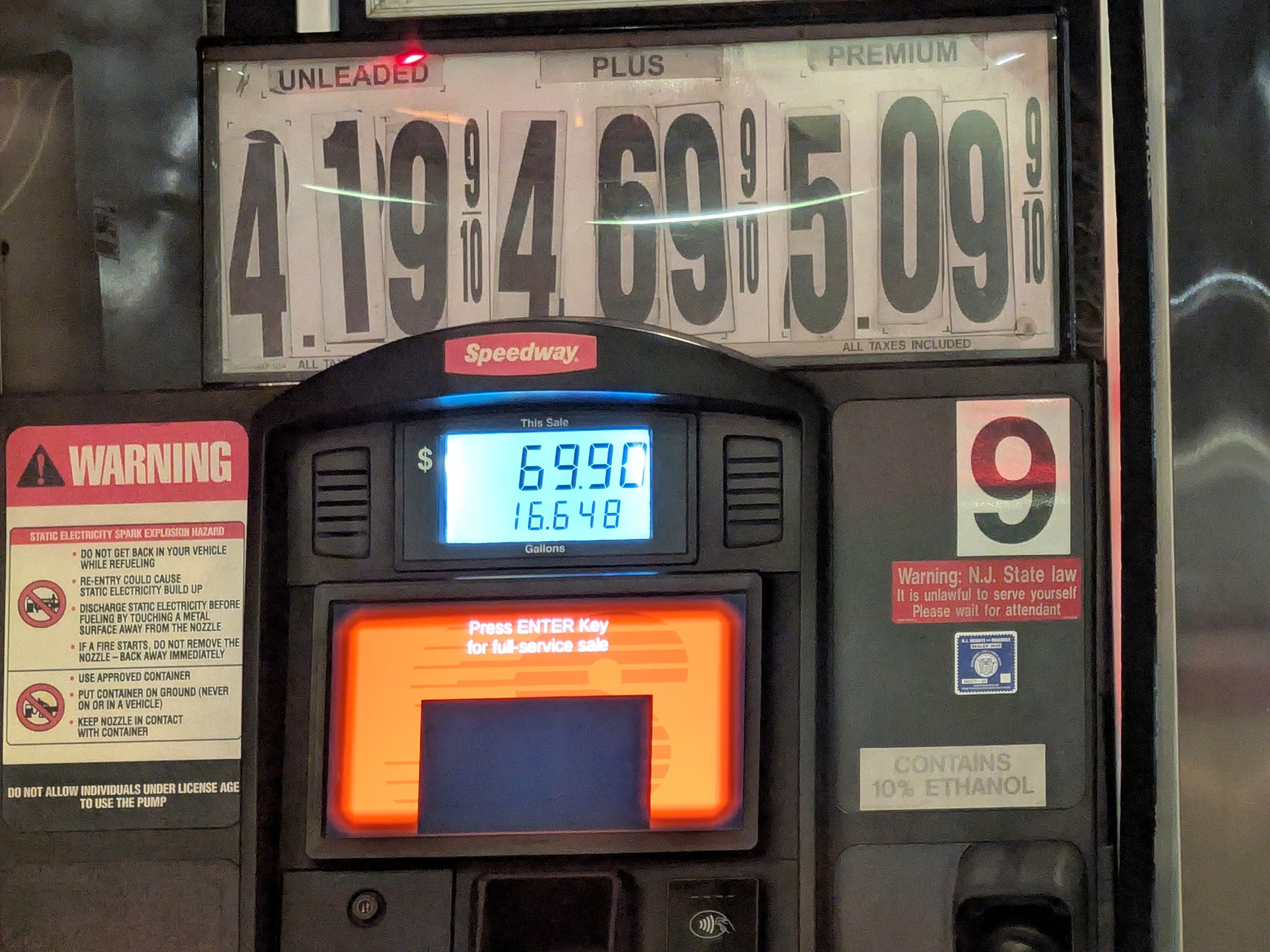
The cost of gasoline is displayed at a pump in Jersey City, N.J., March 31, 2026.Gary Hershorn/ABC News
South Korea
Earlier in the month, South Korea initiated a countrywide campaign to conserve energy, encouraging residents to use bicycles for short trips and shorten their showers. The country also enacted a five-day, alternating scheme for governmental vehicle usage.
Yonhap News Agency reported that South Korean Prime Minister Kim Min-seok mentioned last week the government should plan for the “worst-case scenarios.”
Data from the International Energy Agency shows that imports constitute over 98% of South Korea’s overall crude oil supply.
Philippines
The Philippines has announced a national energy crisis in response to the U.S.-Israeli war on Iran.
Philippine President Ferdinand Marcos Jr. stated that the ongoing hostilities threatened "the availability and stability of the country's energy supply."
The emergency declaration grants the Philippine administration authority over fuel prices and accelerates imports from alternate providers, such as Russia. Last week, Philippine officials communicated that their fuel reserves were sufficient for roughly 45 days at regular consumption rates.
Pakistan
Last month, Pakistan introduced a collection of measures aimed at conserving fuel as the nation confronts a potentially serious scarcity.
According to reports from Al Jazeera, Pakistani Prime Minister Shehbaz Sharif announced that half of all government employees would transition to remote work and schools would suspend classes for a duration of two weeks.
Federal cabinet members will apparently work without salary for a term of two months, and personnel at state-owned firms will accept pay reductions as high as 30% as the government seeks to decrease expenditures.
"The entire region is currently in a state of war," Sharif expressed during a televised statement on March 10.
United States
Earlier this month, the Trump administration declared the second-largest ever withdrawal from the nation’s emergency crude stockpile. According to the White House, the U.S. will release 172 million barrels of oil from its strategic petroleum reserve over the coming 120 days.
U.S. President Donald Trump also eased sanctions on Russian oil and suspended a key regulation of domestic oil transport.
The president has endeavored to restore tanker passage in the Strait of Hormuz, implying that the U.S. may conduct a Naval escort or protect the strait with military personnel. At times, Trump has, nevertheless, suggested that the responsibility of reopening the strait should be entrusted to other nations.
International Energy Agency
The International Energy Agency published a collection of 10 oil-conservation steps accessible to governments, businesses, and individuals in its 32 member nations, including the U.S.
The IEA suggested on March 20 that employees should engage in remote work and commuters should participate in carpools whenever possible. The directive also encouraged governments to lower highway speed restrictions and promote the use of public transportation.
The recommendations appeared days after the IEA announced that its member countries would discharge 400 barrels of crude from their individual petroleum reserves, representing the largest emergency release of oil in the group’s 52-year existence.
Sourse: abcnews.go.com