
“`html

STOCK PHOTO/Getty Images
The nation’s primary defense against cyberattacks is suffering amid gridlocked talks over financing the Department of Homeland Security (DHS).
With over a month and a half passed without funding, leading senators on appropriations committees report that roughly 60% of the Cybersecurity and Infrastructure Security Agency’s (CISA) personnel — the first line of defense for U.S. online space and vital infrastructure — have been placed on unpaid leave.
The same Senate appropriations announcement stated that the furlough forced the agency to halt physical and digital assessments aimed at identifying weak points in the country’s essential infrastructure.
As attacks persist in Iran, some specialists fear that America’s digital defenses are weakened while the nation is confronted by a well-known participant in global cyber conflicts.
Even though President Donald Trump enacted an executive order mandating the TSA to resume paying employees, other entities such as CISA still lack designated budgets.
Senate Republican and Democratic leaders keep issuing warnings regarding Iranian cyberattacks as the tensions involving the U.S. and Israel escalate, but there remains no distinct or speedy solution, causing concern for some experts.
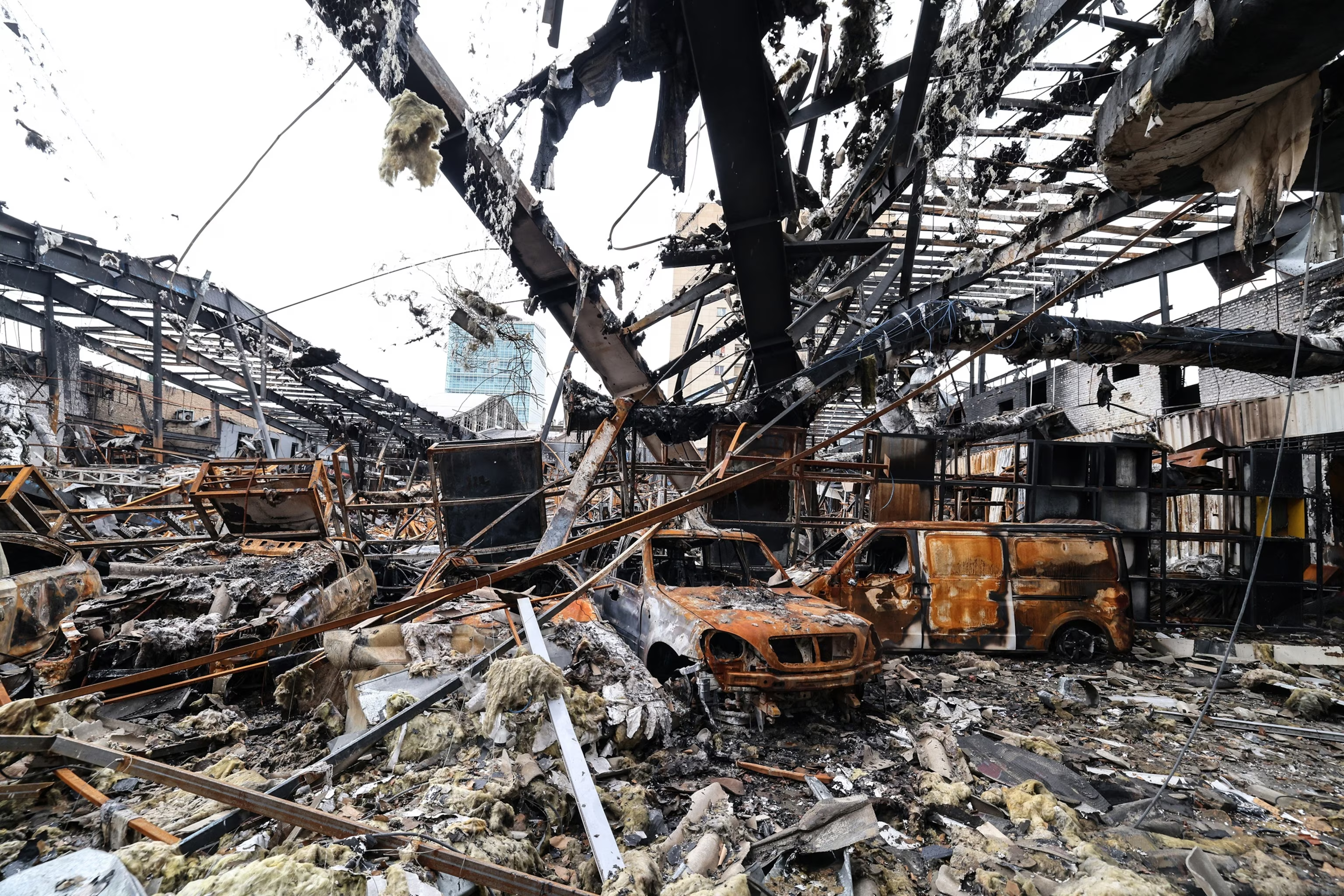
Damage is seen at a car service centre in eastern Tehran that was hit by a missile strike, March 28, 2026.Atta Kenare/AFP via Getty Images
“The reduction of cybersecurity resources at this crucial time is very risky,” conveyed Dr. Frederic Lemieux, a Georgetown professor specializing in cybersecurity risk management.
“I think if a conflict should arise with a known adversary that employs cyber weapons, intending to inflict damage on its foes, then it will definitely be tested,” he stated.
CISA has not responded to multiple comment requests from ABC News.
What constitutes cyber warfare?
In straightforward terms, cyber warfare encompasses the infringement of data networks for various harmful ends, such as interference, espionage, or devastation.
Cyber intrusions from both state and independent actors are widespread. In 2025, CISA effectively obstructed 2.62 billion harmful connections within the federal civilian network, as per its yearly reports.
It prevented 371 million attempts aimed at the country’s essential infrastructure, including electric and water systems.
“They do occur, but their consequences are not always significant,” Lemieux mentioned. “We can keep them in check, fight them off, and so on.”
Traditional warfare is costly. Cyberspace offers another, significantly cheaper alternative, Lemieux noted. The increasing availability of technology and coding tools has greatly lowered the obstacles for aspiring cyberattackers.
“They’re very easy to launch, and there’s a certain return on investment that makes it possible to run large-scale operations at very little cost,” Lemieux explained.
“You can make your opponent pay a lot just by making them defend systems, without even considering the later consequences,” he continued.
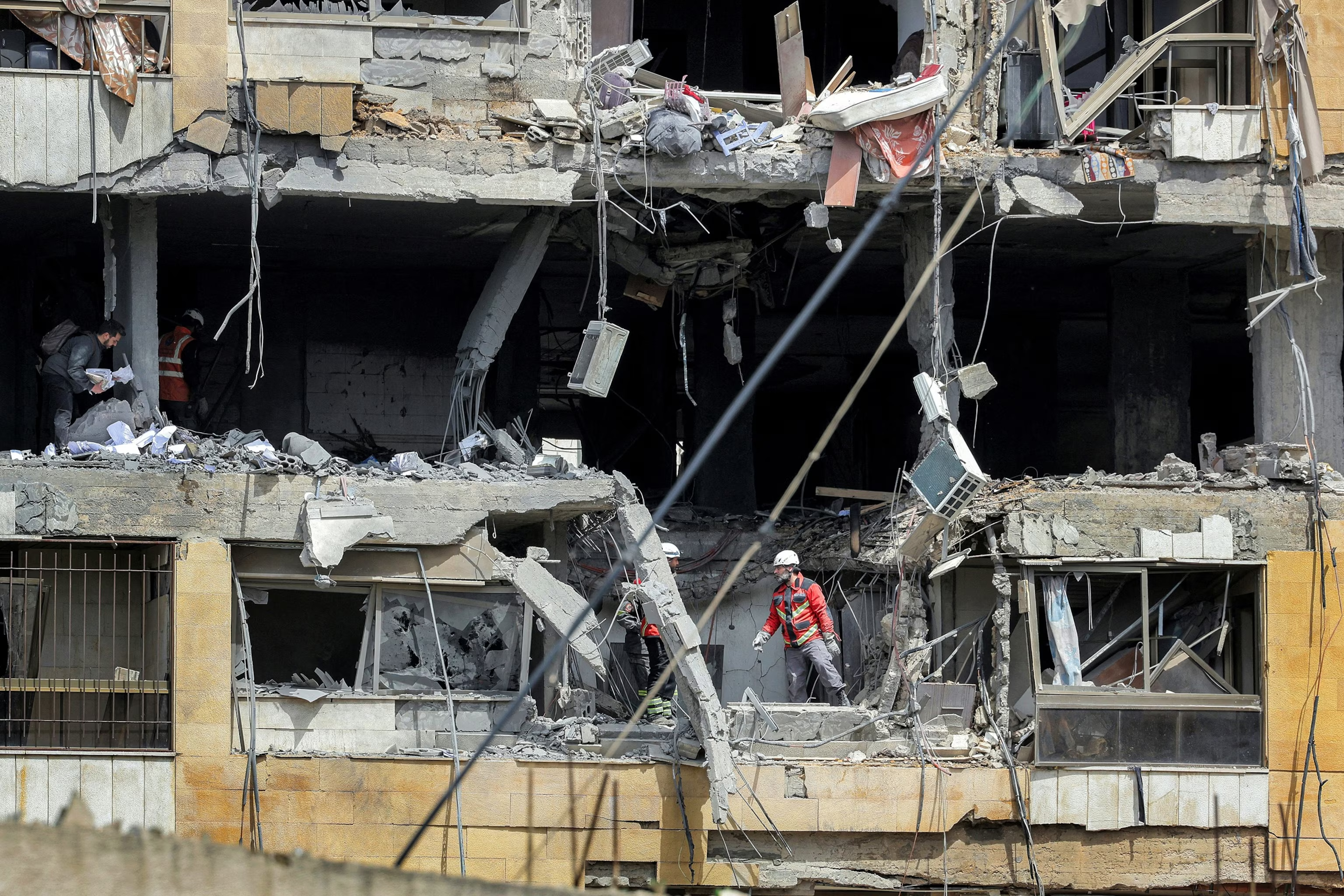
First-responders search a heavily-damaged building that was hit by an Israeli airstrike in Beirut’s southern suburbs, March 30, 2026.Anwar Amro/AFP via Getty Images
What threats are present?
Harry Coker Jr., former National Cyber Director, gave a warning in a 2024 analysis of the United States’ cyber defenses, stating that the U.S. is facing “a fundamental transformation” of its cybersecurity strategies.
“Clearly, a reactive approach can’t keep up with quickly changing cyber threats and the ever-evolving technological landscape,” Coker said.
The same document named Iran as one of four primary nation-states accountable for “a wide spectrum of malicious actions with effects on the United States and its partners.”
Sources familiar with the matter reported last week that hackers had gained entry to FBI Director Kash Patel’s private email account. Individuals with links to Iran have since claimed responsibility online.
Earlier in the month, a cyberattack against U.S. medical device maker Stryker was claimed by hackers sympathetic to Iran. Handala, the group responsible, claimed the act as a retaliatory measure for attacks that led to the deaths of Iranian schoolchildren.
According to previous reports, groups serving Tehran also broke into email systems used by President Donald Trump’s campaign, attempted to compromise networks used by the military and defense contractors, and even singled out U.S. water treatment facilities in rural areas.
“We’re dealing with a cornered state actor that we know has already made its way into several critical infrastructure systems and remains there,” Lemieux said.
The report also identified Russia and China, two strong Iranian allies, as hostile actors against the U.S.
“The convergence of the situation may incentivize another adversary to get involved,” Lemieux said.
U.S. officials reported that since the airstrikes began, the Kremlin has been giving Iran intelligence on where American soldiers are. Lemieux said he worries about military intelligence sharing, but he’s more concerned about cyberspace.
“We don’t know everything about where the Russians or Chinese might be hiding in our systems,” Lemieux said. “These are the realities of cybersecurity. You never know what or when something might happen.”
Attacks come in different forms, Lemieux said, further complicating cyber defense and presenting challenges exacerbated by the recent rise in artificial intelligence.
“For instance, they may be passive and merely provocative,” Lemieux said. “We have seen them interrupt television channels and broadcast messages.”
Lemieux explained that hackers can now easily coordinate large-scale attacks or make programs more resilient to defenses.
“Your local government may announce that the water supply is unsafe to drink because someone tampered with filtration and water chemistry levels,” he added.
Lemieux cautioned that the threat is only intensifying.
“It’s critical,” Lemieux said. “… being trapped may lead to escalated measures. That’s when we might see these hybrid warfare tactics unfold.”
CISA’s funding is linked to DHS. Should Americans feel anxious during a shutdown?
Personnel at multiple DHS agencies, including CISA, are working without pay. According to some senators, both procedures and staff have been affected.
CISA has encountered funding challenges due to shutdowns before. It faced one of its largest challenges within DHS during the November 2025 shutdown, when 65% of its staff were placed on furlough.
Pennsylvania Republican Sen. Dave McCormick stated in early March via social media that “over half of CISA’s staff has been furloughed — 2,000 staff members reduced to around 800,” and warned that “Important cybersecurity and infrastructure evaluations are paused as the potential for Iranian cyberattacks increases.”
Sen. Chuck Grassley, R-Iowa, among others, has mentioned that “the Cybersecurity & Infrastructure Security Agency has been forced to reduce its operations.”
Funding for the agency is still being debated. House Republicans refused to approve a Senate bill Friday that would have reinstated the DHS budget without funding ICE. They instead passed a brief funding bill for all agency departments. The measure was sent to the Senate, where Minority Leader Chuck Schumer, D-New York, has declared it dead.
Former CISA acting director Dr. Madhu Gottumukkala cautioned lawmakers ahead of February’s partial shutdown.
“Let me be clear. Cyber threats don’t take a break when the government shuts down. Our enemies are working around the clock,” Gottumukkala stated. “Even a small lapse can create lasting issues for small businesses, federal networks, and American taxpayers.”
Lemieux is in agreement.
“You should be concerned about what was happening even before the shutdown,” Lemieux remarked. “Also about the cuts from before the shutdown. All of this leaves us in a very vulnerable position.”
“`
Sourse: abcnews.go.com