
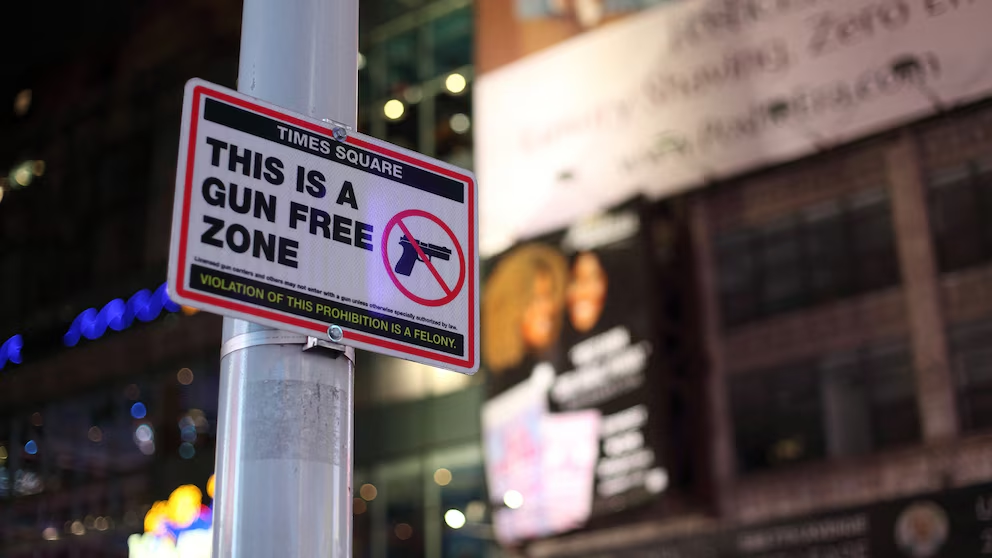
6:55In this April 15, 2025, file photo, a gun-free zone sign is displayed in New York. Daniel Perron/Hans Lucas/AFP via Getty Images, FILE
Three years after recognizing a constitutional right for Americans to carry firearms for self-defense, the U.S. Supreme Court on Tuesday deliberated whether states can restrict the carrying of guns on privately-owned properties accessible to the public without prior consent from the property owner.
The case pertains to a law in Hawaii and similar statutes in four other states—California, Maryland, New York, and New Jersey—where lawmakers established a strict “default rule” that forbids the possession of handguns in privately-owned venues where the public may gather, unless the owner explicitly provides permission.
These regulations apply to places such as shops, shopping centers, bars, eateries, theaters, sports venues, farms, and private beaches. Public properties are not included, as they are governed by different regulations.
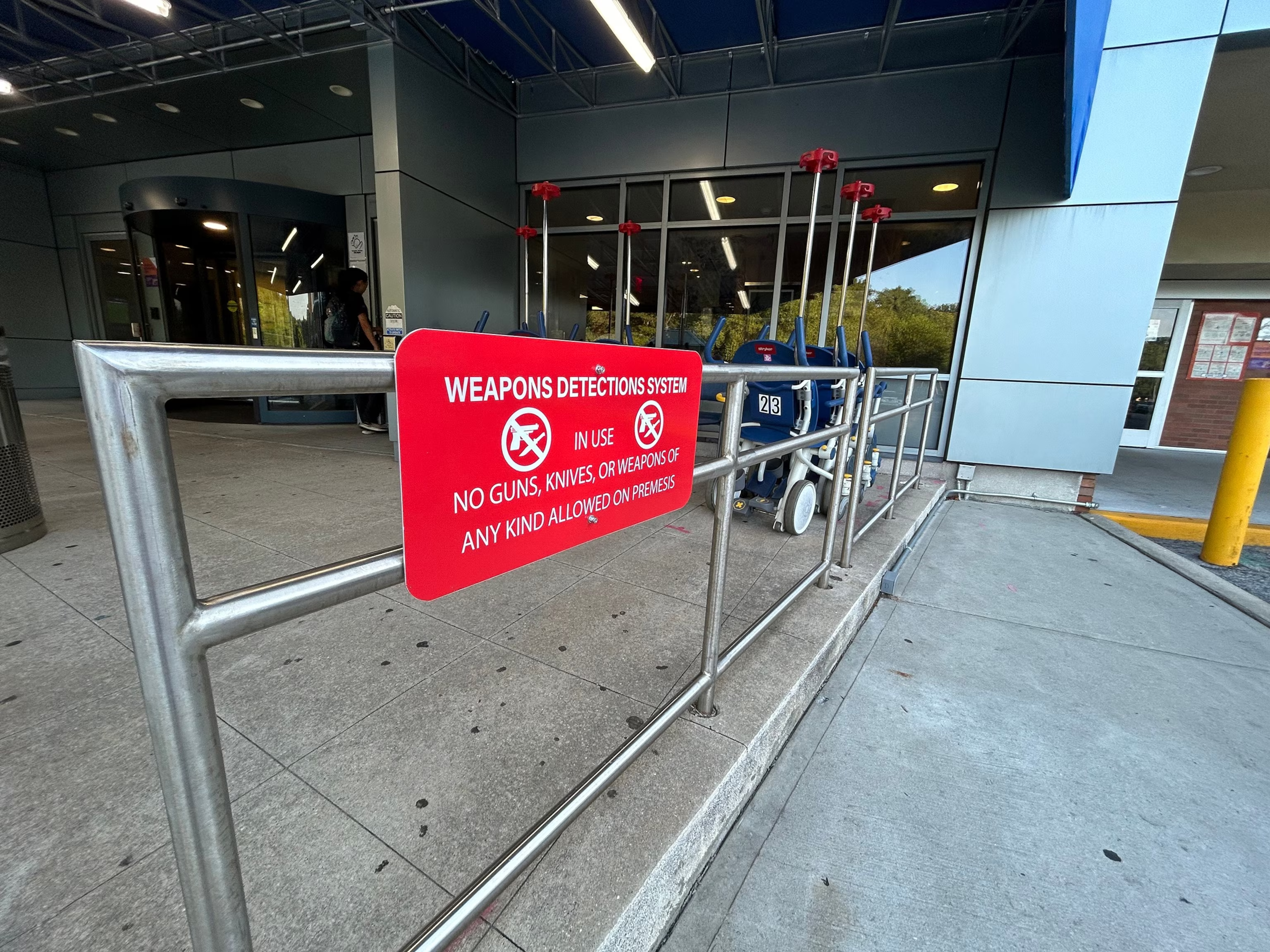
In this Aug. 20, 2023, file photo, a weapons detection system sign is seen outside the emergency entrance of North Shore University Hospital in Manhasset, Long Island. Lindsey Nicholson/UCG/UIG via Getty Images
"This legislation is exceedingly limiting. It prohibits public carry in 96.4% of the accessible land in the County of Maui," stated Alan Beck, an attorney representing three Maui residents and members of the Hawaii Firearms Coalition contesting the law.
"They wish to carry while dropping off cash at an ATM late at night or simply while having lunch at a restaurant," Beck mentioned. "They cannot carry in any private establishment that is open to the public unless the owner displays a sign stating ‘guns allowed.’"
While property owners possess the inherent right to ban firearms from their properties, Beck argues that the responsibility should fall on them to clearly communicate their preferences; otherwise, they should anticipate that members of the public can freely exercise their Second Amendment rights as a customary practice.
In contrast to Hawaii, 45 states allow licensed handgun owners to assume they can legally bring their firearms onto privately-owned properties accessible to the public, unless the owner explicitly prohibits guns through verbal communication or signage.
"The clear intention behind this law is to discourage individuals from exercising their constitutional rights," Beck stated.
STOCK PHOTO/Getty Images
Hawaii officials contend in court documents that at no point in the nation’s history has there been a "right to armed entry onto private property without consent" and that their law aims to uphold a property owner’s right to prohibit guns without needing to take additional measures.
"The fundamental principle is that private property owners have the authority to establish the rules for their properties, and the state can facilitate this process for private property owners," remarked Douglas Letter, chief legal officer at Brady, a gun safety organization.
"Hawaii’s legislation is clearly very reasonable," Letter added. "Visitors simply must obtain a private property owner’s approval to bring a firearm onto that property."
The Supreme Court will assess the Hawaii law using a standard established in a significant 2022 ruling in which Justice Clarence Thomas, representing the conservative majority, asserted that only gun regulations that align with "the Nation’s historical tradition of firearm regulation" can be upheld.
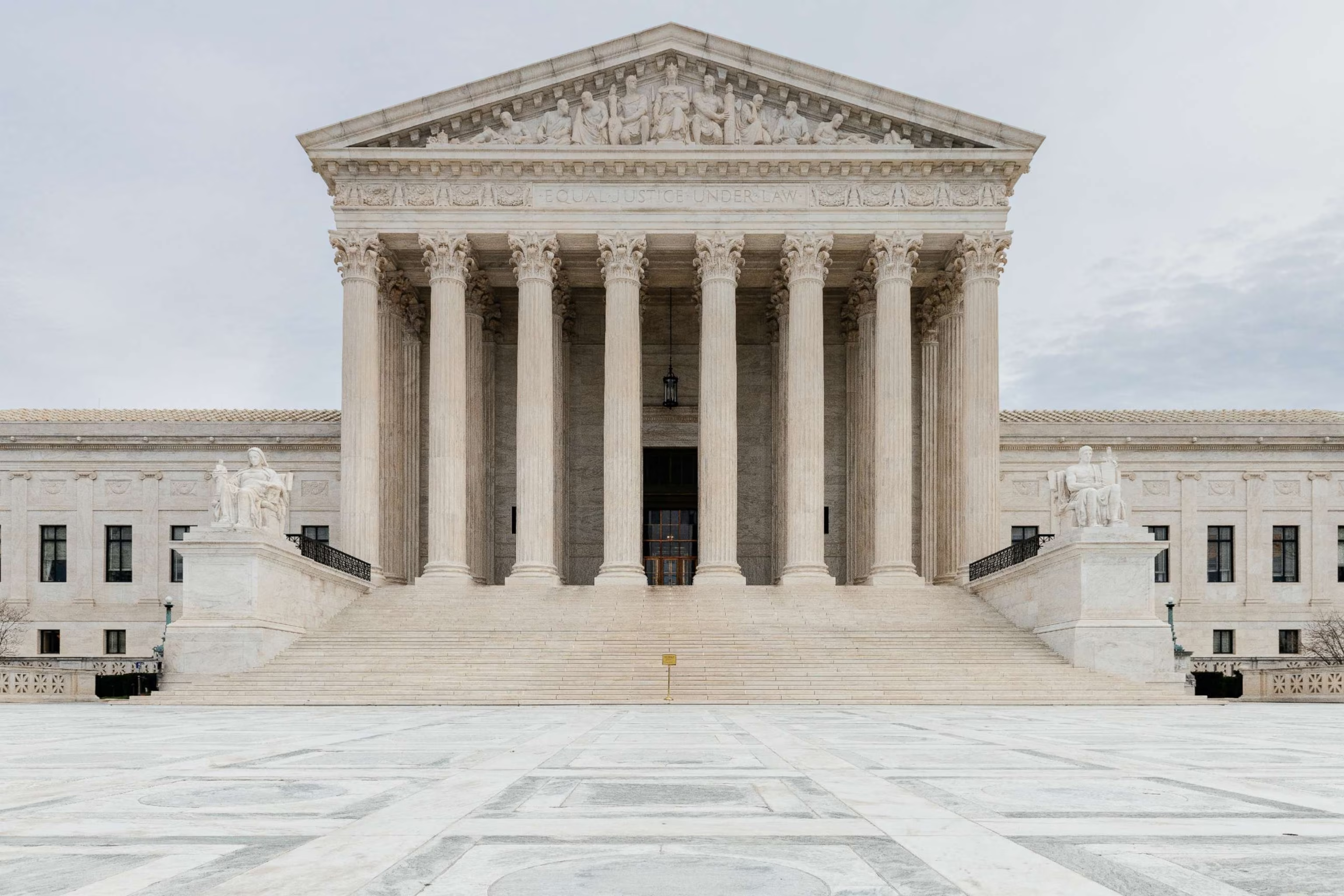
An undated image depicts the U.S. Supreme Court building in Washington, D.C. STOCK PHOTO/Getty Images
Hawaii references an 186
Sourse: abcnews.go.com