
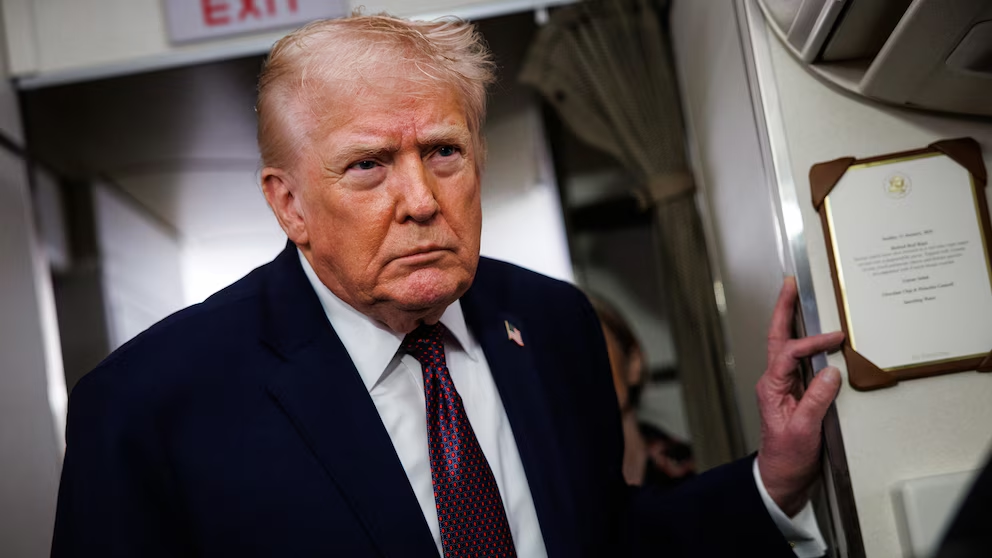
2:31President Donald Trump addresses questions from the press while aboard Air Force One on January 11, 2026, as he returns to the White House from Palm Beach, Fla. Samuel Corum/Getty Images
After stating that Iran is in "big trouble" and nearing a critical boundary due to its response to anti-government protests, President Donald Trump’s national security team was anticipated to convene at the White House on Tuesday to deliberate on potential intervention strategies in the Islamic Republic.
A U.S. official informed ABC News that among the options being evaluated are fresh sanctions targeting prominent regime figures or Iran’s energy and banking sectors.
In a social media statement on Monday, Trump mentioned he was ready to impose a 25% tariff on "any country engaging in trade with Iran" regarding "any and all transactions involving the United States of America."
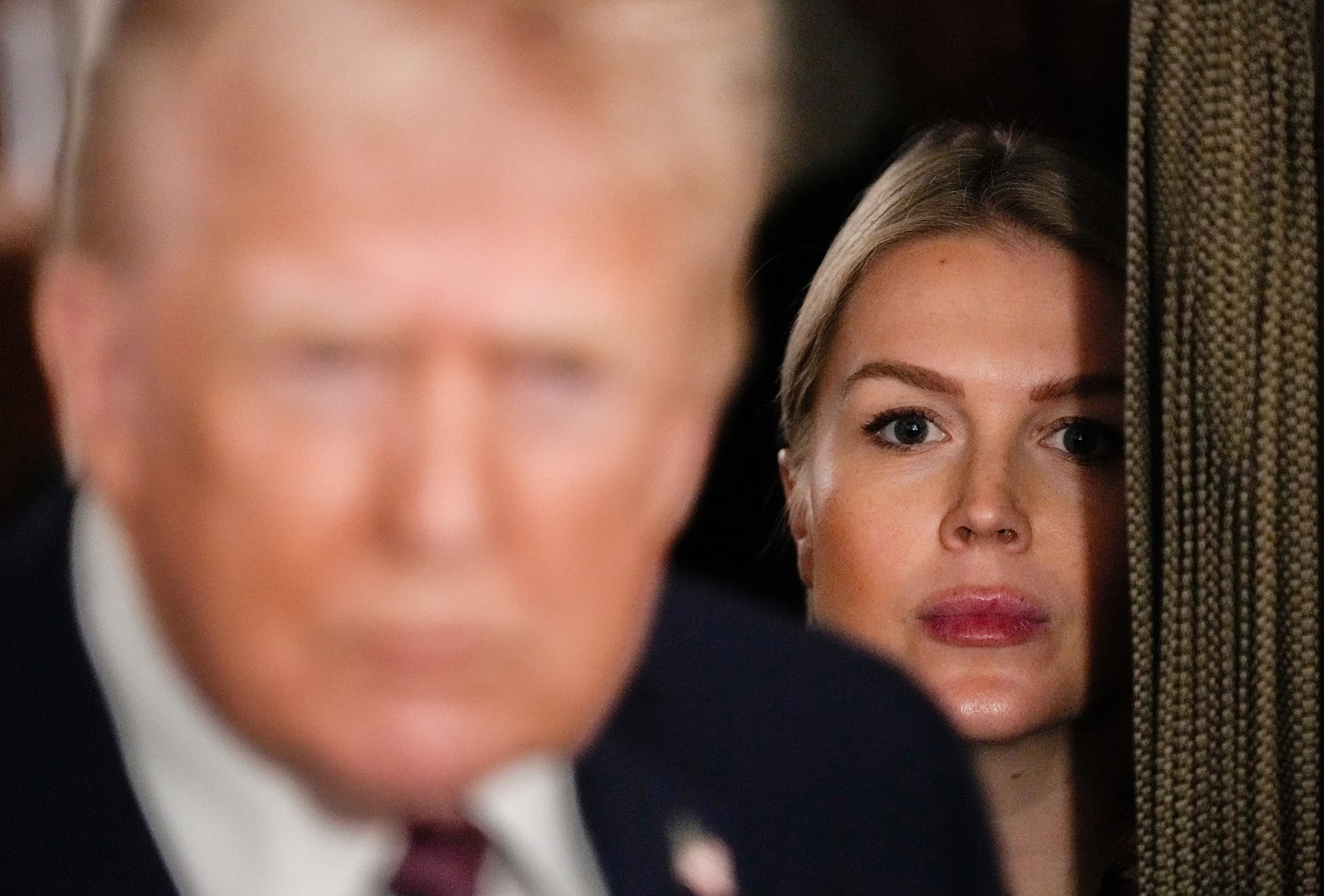
White House press secretary Karoline Leavitt listens as President Donald Trump speaks with reporters during a flight on Air Force One to Joint Base Andrews, Md., Jan. 11, 2026. Julia Demaree Nikhinson/AP
Former U.S. officials indicate that other options likely to be presented to the president could include extensive military strikes or more precise attacks on particular Iranian leaders or police units that have allegedly played a role in violently suppressing protests.
The U.S. is also expected to consider cyber operations against the government, in addition to online "influence campaigns" aimed at enhancing the messages of protesters online and undermining the Iranian regime.
"One of President Trump’s strengths is maintaining all options available, and air strikes would be among the numerous possibilities for the commander in chief. Diplomacy remains the president’s primary choice,” White House press secretary Karoline Leavitt informed reporters on Monday.
Leavitt also noted that the public messaging from the Iranian regime differs from the private communications being sent to the White House. "The president is interested in examining those messages. However, it should be noted that he has demonstrated he is not hesitant to utilize military options when deemed necessary," Leavitt added.
Mick Mulroy, an ABC News contributor who previously served as deputy assistant secretary of defense for the Middle East at the Pentagon, stated that the president will likely receive an intelligence analysis regarding the repercussions of a direct military strike and its potential to facilitate regime change.
"If they decide to proceed [with a military strike], I believe it will focus on regime targets specifically related to controlling or repressing the protests," he remarked. This might involve the Islamic Revolutionary Guard Corps’ Basij forces or other internal security agencies, which have been held responsible for the fatalities among protesters.
Leavitt stated that Iran’s foreign minister, Abbas Araghchi, is directly negotiating with Trump’s Special Envoy Steve Witkoff. On Monday, Araghchi expressed that Iran is "prepared" for conflict with the United States but is also receptive to diplomatic discussions.
In this frame grab from footage circulating on social media from Iran, protesters are seen taking to the streets of Tehran once again despite an escalating crackdown as the Islamic Republic remains isolated from the global community in Tehran, Iran, Saturday Jan. 10, 2026. (UGC via AP) The Associated Press
Iranian foreign ministry spokesperson Esmail Baghaei noted that the communication line between Araghchi and Witkoff "remains active" and that "when necessary, messages are transmitted through that channel," during comments made in a televised meeting in Tehran.
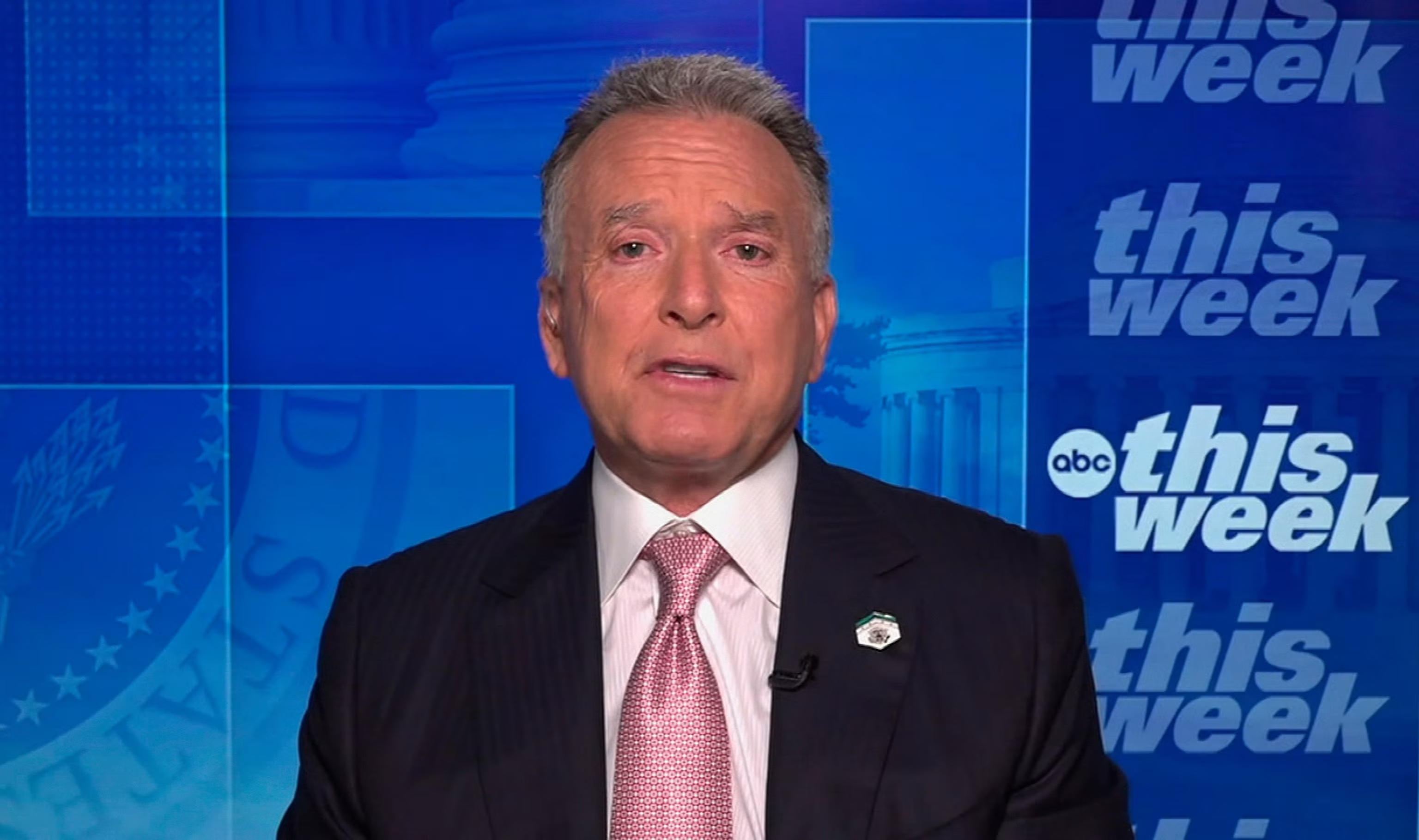
Special Envoy Steve Witkoff speaks with ABC
Sourse: abcnews.go.com