
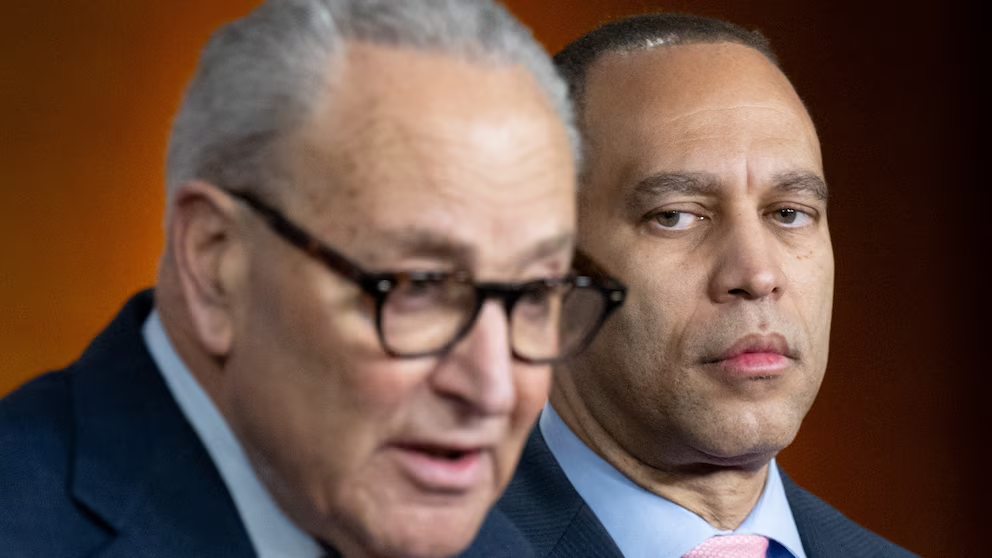
4:30Senate Minority Leader Chuck Schumer and US House Minority Leader Hakeem Jeffries conduct a press conference on Capitol Hill in Washington, January 8, 2026.Saul Loeb/AFP via Getty Images
In anticipation of Thursday’s vote concerning a three-year prolongation of enhanced Affordable Care Act subsidies, Democrats are highlighting that several Republicans are anticipated to go against their leadership.
House Minority Leader Hakeem Jeffries expressed satisfaction with the “bipartisan coalition” formed in advance of Thursday’s vote on extending the enhanced Affordable Care Act subsidies for three years, as nine Republicans crossed the aisle on Wednesday night, facilitating passage in the House.
“I hope more Republicans will join this leader today,” remarked Senate Minority Leader Chuck Schumer, indicating towards Jeffries during a news conference on Thursday.
Jeffries referred to the vote as “an opportunity to make a significant advancement in reducing the high cost of living for everyday Americans, especially regarding health care, but it is a struggle we will persist in on behalf of the American populace.”
Wednesday’s procedural vote succeeded with a 221-205 margin. Nine Republicans — Reps. Mike Lawler and Nick LaLota from New York, Rob Bresnahan, Ryan Mackenzie, and Brian Fitzpatrick from Pennsylvania, Maria Salazar from Florida, David Valadao from California, Thomas Kean from New Jersey, and Max Miller from Ohio — voted alongside Democrats to approve it.
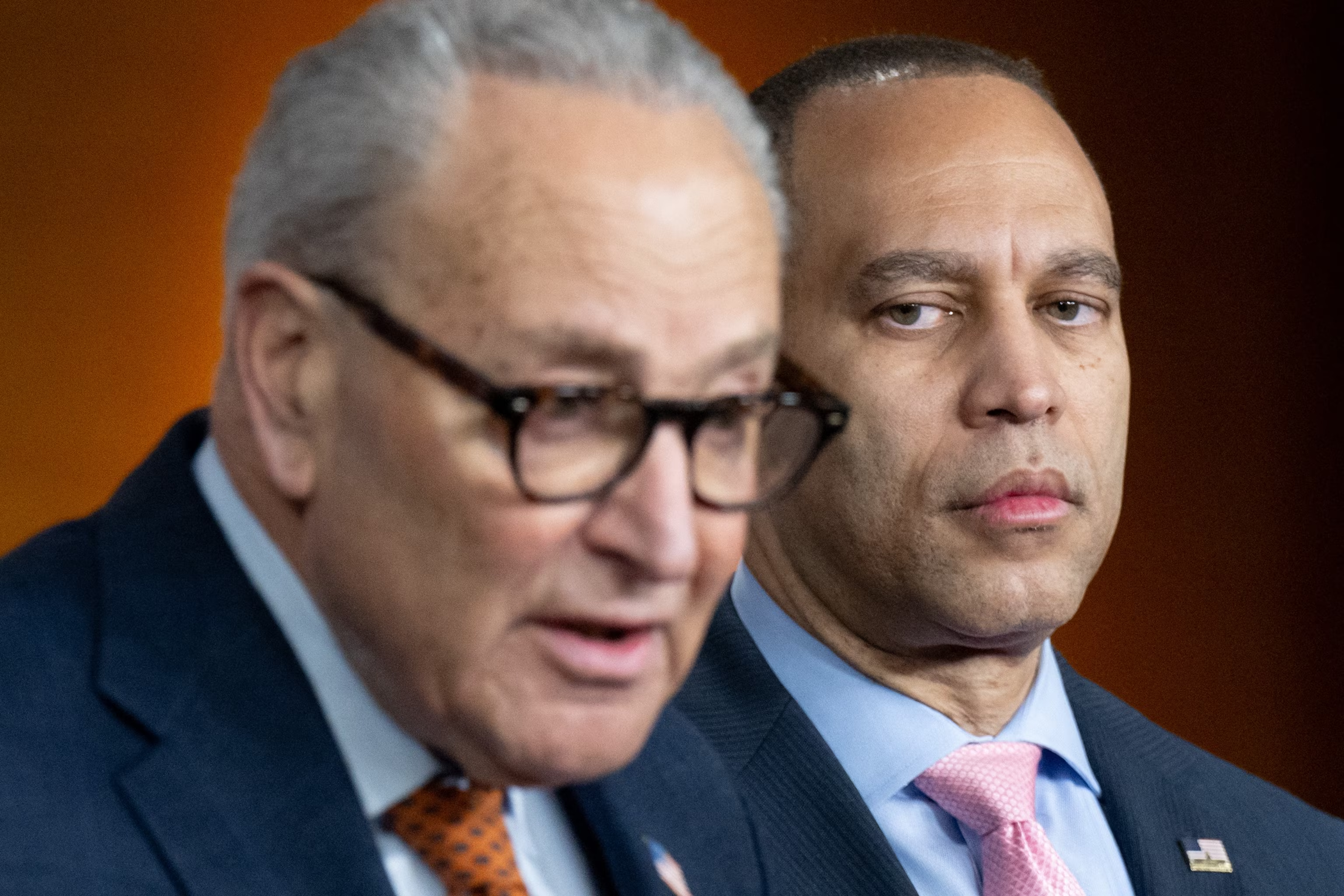
Senate Minority Leader Chuck Schumer and US House Minority Leader Hakeem Jeffries conduct a press conference on Capitol Hill in Washington, January 8, 2026.Saul Loeb/AFP via Getty Images
The subsidies, which lapsed at the conclusion of 2025, were enhanced during the COVID-19 crisis to increase the level of financial support for those already qualified and to broaden eligibility for more individuals.
A viable route that allows legislation to progress through the Senate to the Resolute Desk to tackle the expired subsidies remains uncertain.
Senate Majority Leader John Thune stated on Thursday that there is “no desire” in the upper chamber for an extension and highlighted ongoing bipartisan discussions between senators and House members.
“We’ve already had that vote, as you know,” Thune remarked. “But we’ll see what transpires from the working group, and if they can devise something that includes reforms. Then we’ll proceed from there.
Last month, the Senate turned down a three-year extension of the subsidies when the proposal did not meet the 60-vote requirement, although four Republicans — Sens. Susan Collins from Maine, Josh Hawley from Missouri, and Lisa Murkowski and Dan Sullivan from Alaska — all voted in favor of the measure.
Approximately 22 million of the 24 million ACA marketplace participants are presently receiving enhanced premium tax credits to reduce their monthly costs, with many experiencing soaring premiums in 2026.
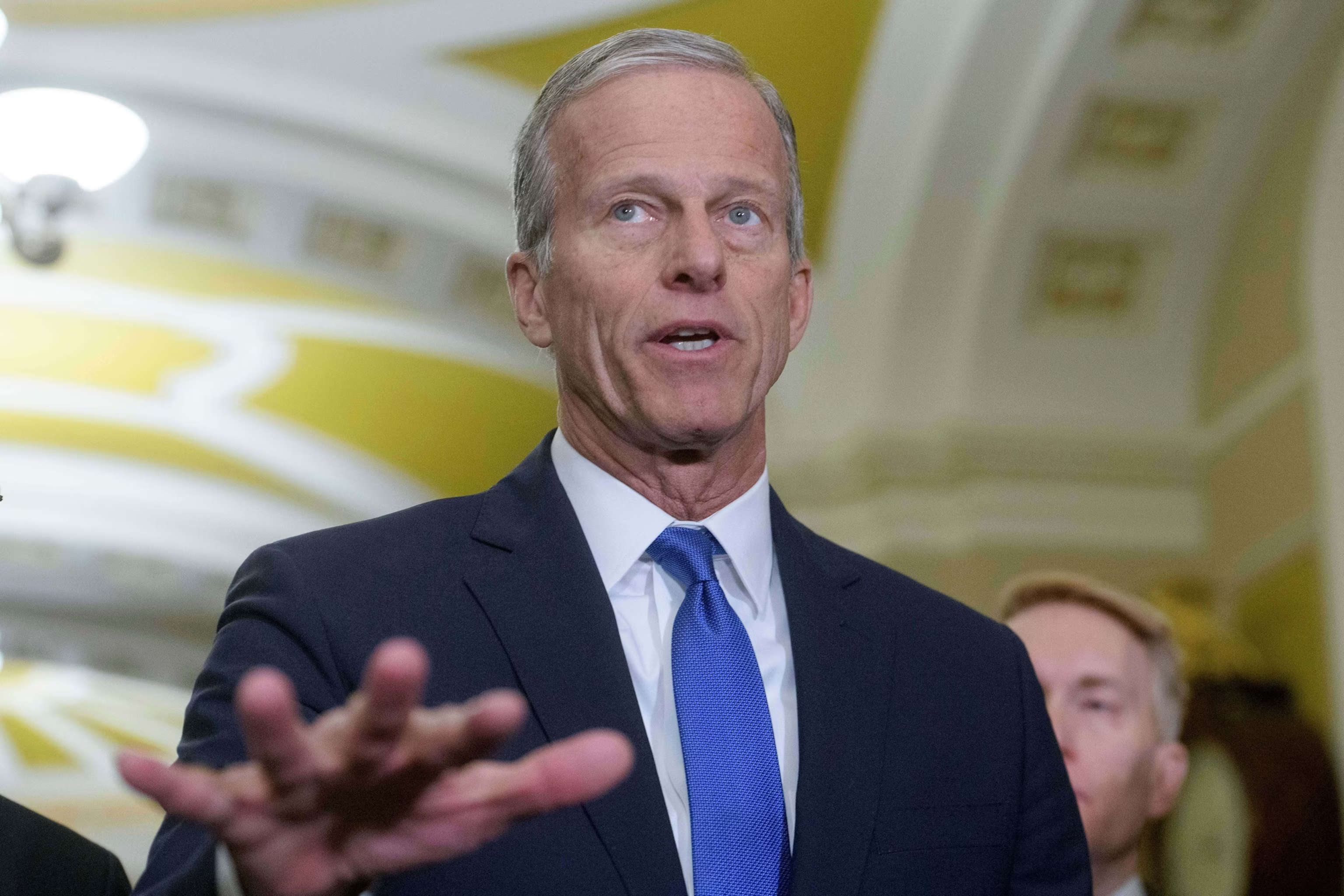
Senate Majority Leader John Thune addresses the Senate Republican policy luncheon press conference at the Capitol, Jan. 6, 2026, in Washington.Rod Lamkey/AP
The nonpartisan Congressional Budget Office estimates that the bill would raise the federal deficit by approximately $80.6 billion over the next decade.
If implemented, the measure would lead to an increase of 100,000 individuals with health insurance in 2026, 3 million in 2027, 4 million in 2028, and 1.1 million in 2029, relative to current law, according to the CBO.
The CBO notes that the 4 million rise in 2028 would stem from alterations in various coverage types: 6.2 million additional people would enroll through ACA health insurance marketplaces; 400,000 more individuals would join Medicaid and the Children’s Health Insurance Program; 500,000 fewer individuals would purchase nongroup coverage outside the
Sourse: abcnews.go.com