
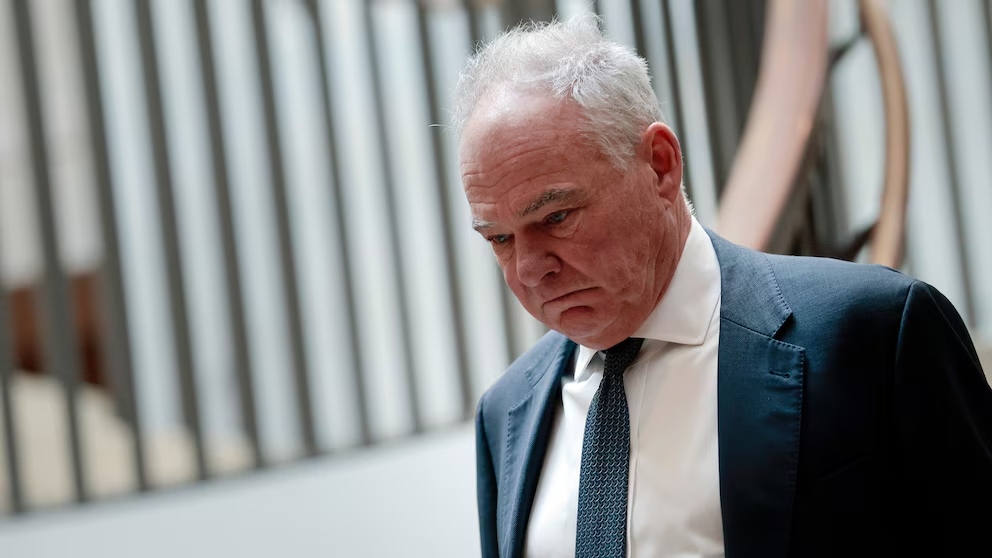
5:26Sen. Tim Kaine arrives for a closed briefing in the U.S. Capitol Building on December 17, 2025 in Washington, DC.Heather Diehl/Getty Images
On Thursday, the Senate moved forward with a war powers resolution aimed at restricting the president’s ability to utilize the U.S. military for hostilities in or against Venezuela without congressional approval.
A handful of Senate Republicans collaborated with all Democrats to narrowly pass the resolution with a 52-47 vote. It required 51 votes to proceed.
Republican Senators Rand Paul, Lisa Murkowski, Todd Young, Susan Collins, and Josh Hawley voted alongside all Democrats in support of the bill.
Democratic Senator Tim Kaine, a member of the Senate Armed Services Committee, advocated for the resolution to be voted on promptly following President Donald Trump’s announcement regarding a significant military operation in Venezuela, which resulted in the capture of dictator Nicolas Maduro and his spouse, both facing federal charges for narcoterrorism conspiracy and cocaine import conspiracy.
"What will happen next? Will the President send our troops to safeguard Iranian demonstrators? To uphold the fragile ceasefire in Gaza? To combat terrorists in Nigeria? To seize Greenland or the Panama Canal? To suppress Americans who peacefully gather to protest his policies? Trump has threatened to pursue all these actions and more, without feeling the need to obtain legal authorization from the elected representatives of the people before endangering servicemembers," Kaine stated in a January 3 release.
Kaine emphasized it was "well overdue for Congress to reaffirm its essential constitutional role in issues related to war, peace, diplomacy, and trade."
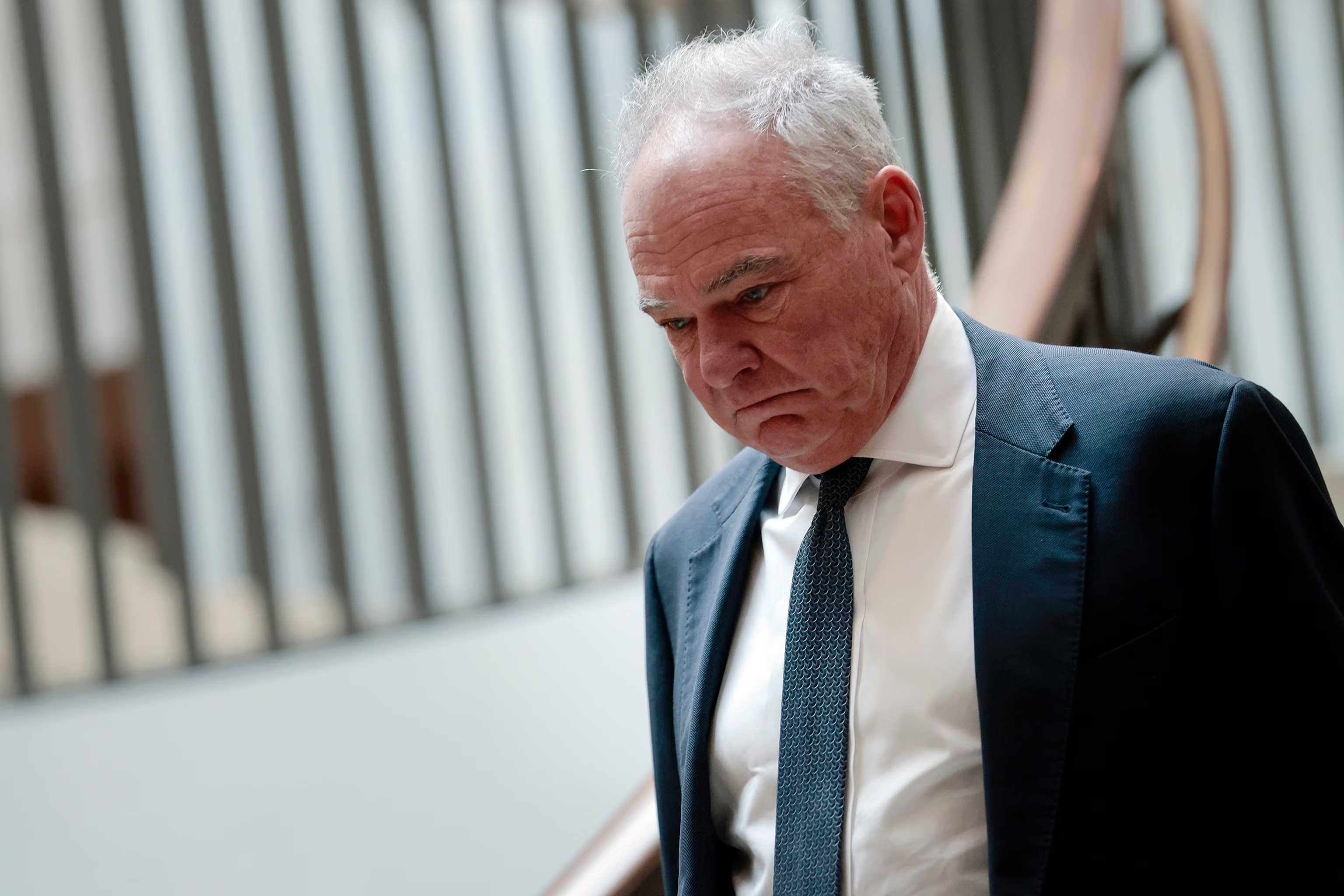
Sen. Tim Kaine arrives for a closed briefing in the U.S. Capitol Building on December 17, 2025 in Washington, DC.Heather Diehl/Getty Images
Senate Minority Leader Chuck Schumer, Republican Senator Paul, and Democratic Senator Adam Schiff co-sponsored Kaine’s resolution.
If the Senate ultimately approves the legislation, it would still require House approval and the president’s signature. The bill did not pass the Senate with a majority that could withstand a veto, and it appears unlikely that Trump would enact it into law.
A similar resolution was considered by the Senate last November but narrowly fell short of the 50 votes needed for passage. Senators Paul and Murkowski voted with all Democrats to advance it at that time.
In the lead-up to Thursday’s vote, many Republicans distanced themselves from the initiative.
"Let us clarify what this resolution does and what it does not do. It does not reaffirm Congress’s powers. It does not enhance America’s strength. It diminishes America’s safety and resilience," Senate Majority Whip John Barrasso stated on Wednesday.
"It would undermine the President’s legitimate constitutional authority. This body, the United States Senate, is being asked whether the President of the United States holds the authority to apprehend indicted criminals. Naturally, he does. Democrats aim to weaken the President’s capacity to enforce the law. That sends the wrong message to hardened drug traffickers and dictators," Barrasso concluded.
Sourse: abcnews.go.com