
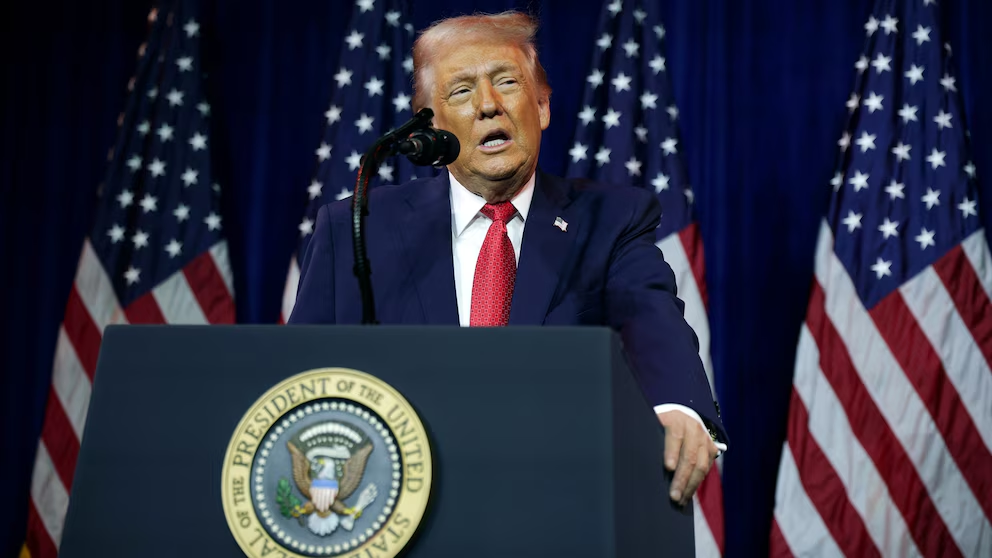
2:08President Donald Trump speaks at a House Republican retreat at The John F. Kennedy Center for the Performing Arts on January 6, 2026, in Washington. Alex Wong/Getty Images
The Manhattan district attorney’s office asserts that a federal judge should once again dismiss President Donald Trump’s effort to transfer his criminal hush money matter to federal court, arguing that the allegations of falsifying business records to conceal a payment aimed at silencing a porn actress were “rooted in entirely private, unofficial actions.”
This argument was presented in a recent court document filed on Wednesday.
Judge Alvin Hellerstein had previously rejected Trump’s request to relocate the case but was instructed in November by a federal appeals court to reconsider.
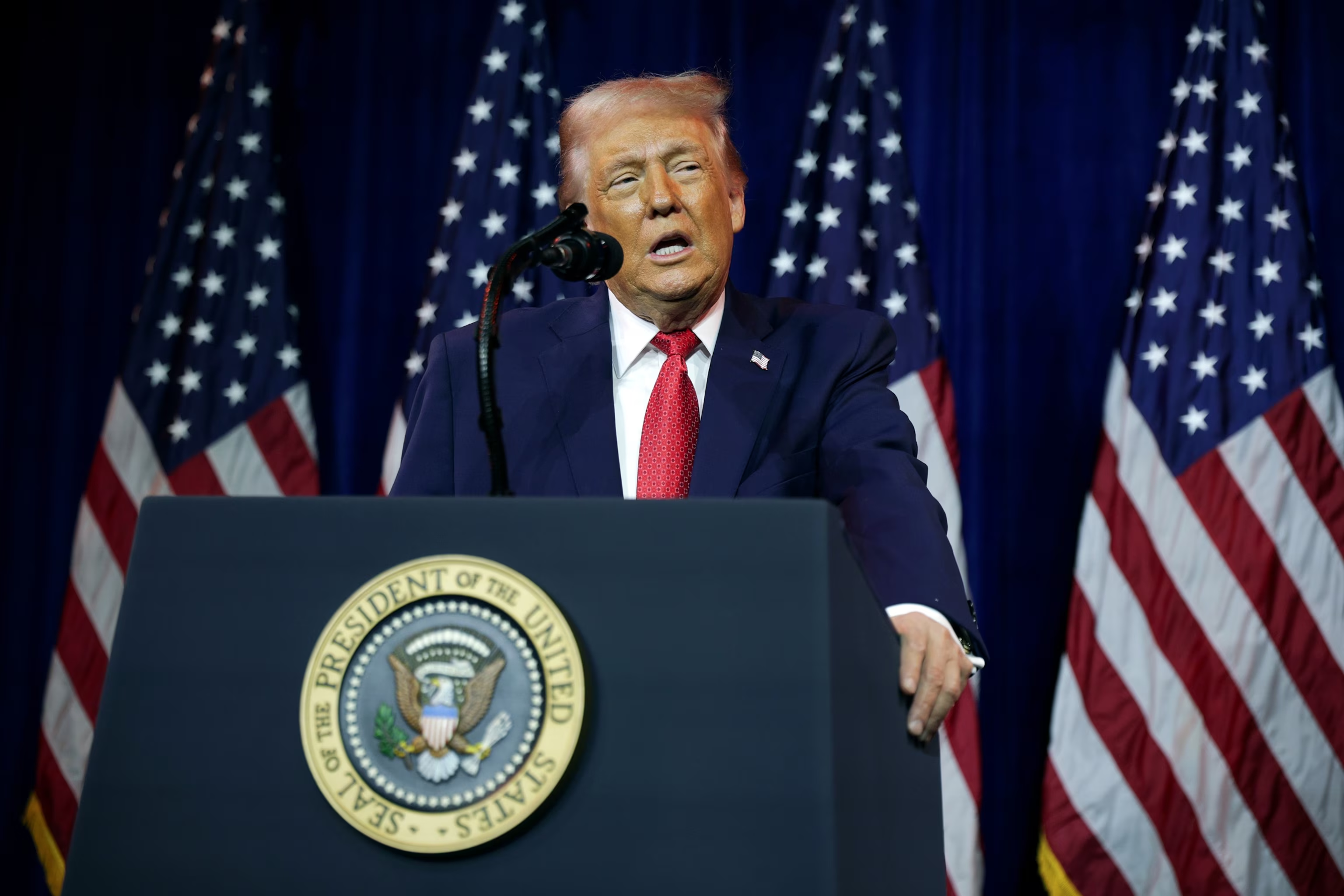
President Donald Trump speaks at a House Republican retreat at The John F. Kennedy Center for the Performing Arts on January 6, 2026, in Washington. Alex Wong/Getty Images
Hellerstein is also the judge assigned to the narco-terrorism conspiracy case involving the ousted Venezuelan leader Nicolas Maduro.
In 2024, Trump was found guilty of 34 felony charges for falsifying business records to hide a payment to Stormy Daniels intended to prevent her from revealing allegations of a long-denied affair prior to the 2016 election.
While appealing his conviction, Trump claimed that prosecutors relied on evidence that a U.S. Supreme Court ruling concerning presidential immunity deemed inadmissible.
“Time has not enhanced the defendant’s arguments,” assistant district attorney John Hughes stated in the court filing on Wednesday. “This Court has already determined there is no valid reason for the defendant to transfer this case again. It should arrive at the same conclusion once more.”
A year ago, Trump received an unconditional discharge, which allowed him to evade prison, fines, or probation while affirming the conviction, and prosecutors indicated that the “advanced stage” of the case argues against transitioning it to federal court.
Trump is unable to grant himself a pardon for a state conviction.
Additionally, prosecutors contended that the state charges stemmed from private actions prior to Trump’s election.
“The Second Circuit has now clarified that federal-officer removal necessitates a link between the alleged criminal conduct and an act performed under the authority of office, and such a link does not exist in this case,” Hughes remarked.
Sourse: abcnews.go.com