
Photo: Depositphotos
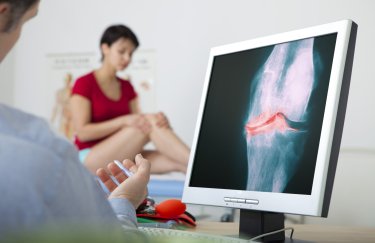
Artificial intelligence can detect knee osteoarthritis 8 years earlier than an X-ray would, using a simple blood test.
This is reported by Live Science.
It is noted that scientists analyzed the blood of 200 middle-aged white women without symptoms of osteoarthritis, who had been examined annually for the disease since 1989. Scientists assumed that the participants in the experiment had a low risk of developing the disease due to the lack of knee injuries and surgeries.
After 10 years of follow-up, half of the women were diagnosed with the disease, and half were not.
How AI was applied
Using artificial intelligence, researchers identified proteins in the blood that indicate osteoarthritis. Blood samples were taken for analysis eight or four years before diagnosis.
Thus, 6 proteins were identified that contribute to inflammation and hemostasis (the body's system for protecting against bleeding in the event of injury) in the early stage of the body's response to injury.
The scientists noted that this model detected osteoarthritis with 77% accuracy. For comparison, the disease is diagnosed with a 50% probability based on a person's age and body mass index, and 57% of cases – due to knee pain.
The researchers noted that the initial results of using AI in diagnostics are promising, but the method will not be implemented in the near future. The team of specialists now needs to find out whether the trial will be as successful among men, as well as people of other nationalities. In addition, they emphasized that women are more likely to develop osteoarthritis than men, especially after the age of 50.
About osteoarthritis
Osteoarthritis is the most common form of arthritis, affecting more than 32.5 million adults in the United States. It's also called “wear and tear disease” because it occurs when the cartilage in a joint—in the hands, hips, and knees—breaks down. As a result, the underlying bone wears down over time, leading to pain, stiffness, and swelling.
Evidence suggests that inflammation is an inherent cause of the joint damage seen in osteoarthritis.
This means that there may be “biomarkers” or measurable signs in the body that can indicate that the disease is beginning long before X-rays reveal structural damage.
Recall, it was recently reported that scientists from the University of Cambridge discovered that the artificial intelligence-based technology ChatGPT 4 can be used to triage patients with vision problems – to identify urgent cases that require specialist examination.
Photo: ua.depositphotos.com