
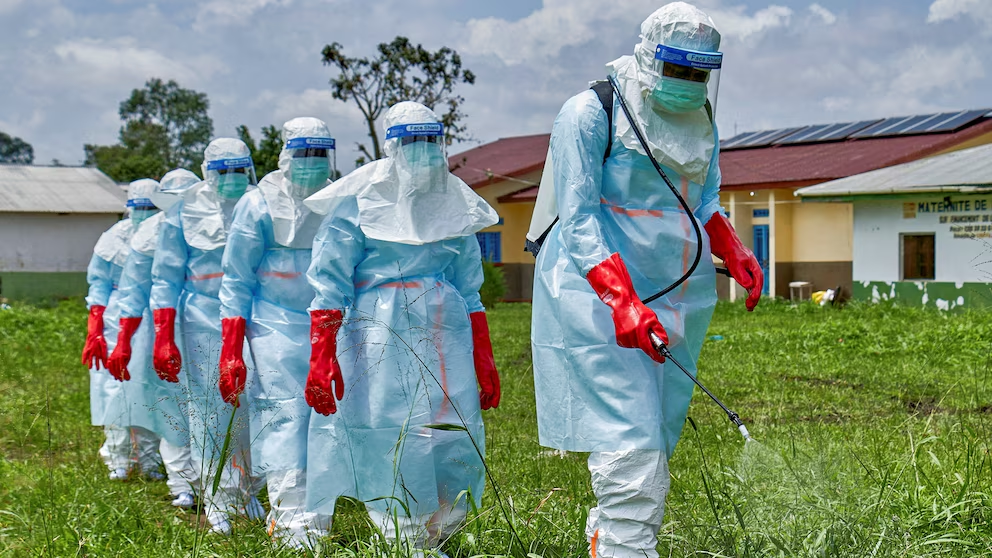
Red Cross personnel walk in a line as they sanitize Rwampara general hospital in Rwampara near Bunia, Ituri province, Democratic Republic of Congo, May 21, 2026. Gradel Muyisa Mumbere/Reuters
The Centers for Disease Control and Prevention (CDC) declared this week it was limiting entry into the United States for international travelers who have recently visited nations affected by an accelerating and concerning Ebola epidemic displaying no indications of control.
Furthermore, U.S. passport holders and U.S. citizens going back to the U.S. from Democratic Republic of the Congo, Uganda, and South Sudan within the past 21 days will be directed to Dulles Airport in Virginia for screening of symptoms and questioning about potential exposure. Increased screening measures have also commenced at Hartsfield-Jackson Atlanta airport as of Saturday morning, and George Bush Intercontinental Airport in Houston will initiate late Tuesday. Legal permanent residents (green card holders) who have been present in any of the three countries within the preceding 21 days are temporarily prohibited from entering the U.S.
A few public health experts informed ABC News that monitoring travel-related exposures is a crucial component in curbing and tracking the dissemination of a disease.
However, they cautioned that wider prohibitions may produce unforeseen repercussions that could adversely affect global public health and impede containment endeavors, considerations meriting attention during decision-making processes.
Travel restrictions may prevent some initial cases from entering the nation, but it lacks assurance, given that those permitted entry might be infected yet display no symptoms upon arrival, the public health specialists noted.
"Regarding Ebola, the pivotal point is not informal travel, but rather whether infected or exposed individuals can be identified, isolated, and monitored," commented John Brownstein, an epidemiologist and chief innovation Officer at Boston Children’s Hospital, also a medical contributor for ABC News.
Brownstein suggested a temporary, specific, and focused travel regulation might initially aid in safeguarding the U.S. territory from cases, but solely as part of more extensive evidence-based tactics to halt transmission at the source.
"We consistently worry that extensive travel limitations provide individuals with a misleading sense of security. Incubation periods can differ, and people might be unaware of their personal exposures to individuals with a virus,” Brownstein stated.
"Theoretically, Ebola is more trackable than a respiratory virus as transmission generally demands close contact," he carried on. "But realistically, tracing can become very challenging when individuals are traversing borders, incidents occur in urban or mining zones, healthcare frameworks are strained, or instability restricts access to communities. The crux lies in promptly identifying each case and every contact.”
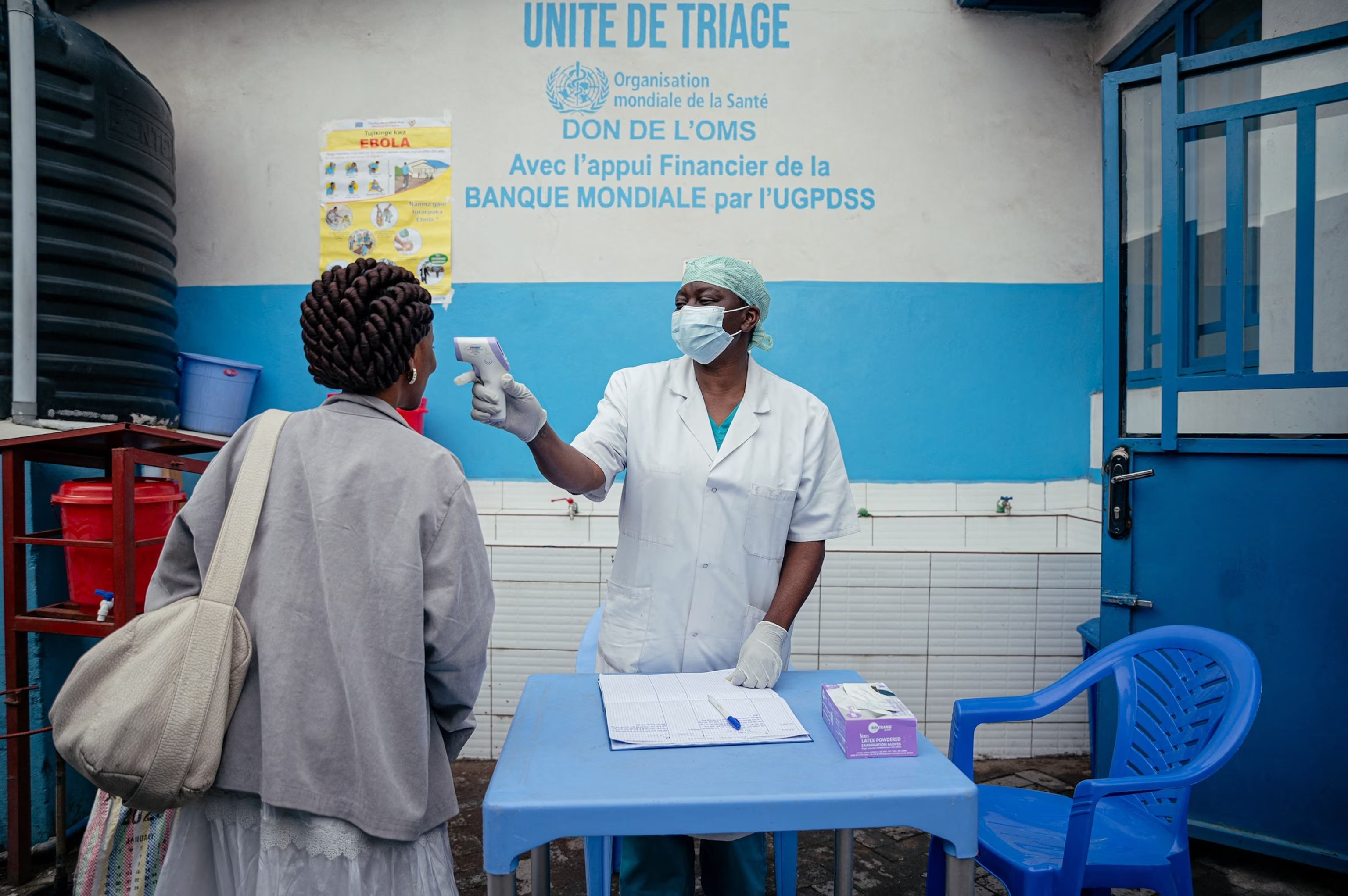
A physician from CBCA Virunga hospital inspects a visitor’s temperature at a screening station established at the hospital entrance as part of Ebola prevention efforts in Goma, May 21, 2026.Jospin Mwisha/AFP via Getty Images
Other specialists highlighted the shortcomings of prior travel bans, such as those enacted during the beginning stages of the COVID-19 global pandemic.
"A broad travel prohibition is not logical based on the knowledge we possess thus far," Dr. Krutika Kuppalli, a Dallas-based infectious disease doctor specializing in emerging infections, advised ABC News. "If risk mitigation is the true aim, policies should be rooted in epidemiology and exposure risk, not nationality."
Numerous leading organizations within global health, including the World Health Organization — the health division of the United Nations — have consistently advised against this specific style of comprehensive travel limitation. The WHO stated on Sunday it has "no basis in science" and is "typically enacted out of apprehension," compelling individuals to use unofficial crossings.
In a statement directed to ABC News, a representative from the Department of Health and Human Services conveyed that any intimations that the department’s actions "are not aligned with public health best practices are entirely erroneous and misguided."
"HHS is implementing focused, evidence-based procedures grounded in well-established protocol and proficiency to safeguard the American populace and avert the proliferation of Ebola," the declaration continued. "These precautions are intended to reinforce screening, monitoring, and containment activities as necessary to bolster the global response in stopping the epidemic at its point of origin."
Prohibitions could backfire
Some public health authorities alerted ABC News that border closures might backfire by deterring individuals from utilizing official entry points and, consequently, complicating the identification of cases.
"You’re preventing people from exiting that region, while simultaneously complicating the importation of essential items into those zones," Amesh Adalja, senior scholar at Johns Hopkins Center for Health Security, explained to ABC News.
Epidemic control interventions frequently depend on external actors to distribute resources or supply medical and technical aid. Kuppalli suggested that curbing return movement to the U.S. could potentially restrict this capability because volunteers might face limitations in returning home.
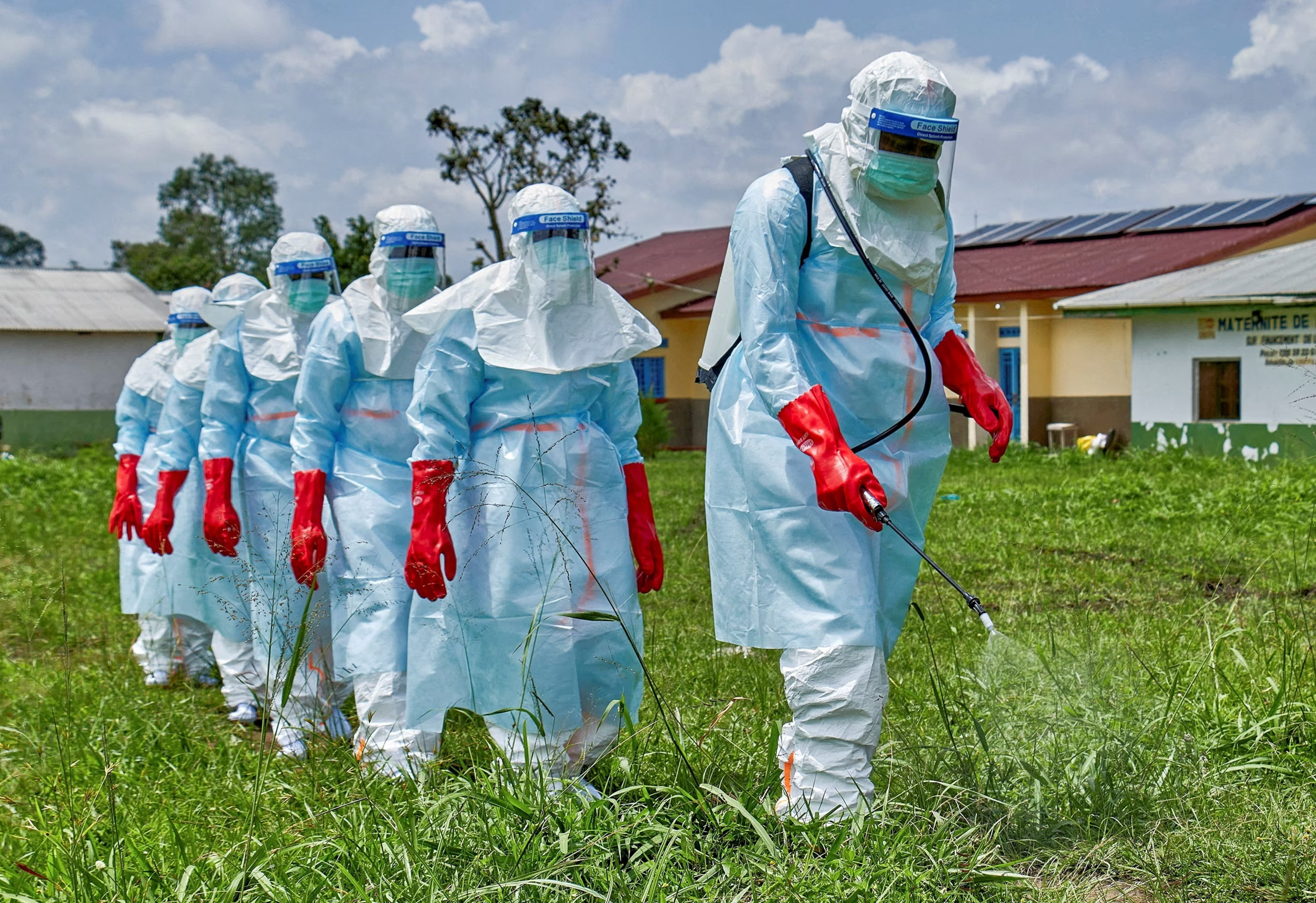
Red Cross workers walk in a formation as they disinfect Rwampara general hospital in Rwampara outside Bunia, Ituri province, Democratic Republic of Congo, May 21, 2026.Gradel Muyisa Mumbere/Reuters
"[Travel prohibitions] can disrupt the flow of healthcare providers, laboratory essentials, PPE, and humanitarian relief into affected territories," Kuppalli stated. "They may additionally discourage frontline responders from deploying if uncertainties surround their fate should they encounter exposure or illness abroad."
Past experiences suggest bans may not halt epidemics
Jessica Malaty Rivera, an infectious disease epidemiologist and executive director for the Infodemiology Initiative at the nonprofit organization The Public Good Projects, informed ABC News that "perhaps a movement ban could postpone a few of the initial imported cases, yet they do not avert epidemics."
Kuppalli cited occurrences such as those during the 2009 H1N1 influenza pandemic, the COVID-19 pandemic, and the mpox response.
"History consistently reveals that travel bans frequently hold more political attraction than epidemiological effectiveness," she remarked.
She expounded that travel restrictions during the H1N1 influenza pandemic did not arrest global spread because infected individuals had already journeyed internationally prior to the implementation of bans.
"Throughout COVID-19, travel prohibitions might have delayed spread by a few days or weeks in certain scenarios, but they failed to prevent global transmission once sustained spread was underway," Kuppalli conveyed. "With mpox, we also witnessed that excessive concentration on border measures, as opposed to testing, surveillance, vaccination, and community involvement, hindered more efficacious public health interventions."
Kuppalli served as a medical director at an Ebola treatment center during the 2014 epidemic, a time when analogous debates surrounding travel bans surfaced.
"During that period, many public health experts contested comprehensive travel prohibitions, as they risked pushing travel underground, thereby complicating the identification and monitoring of exposed individuals," she stated.
Airport surveillance
The DHS' latest action routes all flights transporting entry-eligible travelers who have recently journeyed from DRC, Uganda, and South Sudan to a single port of entry located in Virginia.
Public health specialists indicate this action can streamline screening efforts upon arrival into the U.S.; however, multiple considerations warrant attention during the implementation of airport surveillance.
"Decisions to conduct airport surveillance should hinge on the presence of travel-linked cases, whether the outbreak is spreading to major transportation hubs, the extent of travel connectivity between the impacted region and the U.S., and whether exposed individuals can be monitored post-arrival," Brownstein explained. "[Airport surveillance] should be based on risk assessment, not fear-induced reactions."
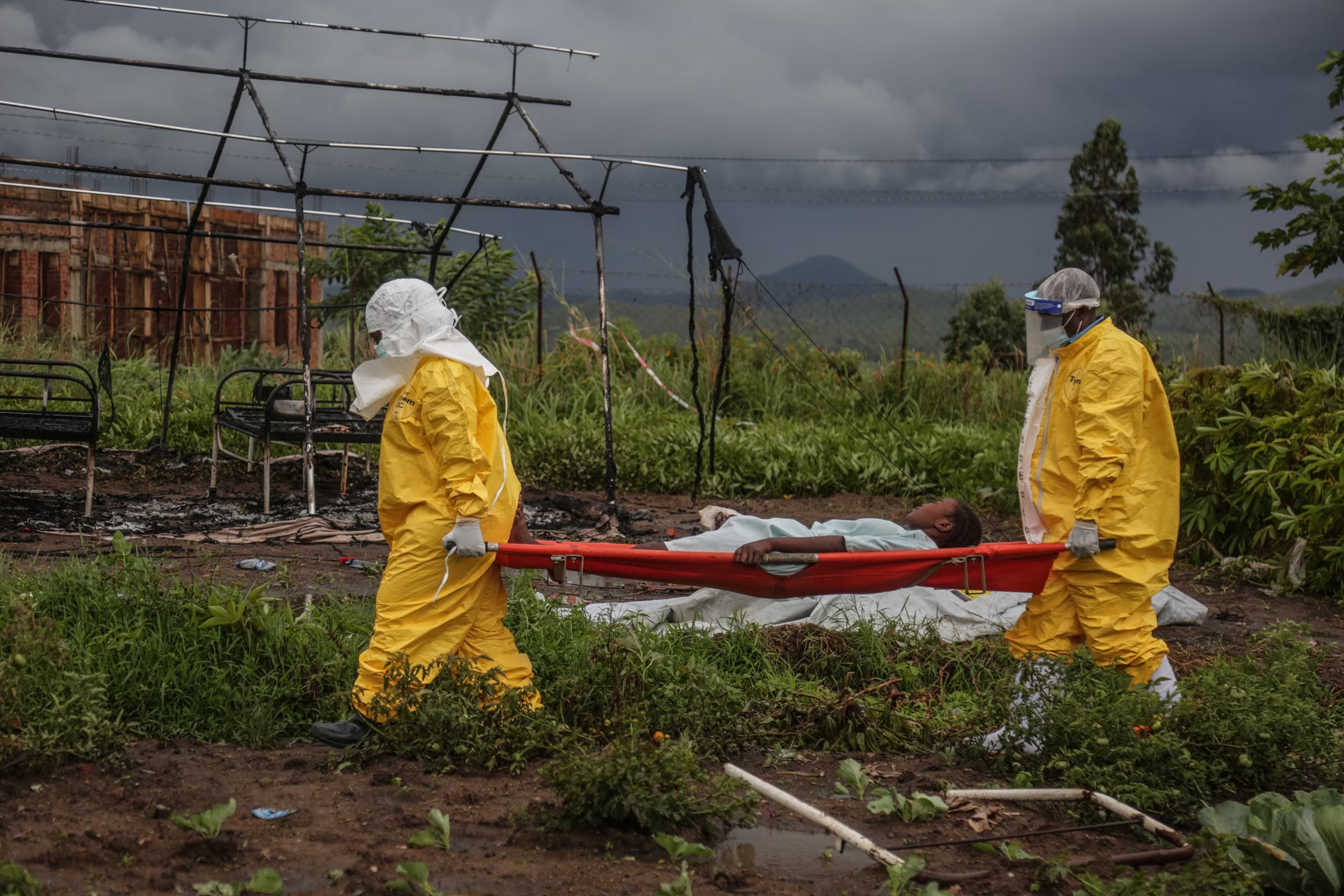
Medical staff wearing personal protective equipment carry a patient on a stretcher at the hospital in Rwampara on May 21, 2026.Seros Muyisa/AFP via Getty Images
On Thursday, the CDC indicated that screening at Dulles will incorporate a questionnaire soliciting information about travel history and any symptoms. CDC staff will also observe travelers for manifestations of illness and record temperatures. Traveler contact information will be relayed to state and local health departments should they develop symptoms subsequently.
Travelers displaying any symptoms deemed indicative of Ebola infection or exposure will be conveyed to a hospital for isolation and medical treatment, officials said.
During a press briefing on Friday, Dr. Satish K. Pillai, the incident manager for the Centers for Disease Control and Prevention's Ebola response, addressed an inquiry about why travelers were exclusively being routed through Dulles, asserting that the CDC’s "experts in global migration determined that the initial port of entry was one that fulfilled the requirement."
The public health specialists conveyed that Ebola demands contact with a symptomatic person’s bodily fluids — it isn’t an airborne illness — rendering its spread on an airplane or its escalation into a global pandemic less probable.
Nevertheless, they acknowledge containment in impacted locales may prove protracted, attributed to its expansive scale and the time elapsed before the outbreak's identification.
Presently, there are at least 750 suspected cases and at least 177 suspected deaths recorded in the ongoing Ebola outbreak in the eastern DRC, according to WHO’s director-general Dr. Tedros Adhanom Ghebreyesus on Friday, who characterized the situation as "deeply troubling." Specialists engaging with ABC News echoed those anxieties.
"I harbor deep concern regarding the health and well-being of individuals in DRC, Uganda, and neighboring countries," Malaty Rivera conveyed. "This multitude of cases and fatalities within such a brief timeframe suggests its probable undetected spread for a considerable duration."
Risks can shift, but the US has established resources
The CDC asserts that the hazard of Ebola to the American populace remains low, yet experts acknowledge the potential for that risk to evolve.
"Minimal risk does not equate to zero risk, and epidemics are dynamic," Brownstein stated. "Should cases extend into larger cities, cross more borders, involve more health workers, or exhibit deficiencies in contact tracing, the risk assessment would undergo alteration. This underscores the paramount significance of surveillance during the early stages."
Ebola constitutes a highly severe and often lethal illness. The Ebola strain involved in the present outbreak, Bundibugyo virus disease, lacks a vaccine or specific treatment.
At least one American physician treating patients within the DRC is among the confirmed cases tied to the present outbreak and is undergoing medical care in Germany. As of Thursday, he remained critically ill but articulated cautious optimism regarding his improving health.
However, should Ebola reach American soil, established protocols exist for implementation. The CDC possesses standing guidance for healthcare providers tending to patients suspected of contracting specific viruses capable of inducing hemorrhagic fever, inclusive of Ebola.
"It would be treated with utmost seriousness, although a single imported case would not signify the widespread propagation of Ebola within the U.S.," Brownstein conveyed. "The patient would undergo isolation, testing, and treatment, with the monitoring of every contact."
Jade A. Cobern, MD, MPH, is a practicing physician, board-certified in pediatrics and general preventive medicine, and is a fellow of the ABC News Medical Unit.
Sourse: abcnews.go.com